
Resource Library

Explore fact sheets, reports, and more from ReFED and the food waste community.
Our resource library is designed for you to explore through report, explainers, fact sheets, case studies, and Food Waste specific charts & infographics. If you have a resource to add, please contact media@refed.org.
Filters
Showing 101 results
- Reports
 Reports
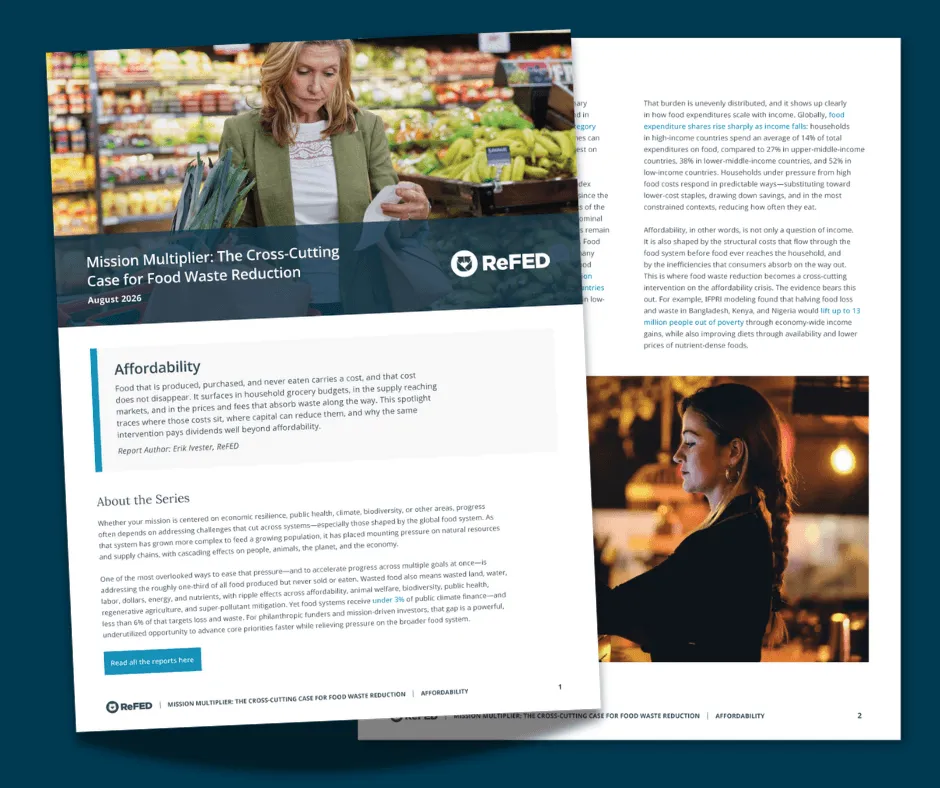
Mission Multiplier: The Cross-Cutting Case for Food Waste Reduction - Affordability
Food that is produced, purchased, yet never eaten carries a cost, and that cost does not disappear. This spotlight traces where those costs sit, where capital can reduce them, and why the same interventions pay dividends well beyond affordability.
- Reports
 Reports
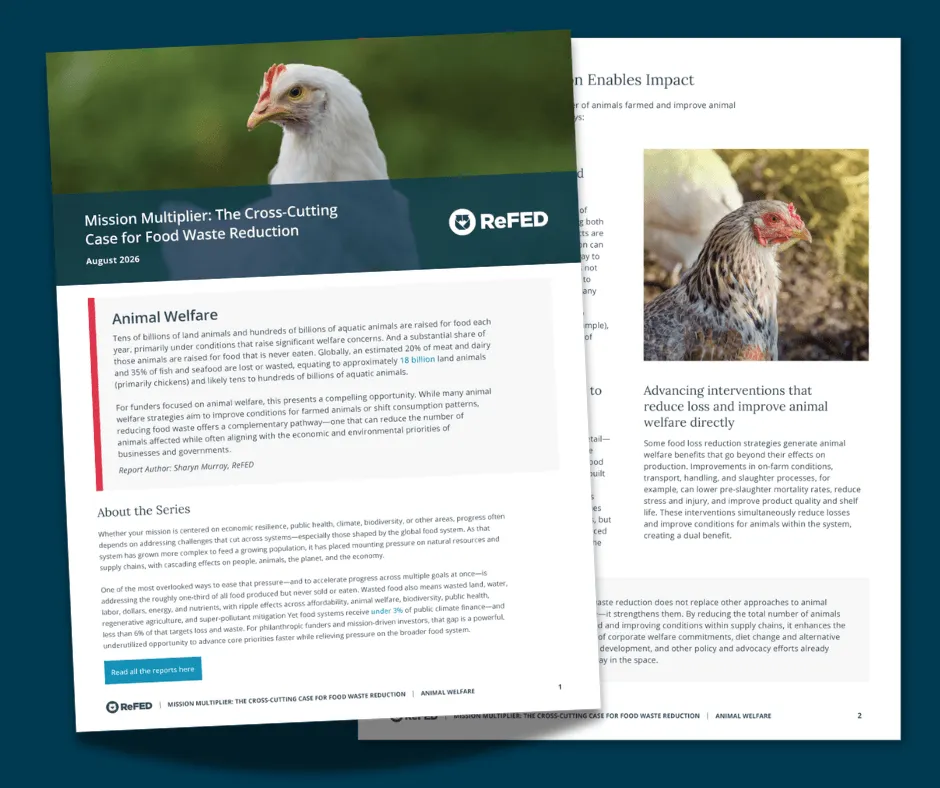
Mission Multiplier: The Cross-Cutting Case for Food Waste Reduction - Animal Welfare
Across demand reduction, supply chain efficiency, and welfare-aligned interventions, food waste reduction offers funders a practical and underutilized pathway to reduce the number of animals affected by industrial agriculture while improving conditions within the system.
- Reports
 Reports
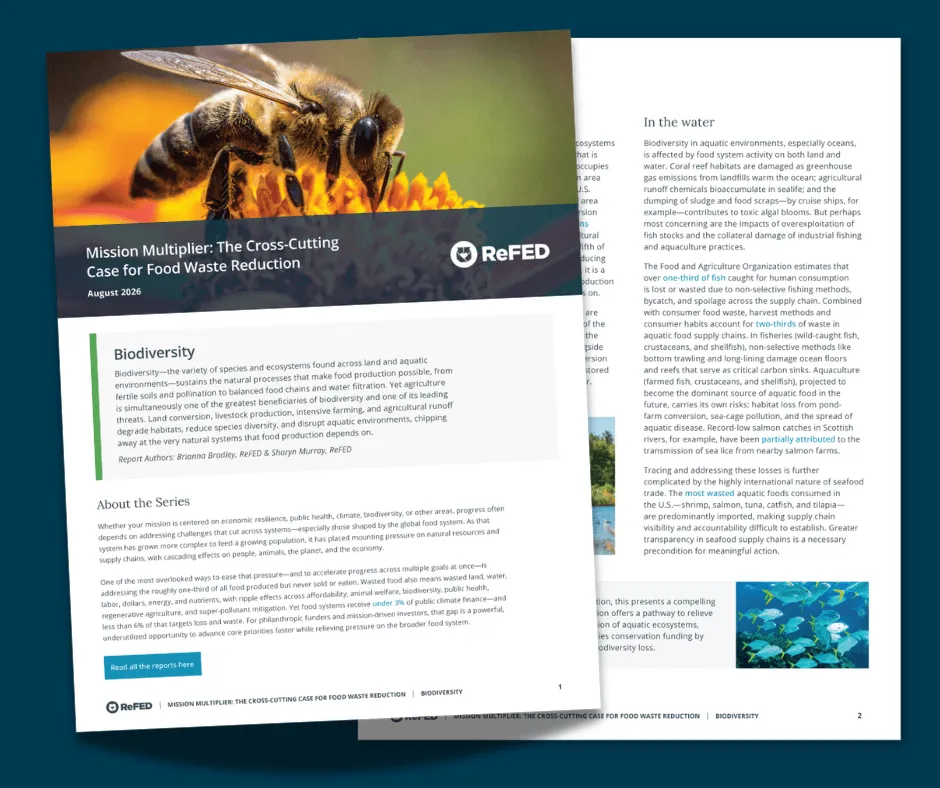
Mission Multiplier: The Cross-Cutting Case for Food Waste Reduction - Biodiversity
Food waste reduction offers a pathway to relieve pressure on land conversion and reduce degradation of aquatic ecosystems, complementing direct habitat protection and species conservation funding by addressing a major systems-level contributor to biodiversity loss.
- Reports
 Reports
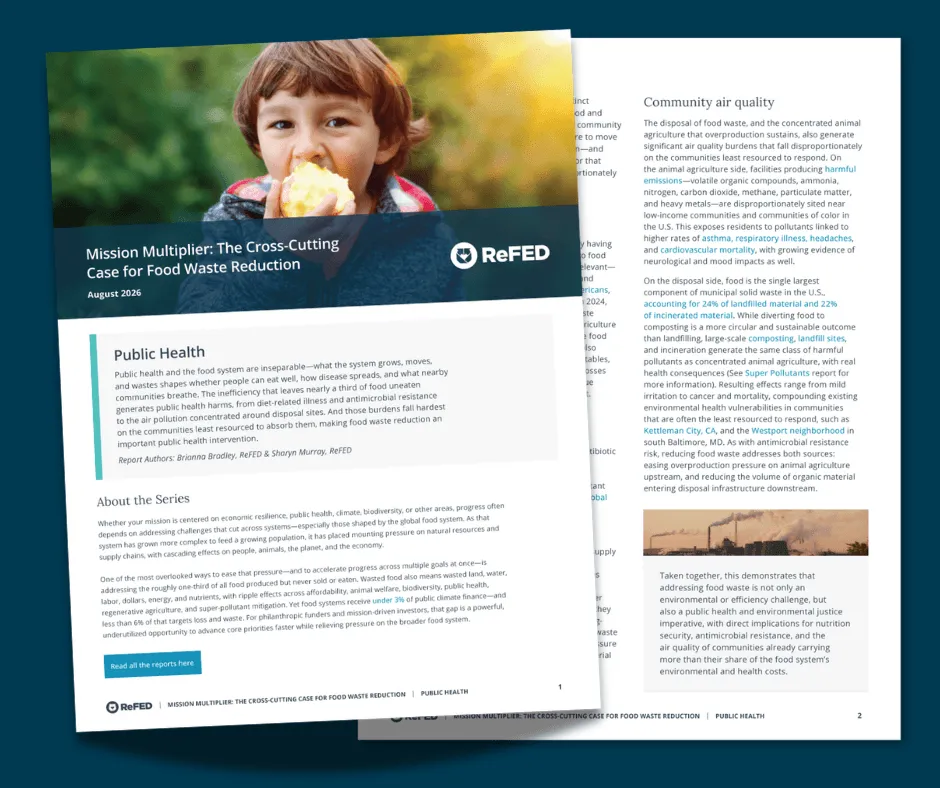
Mission Multiplier: The Cross-Cutting Case for Food Waste Reduction - Public Health
Addressing food waste is not only an environmental or efficiency challenge, but also a public health and environmental justice imperative, with direct implications for nutrition security, antimicrobial resistance, and the air quality of communities already carrying more than their share of the food system's environmental and health costs.
- Reports
 Reports
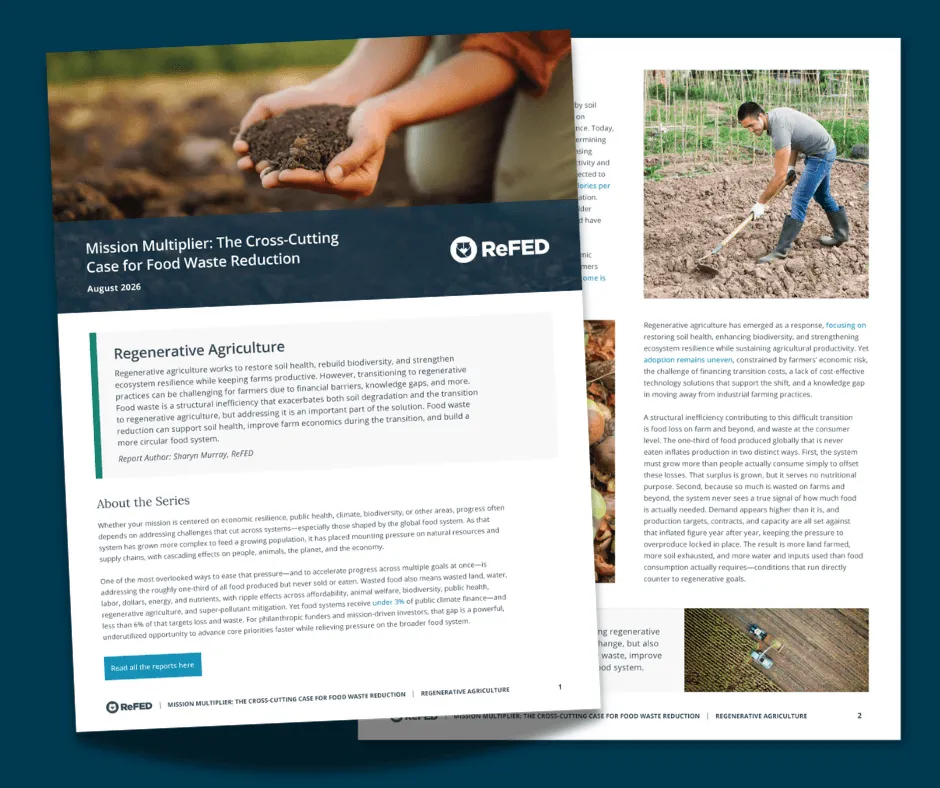
Mission Multiplier: The Cross-Cutting Case for Food Waste Reduction - Regenerative Agriculture
Advancing regenerative agriculture requires not only on-farm practice change, but also system-level interventions that reduce resource waste, improve farmer economics, and create a more circular food system.
- Reports
 Reports
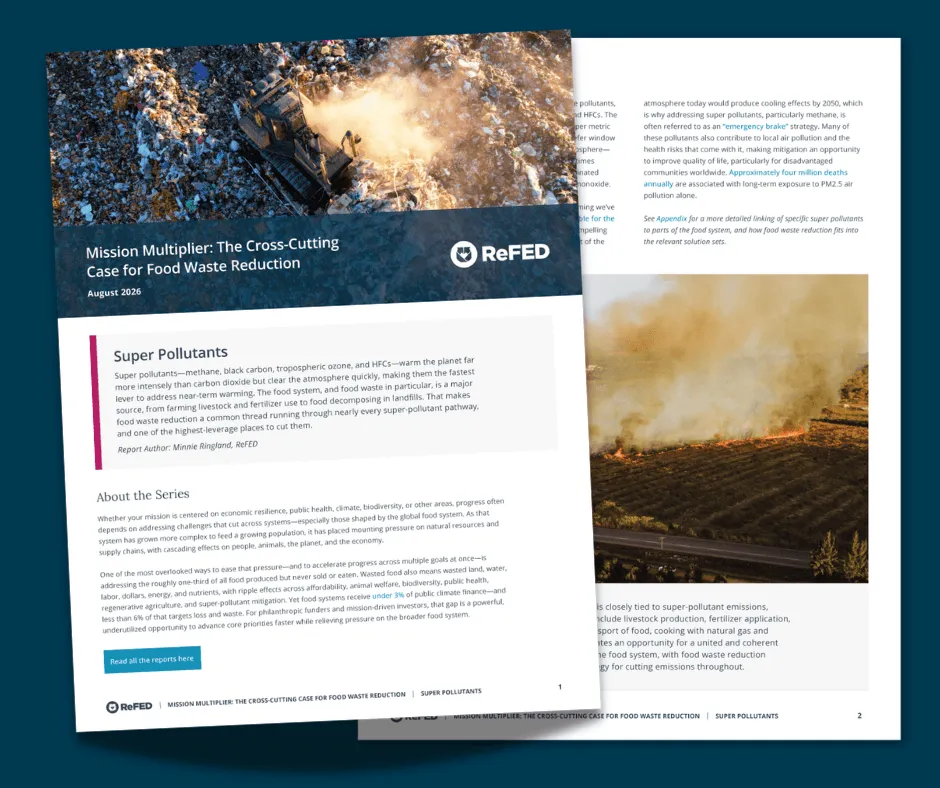
Mission Multiplier: The Cross-Cutting Case for Food Waste Reduction - Super Pollutants
The food system is closely tied to super-pollutant emissions through livestock and fertilizer production, land conversion, and waste management—creating an opportunity for a united and coherent approach to reduce super pollutants, with food waste reduction as a key strategy for cutting emissions throughout.
- Reports
 Reports
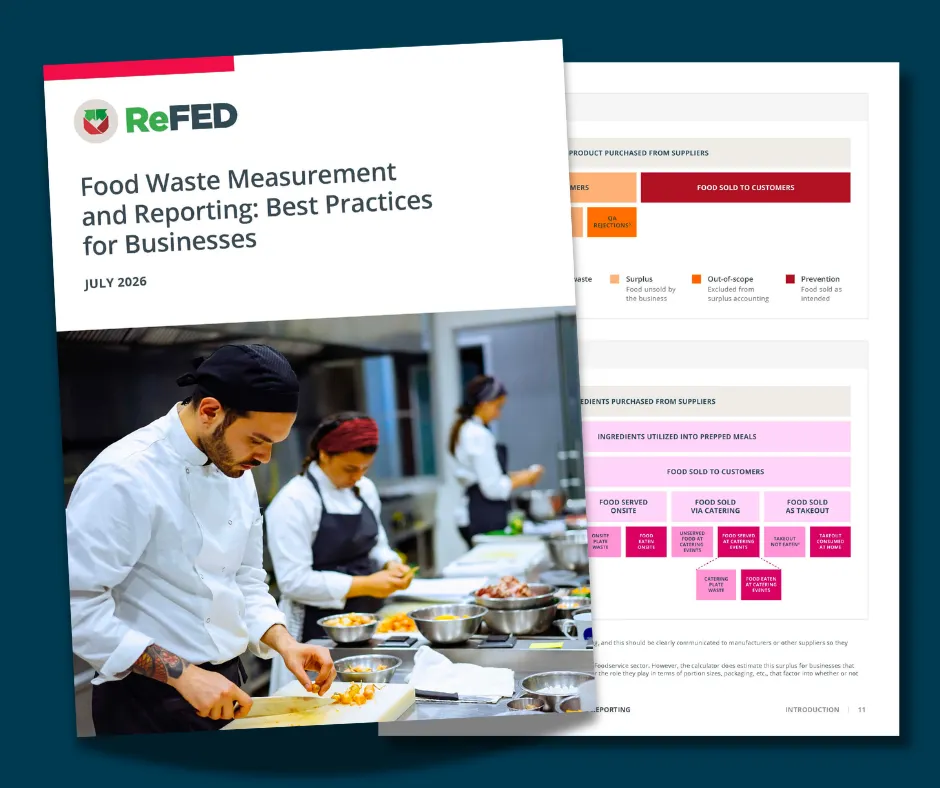
Food Waste Measurement and Reporting: Best Practices for Businesses
This report translates ReFED’s refined data collection and reporting guidance for Pact signatories and clients of ReFED’s Business Services offerings into a “Good, Better, Best” framework that serves three audiences: U.S. Food Waste Pact signatories and Business Services clients, retail and foodservice companies outside of the Pact, and sustainability and ESG teams from food businesses.
- Reports
 Reports
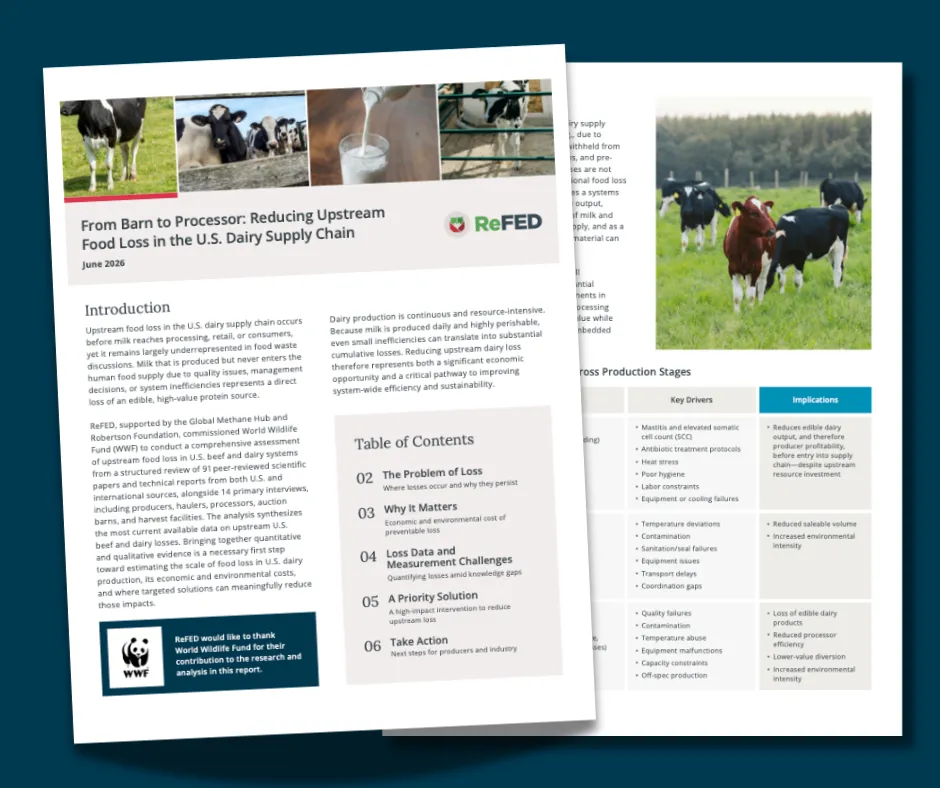
From Barn to Processor: Reducing Upstream Food Loss in the U.S. Dairy Supply Chain
ReFED, supported by the Global Methane Hub and Robertson Foundation, commissioned World Wildlife Fund (WWF) to conduct a comprehensive assessment of upstream food loss in U.S. beef and dairy systems from a structured review of 91 peer-reviewed scientific papers and technical reports from both U.S. and international sources, alongside 14 primary interviews, including producers, haulers, processors, auction barns, and harvest facilities. The analysis synthesizes the most current available data on upstream U.S. beef and dairy losses. Bringing together quantitative and qualitative evidence is a necessary first step toward estimating the scale of food loss in U.S. dairy production, its economic and environmental costs, and where targeted solutions can meaningfully reduce those impacts.
- Reports
 Reports
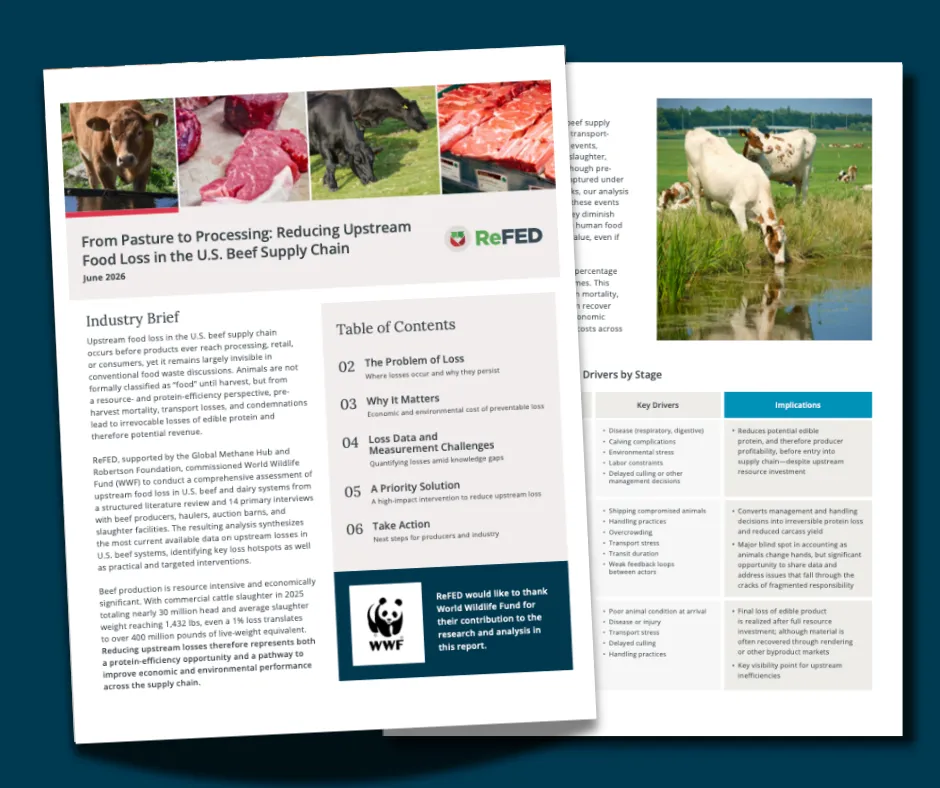
From Pasture to Processing: Reducing Upstream Food Loss in the U.S. Beef Supply Chain
In this report, ReFED, supported by the Global Methane Hub and Robertson Foundation, commissioned World Wildlife Fund (WWF) to conduct a comprehensive assessment of upstream food loss in U.S. beef and dairy systems from a structured literature review and 14 primary interviews with beef producers, haulers, auction barns, and slaughter facilities. The resulting analysis synthesizes the most current available data on upstream losses in U.S. beef systems, identifying key loss hotspots as well as practical and targeted interventions.
- Reports
 Reports
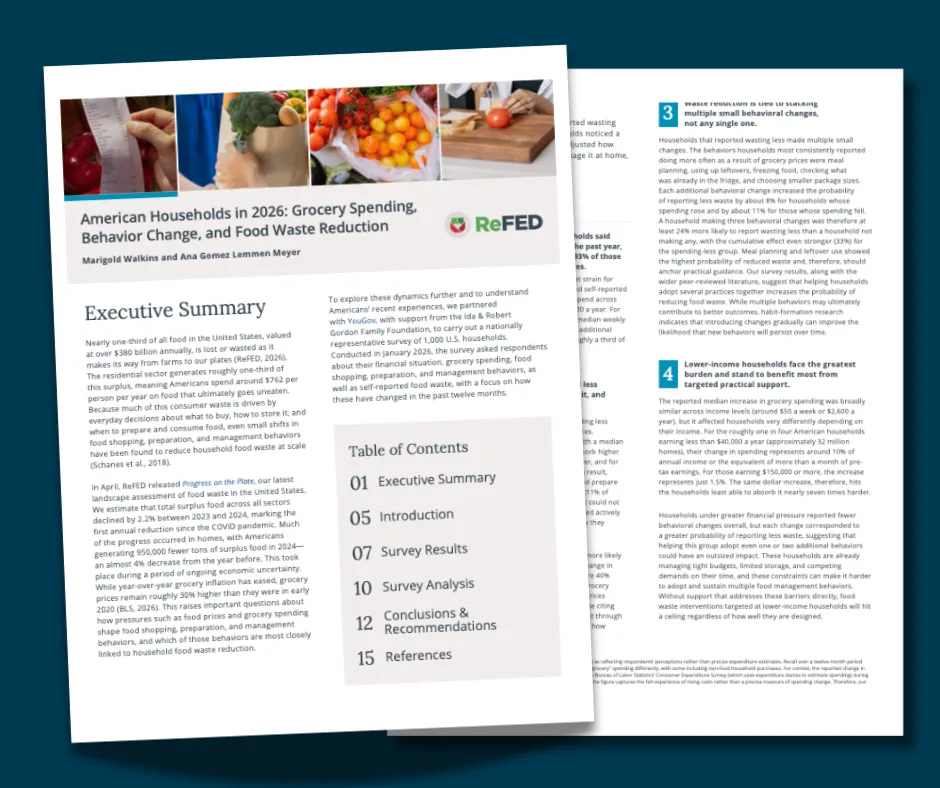
American Households in 2026: Grocery Spending, Behavior Change, and Food Waste Reduction
For this report, ReFED partnered with YouGov, with support from the Ida & Robert Gordon Family Foundation, to carry out a nationally representative survey of 1,000 U.S. households focused on the connections between high food prices and consumer behaviors that reduce food waste. Conducted in January 2026, the survey asked respondents about their financial situation, grocery spending, food shopping, preparation, and management behaviors, as well as self-reported food waste, with a focus on how these have changed in the past twelve months.
- Reports
 Reports
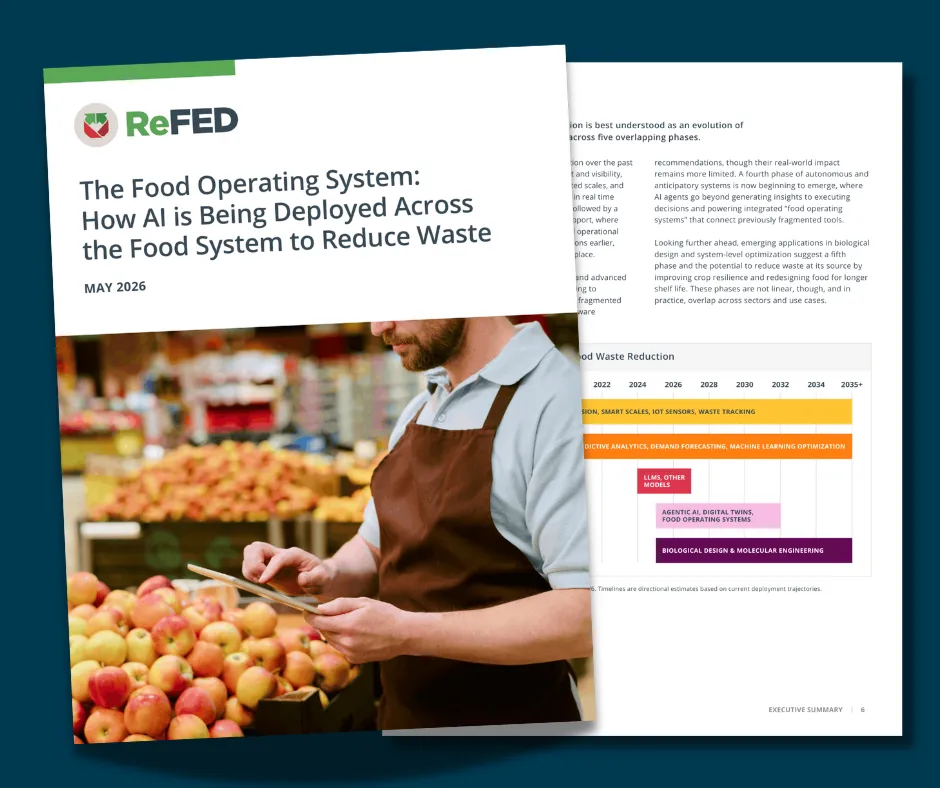
The Food Operating System: How AI is Being Deployed Across the Food System to Reduce Waste
Drawing on more than 40 interviews with industry leaders, technology developers, operators, and solution providers, as well as peer-reviewed academic research, case studies, and pilot program data, this report examines how AI is currently being applied to food waste reduction, where it is delivering measurable results, and where its impact remains constrained.
- Fact Sheets
 Fact Sheets
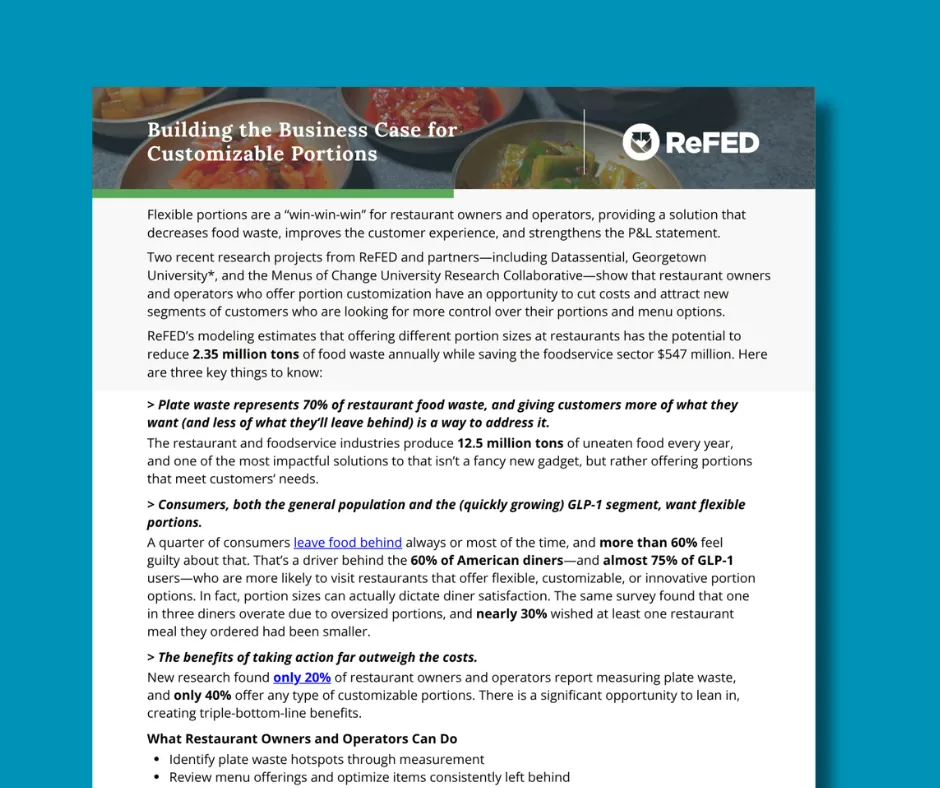
Building the Business Case for Customizable Portions
Two recent research projects from ReFED and partners show that restaurant owners and operators who offer portion customization have an opportunity to cut costs and attract new segments of customers who are looking for more control over their portions and menu options. This one-pager highlights key takeaways from this research, including that ReFED’s modeling estimates offering different portion sizes at restaurants has the potential to reduce 2.35 million tons of food waste annually while saving the foodservice sector $547 million.
- Fact Sheets
 Fact Sheets
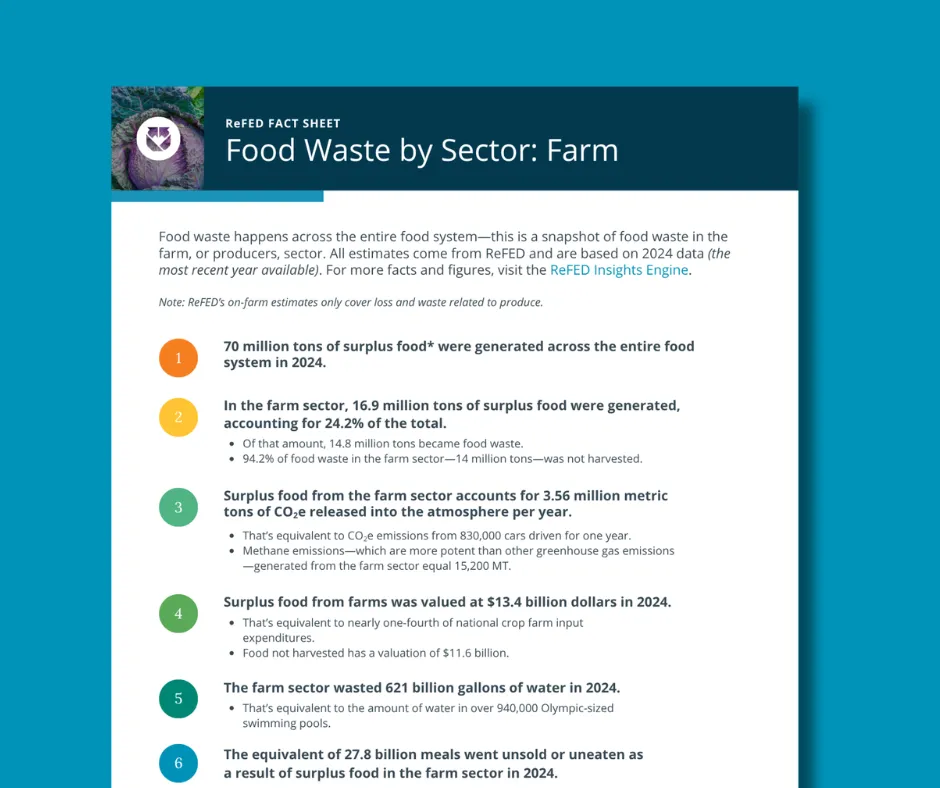
Food Waste by Sector: Farm
Food waste happens across the entire food system—this is a snapshot of food waste in the farm, or producers, sector. All estimates come from ReFED and are based on 2024 data (the most recent year available). Note: ReFED's on-farm estimates only cover loss and waste related to produce.
- Fact Sheets
 Fact Sheets
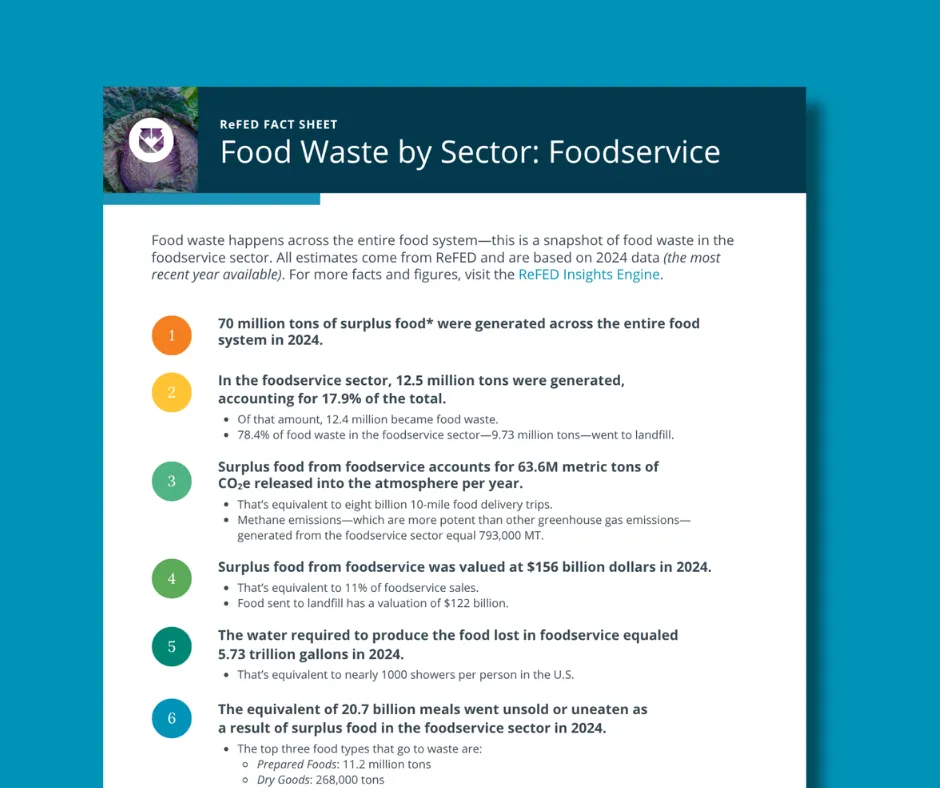
Food Waste by Sector: Foodservice
Food waste happens across the entire food system—this is a snapshot of food waste in the foodservice sector. All estimates come from ReFED and are based on 2024 data (the most recent year available).
- Fact Sheets
 Fact Sheets
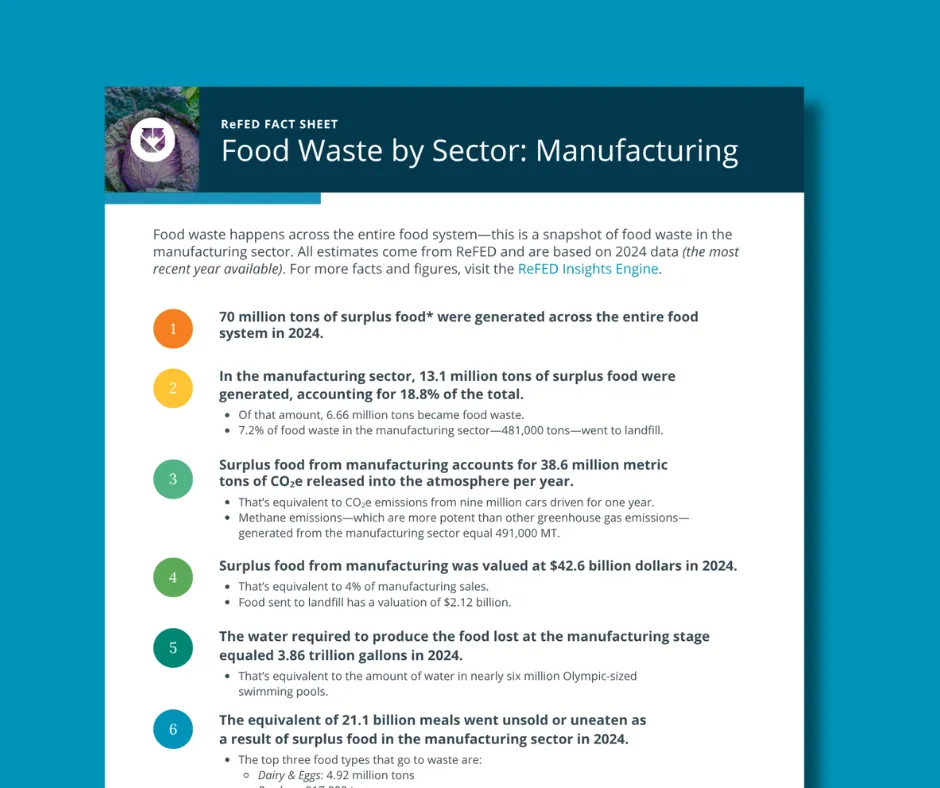
Food Waste by Sector: Manufacturing
Food waste happens across the entire food system—this is a snapshot of food waste in the manufacturing sector. All estimates come from ReFED and are based on 2024 data (the most recent year available).
- Fact Sheets
 Fact Sheets
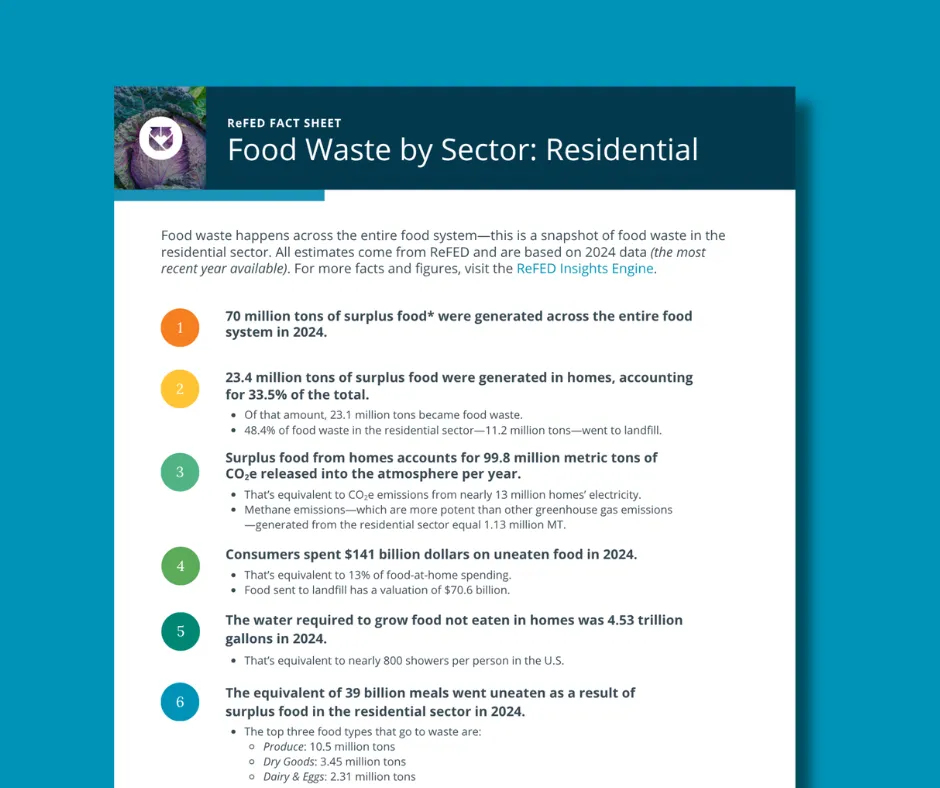
Food Waste by Sector: Residential
Food waste happens across the entire food system—this is a snapshot of food waste in the residential sector. All estimates come from ReFED and are based on 2024 data (the most recent year available).
- Fact Sheets
 Fact Sheets
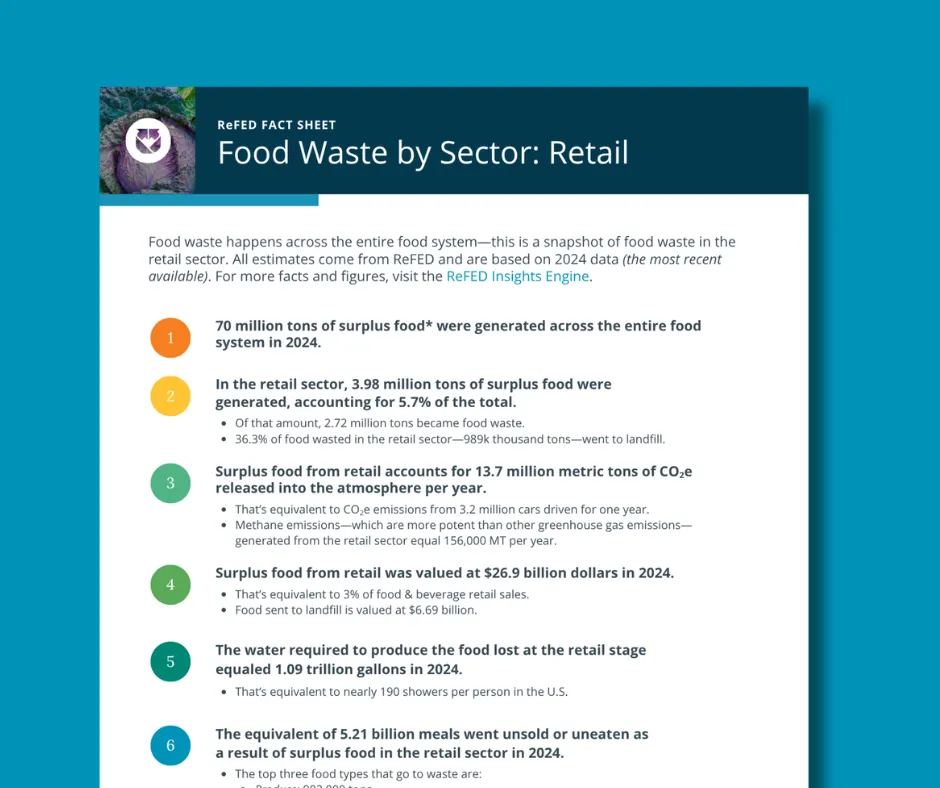
Food Waste by Sector: Retail
Food waste happens across the entire food system—this is a snapshot of food waste in the retail sector. All estimates come from ReFED and are based on 2024 data (the most recent year available).
- Fact Sheets
 Fact Sheets
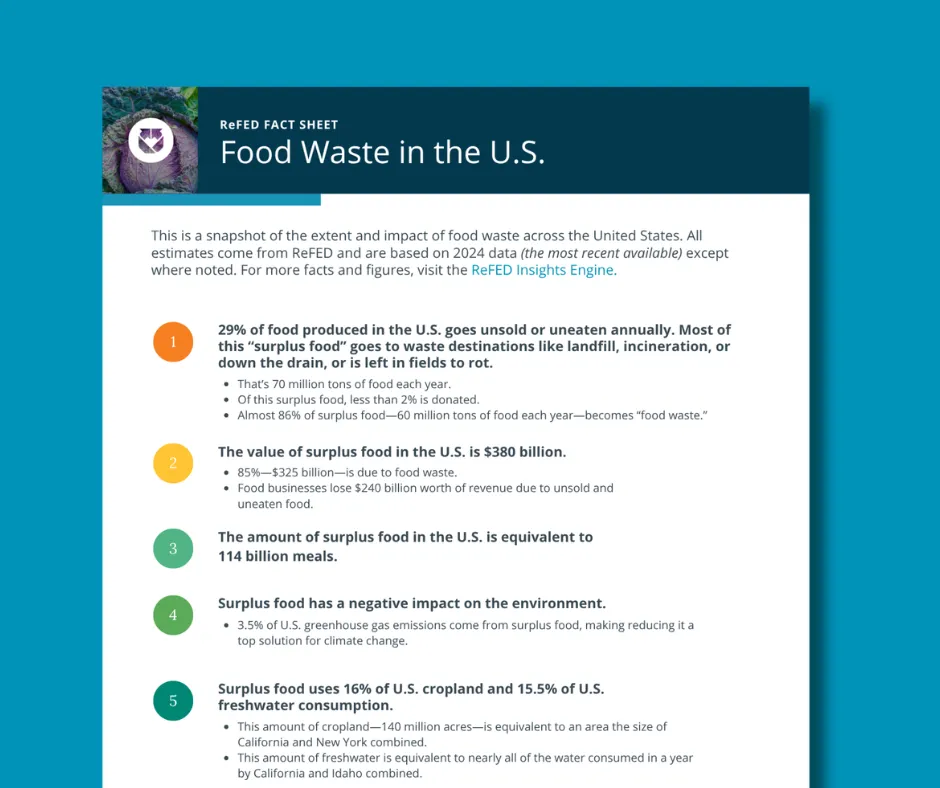
Food Waste in the United States
This is a snapshot of the extent and impact of food waste across the United States. All estimates come from ReFED and are based on 2024 data (the most recent available) except where noted.
- Reports
 Reports
2025 Annual Impact Report
- Reports
 Reports
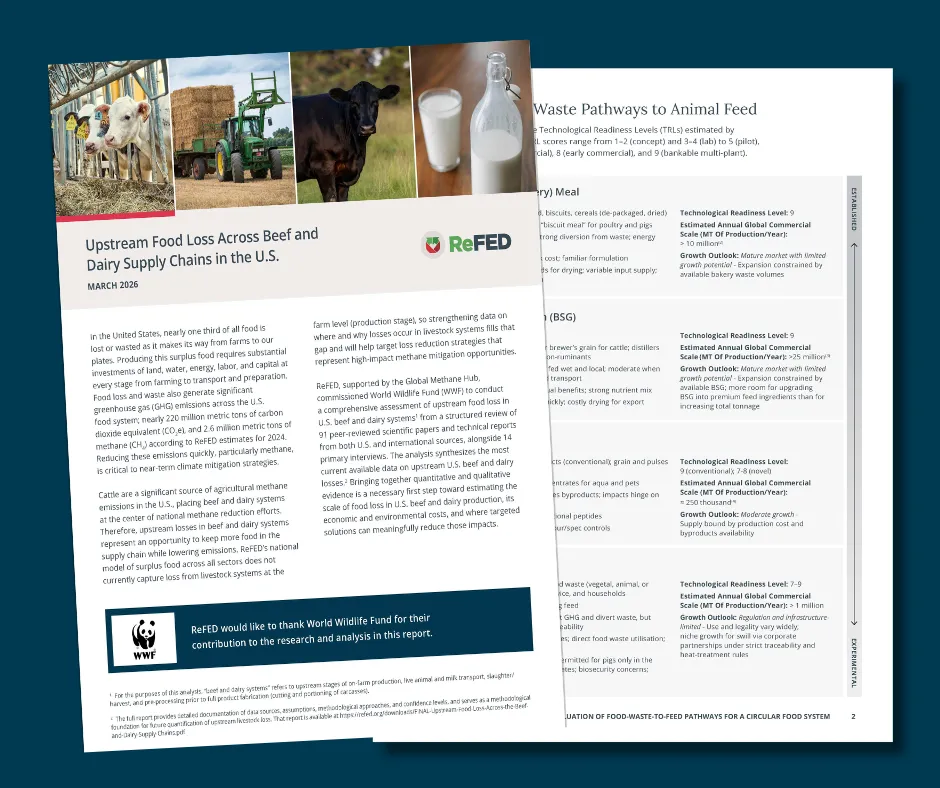
Executive Summary: Upstream Food Loss Across Beef and Dairy Supply Chains in the U.S.
This is the executive summary for ReFED's "Upstream Food Loss Across the Beef and Dairy Supply Chains" report. For this report, ReFED, supported by the Global Methane Hub, commissioned World Wildlife Fund (WWF) to conduct a comprehensive assessment of upstream food loss in U.S. beef and dairy systems from a structured review of 91 peer-reviewed scientific papers and technical reports from both U.S. and international sources, alongside 14 primary interviews.
- Reports
 Reports
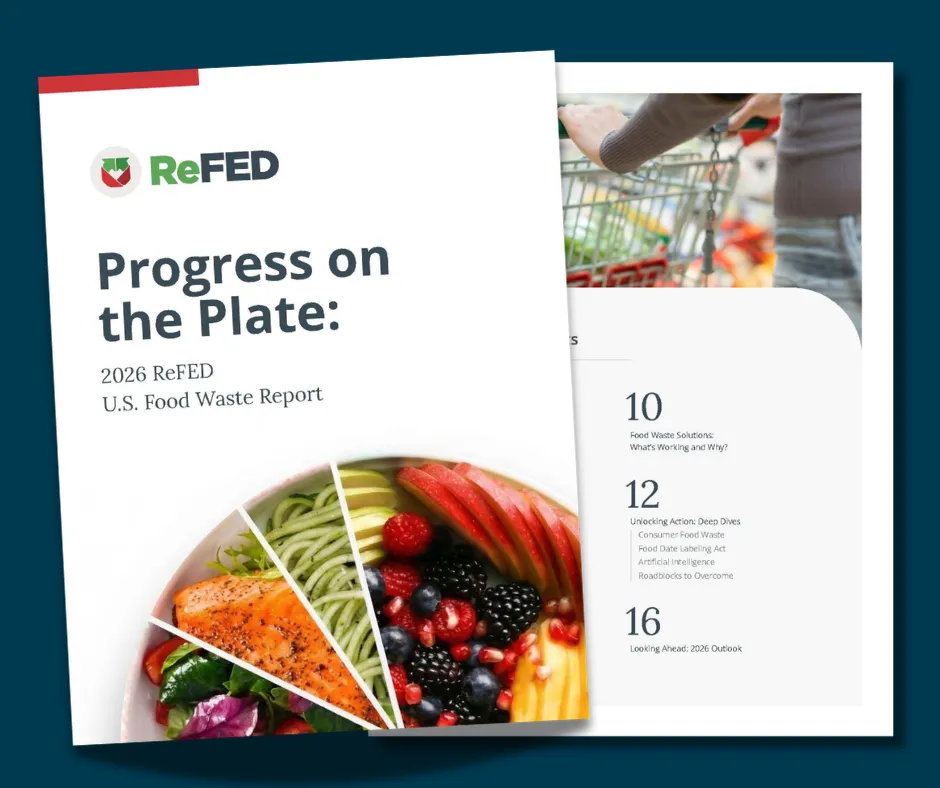
Progress on the Plate: 2026 ReFED U.S. Food Waste Report
As affordability and food prices remain top of mind for Americans, a harsh reality remains true: in the United States, nearly one third of all food is lost or wasted as it makes its way from farm to fork. But as you’ll see throughout this report, progress on food waste is not only possible—it’s happening. Pulling together ReFED data analysis and modeling with external research and supported by narratives developed through our work with partners across the food waste ecosystem, this report is intended to help the food system understand food waste and what can be done to solve it.
- Reports
 Reports
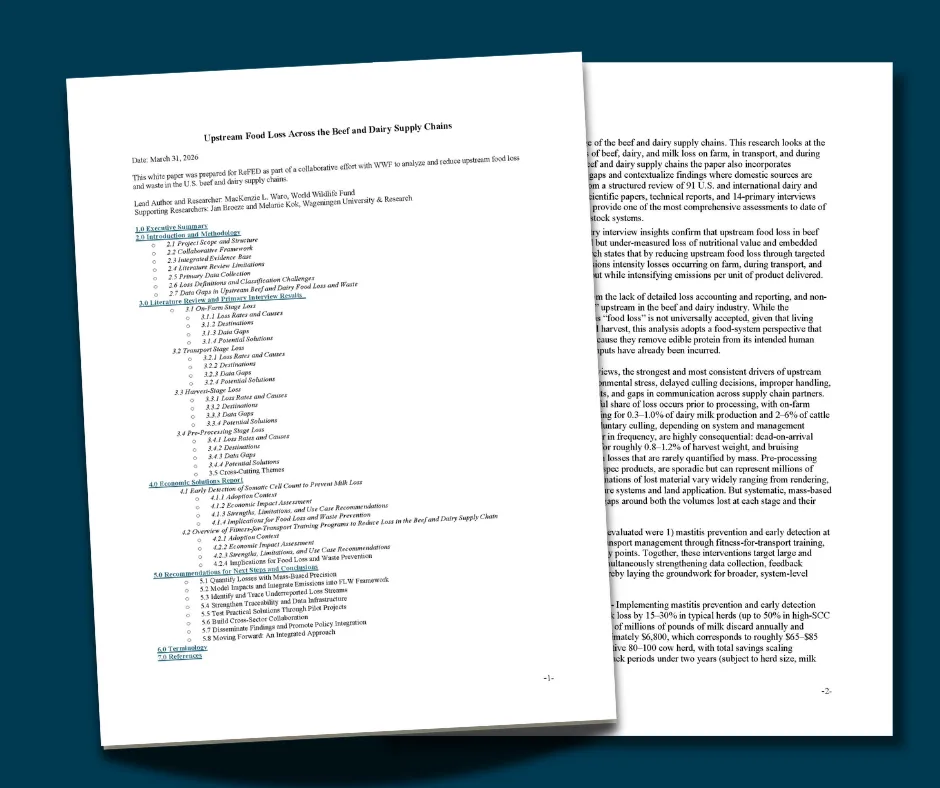
Upstream Food Loss Across the Beef and Dairy Supply Chains
In this report, ReFED, supported by the Global Methane Hub, commissioned World Wildlife Fund (WWF) to conduct a comprehensive assessment of upstream food loss in U.S. beef and dairy systems from a structured review of 91 peer-reviewed scientific papers and technical reports from both U.S. and international sources, alongside 14 primary interviews. The analysis synthesizes the most current available data on upstream U.S. beef and dairy losses, and serves as a necessary first step toward estimating the scale of food loss in U.S. beef and dairy production, its economic and environmental costs, and where targeted solutions can meaningfully reduce those impacts
- Reports
 Reports
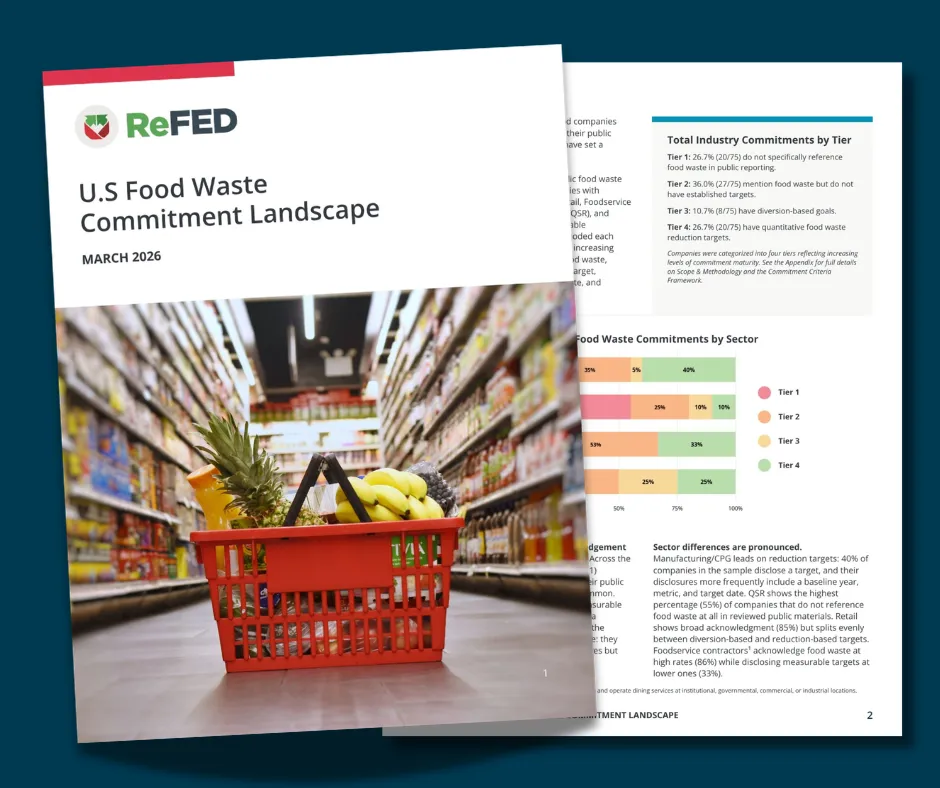
U.S Food Waste Commitment Landscape
This report examines public food waste commitments across 75 parent companies with significant U.S. operations, spanning Retail, Foodservice Contractors, Quick-Service Restaurants (QSR), and Manufacturing/CPG. Using publicly available disclosures as of February 2026, ReFED coded each company into one of four tiers reflecting increasing commitment maturity: no mention of food waste, acknowledgment without a measurable target, diversion-based goals including food waste, and quantitative reduction targets.
- Reports
 Reports
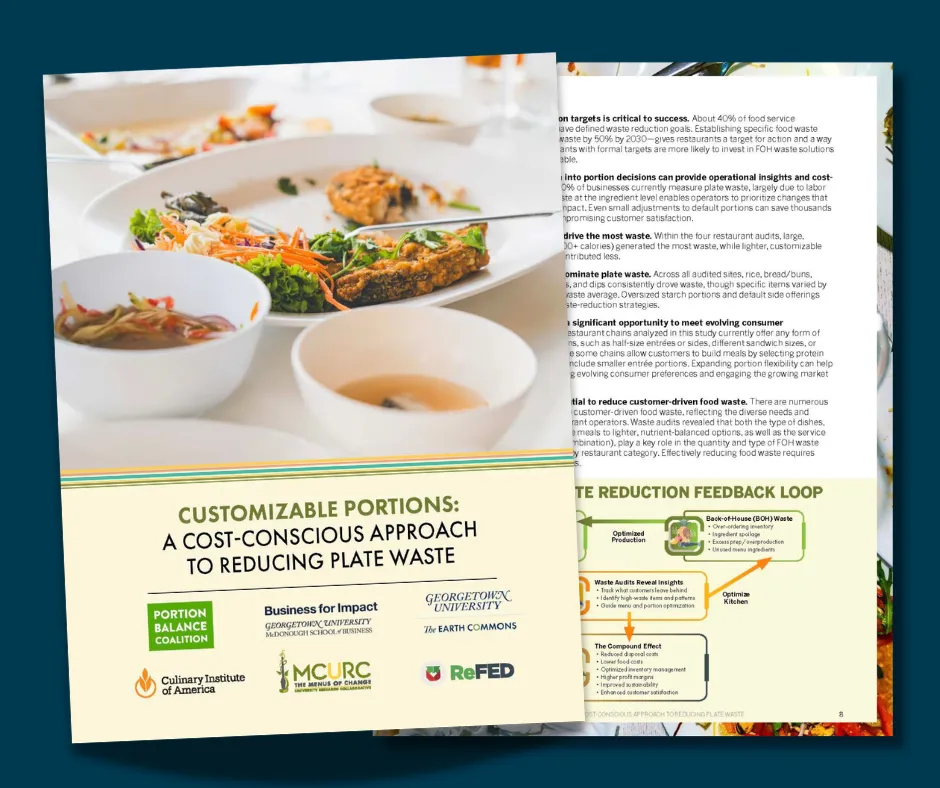
Customizable Portions: A Cost-Conscious Approach To Reducing Plate Waste
Food waste is a significant and costly challenge for the U.S. foodservice industry, driven largely by front-of-house plate waste—food sold but not consumed—despite many reduction efforts targeting back-of-house and supply chain optimization. Portion customization presents a key solution, offering untapped potential to enhance profitability, support sustainability goals, and improve customer satisfaction.
- Fact Sheets
 Fact Sheets
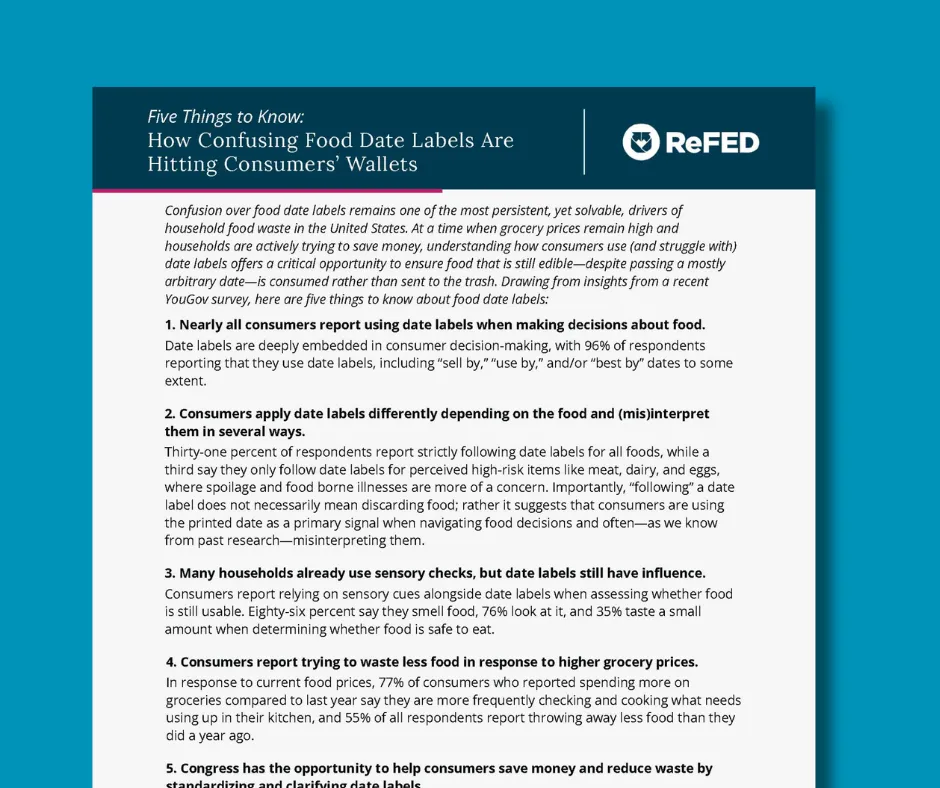
Five Things to Know: How Confusing Food Date Labels Are Hitting Consumers' Wallets
Confusion over food date labels remains one of the most persistent, yet solvable, drivers of household food waste in the United States. At a time when grocery prices remain high and households are actively trying to save money, understanding how consumers use (and struggle with) date labels offers a critical opportunity to ensure food that is still edible—despite passing a mostly arbitrary date—is consumed rather than sent to the trash. Drawing from insights from a recent YouGov survey, here are five things to know about food date labels.
- Reports
 Reports
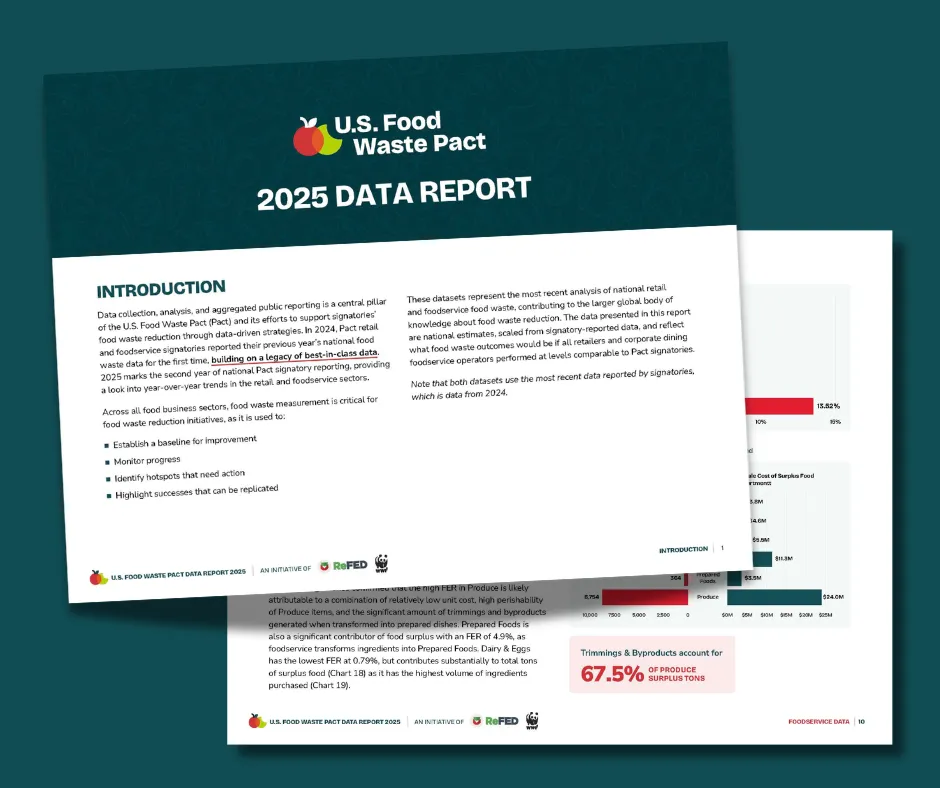
U.S. Food Waste Pact 2025 Data Report
The U.S. Food Waste Pact's annual data report details food waste reduction progress in the retail and foodservice sectors. Unsold food rates, food efficiency rates, destination rates, and food waste causes (in foodservice) are a few of the key metrics explored in this report, and a robust methodology section explains how these best-in-class datasets are calculated and maintained. This report, though published alongside the Pact's 2025 Impact Report, summarizes 2024 data, as that is the year of data most recently available from reporting signatories.
- Reports
 Reports
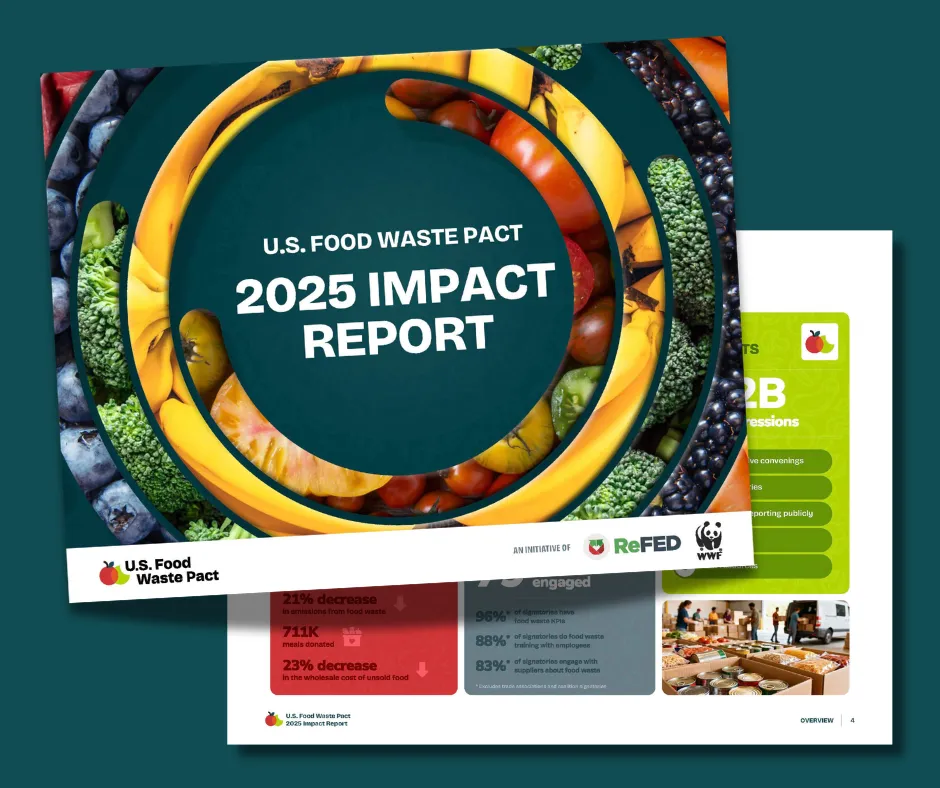
U.S. Food Waste Pact 2025 Impact Report
The U.S. Food Waste Pact’s annual impact report details the work that the Pact and its signatories undertook in 2025. It includes overviews of food waste reduction progress in retail and foodservice, pilot summaries, and more.
- Reports
 Reports
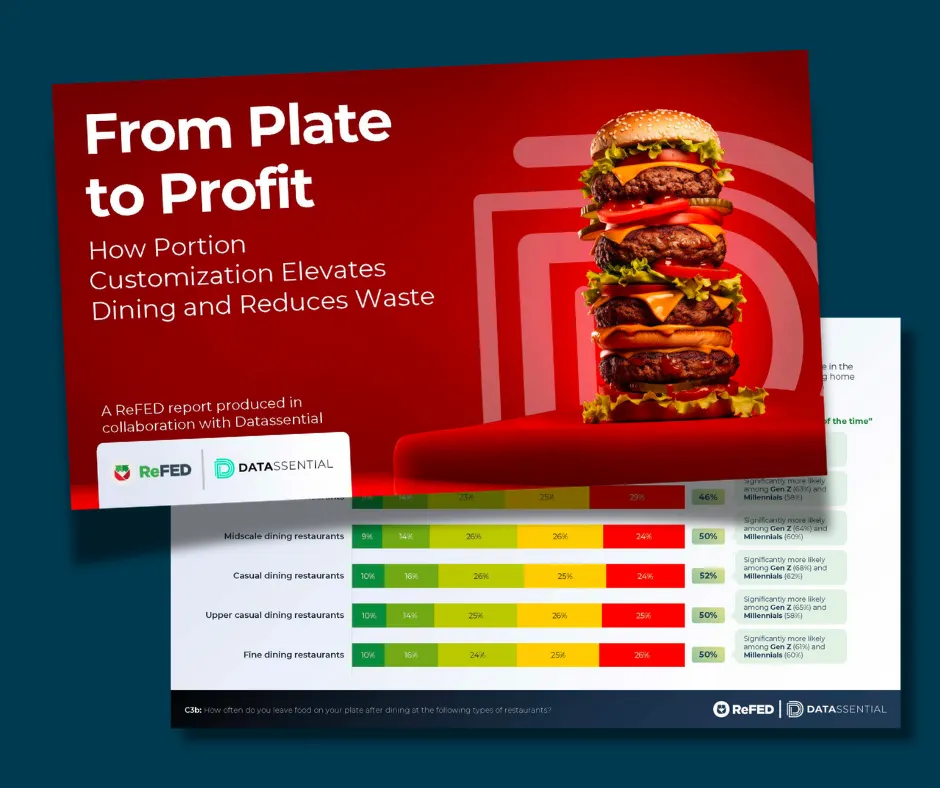
From Plate to Profit: How Portion Customization Elevates Dining and Reduces Waste
This study from ReFED and Datassential examines the evolving role of portion customization in restaurant experiences and expectations. We explore how well restaurant portions align with diners' actual wants in a single sitting, the strategies eaters use to manage oversized meals, potential interest in flexible and customizable options, and the complex relationship between portions and perceived value.
- Reports
 Reports
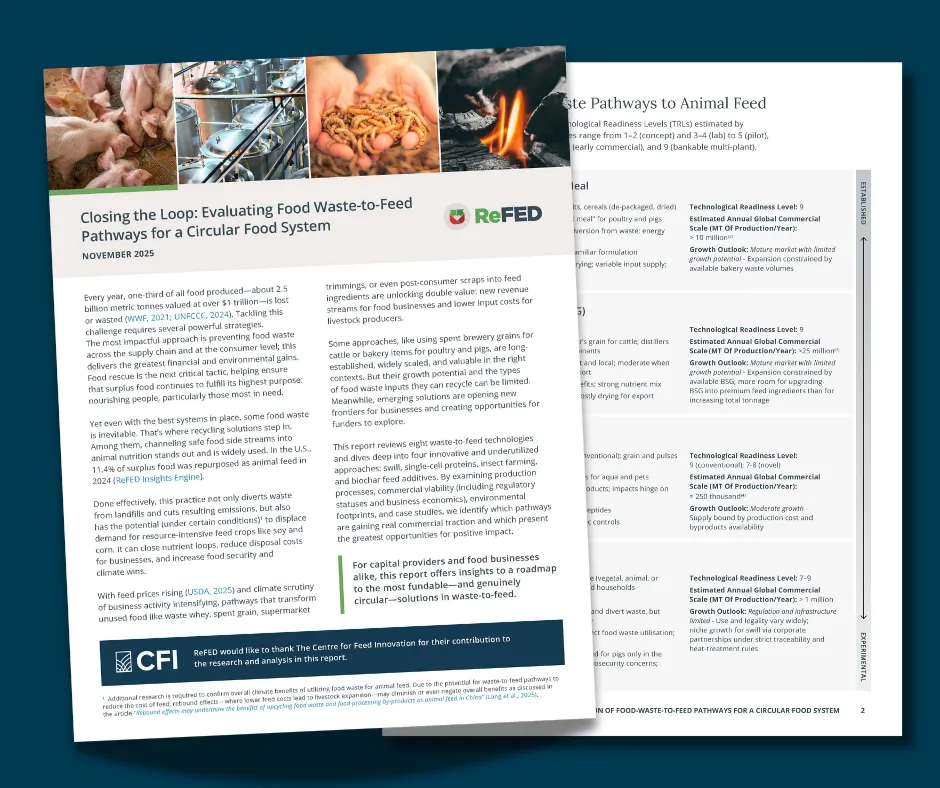
Closing the Loop: Evaluating Food Waste-to-Feed Pathways for a Circular Food System
In this report, eight waste-to-feed technologies are reviewed and four innovative and underutilized approaches are discussed.
- Reports
 Reports
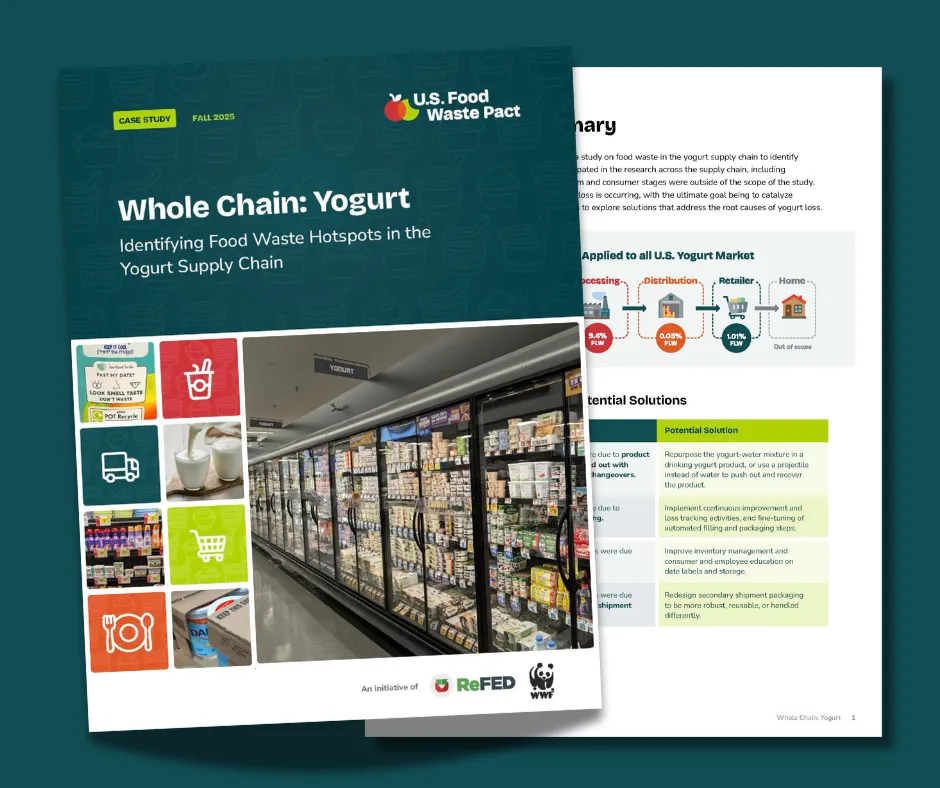
Whole Chain: Yogurt
The U.S. Food Waste Pact commissioned a study on food waste in the yogurt supply chain to identify waste hotspots. Several companies participated in the research across the supply chain, including processing, distribution, and retail. This initial study explored where and why waste is occurring, with the ultimate goal being to catalyze collaboration among supply chain partners to explore solutions that address the root causes of yogurt waste.
- Case Studies
 Case Studies
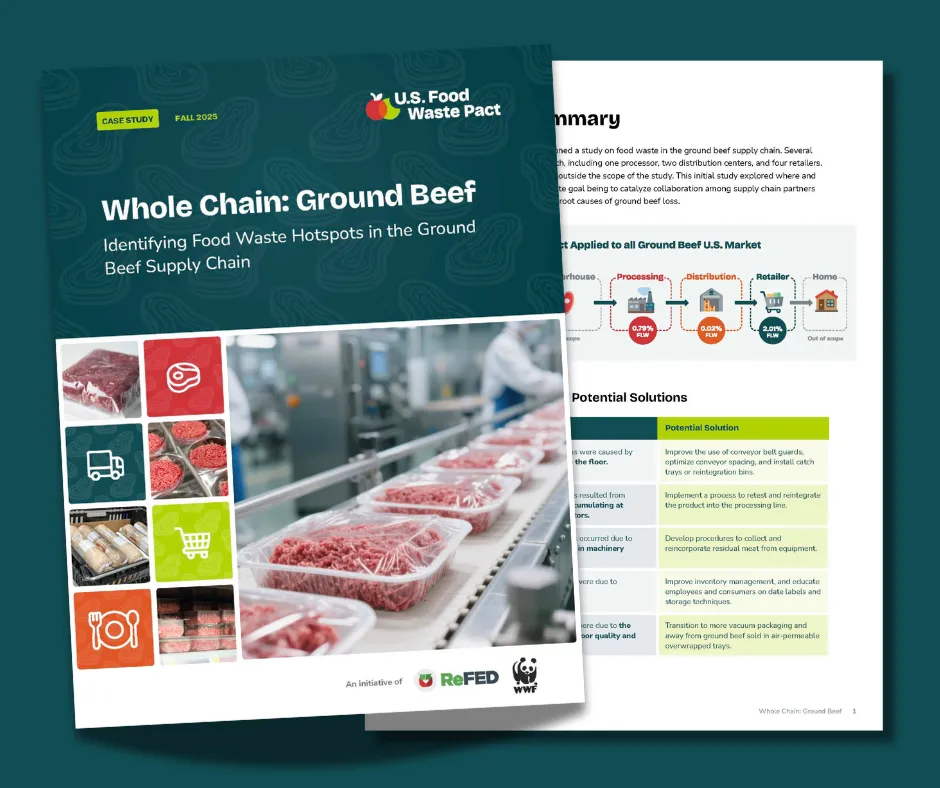
Whole Chain: Ground Beef
The U.S. Food Waste Pact commissioned a study on food waste in the ground beef supply chain. Several companies participated in the research, including one processor, two distribution centers, and four retailers. This initial study explored where and why waste is occurring, with the ultimate goal being to catalyze collaboration among supply chain partners to explore solutions that address the root causes of ground beef waste.
- Reports
 Reports
2024 Audit Report
- Explainers
 Explainers
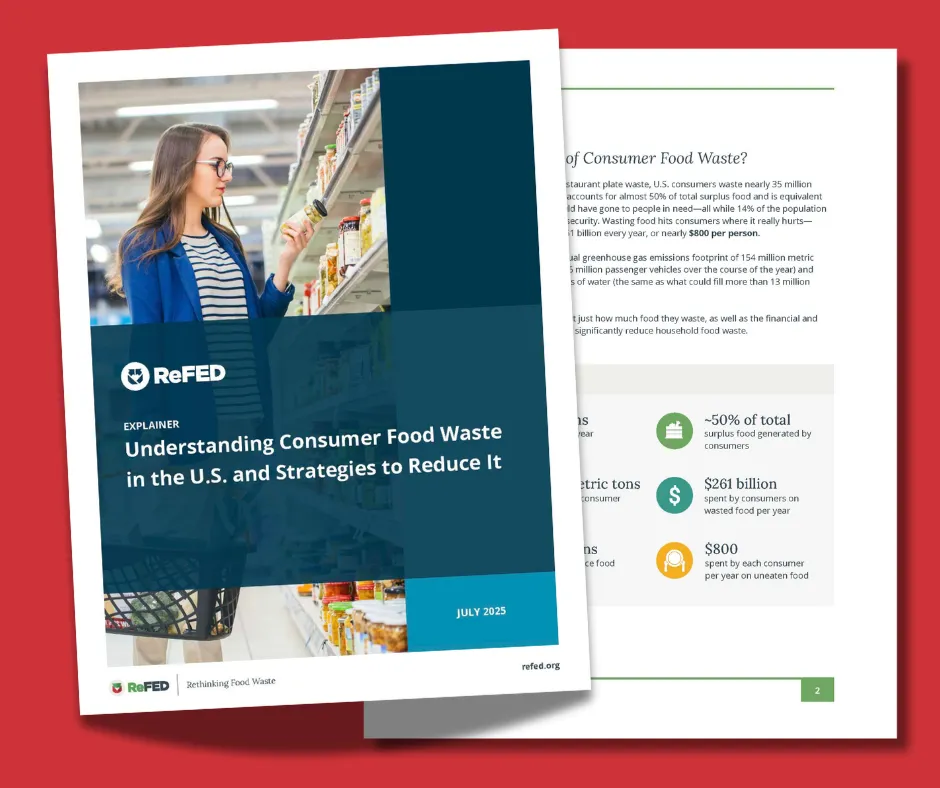
Understanding Consumer Food Waste in the U.S. and Strategies to Reduce It
In the United States, consumers are the largest generators of food waste. Combining uneaten groceries and restaurant plate waste, consumer food waste accounts for nearly 50% of surplus food at a cost of $261 billion. The consequences of this waste on our climate and our wallets are enormous. And while organizations and governments can help mitigate this by reshaping consumer environments to make it easier, more convenient, and more affordable to not waste food, much of this waste comes down to problematic—yet very common—consumer behaviors.
- Reports
 Reports
2024 Annual Impact Report
- Reports
 Reports
Beyond the Plate: Turning Food Waste from a Cost to an Opportunity
- Reports
 Reports
Creating a Sustainable Future Through Food Waste Reduction
- Reports
 Reports
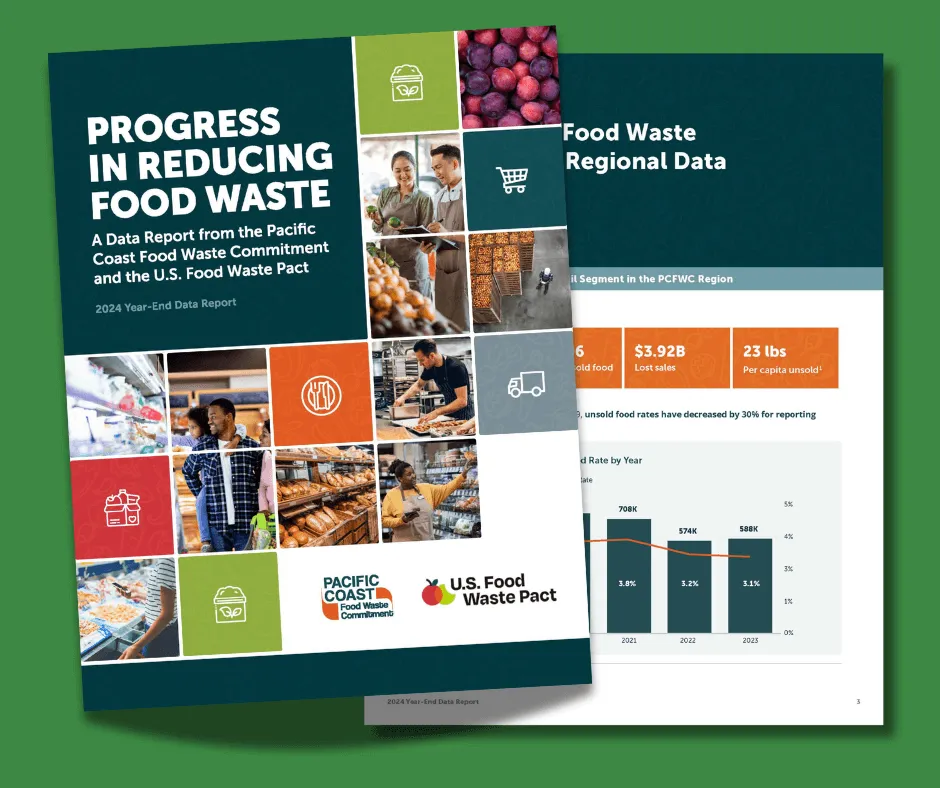
Progress In Reducing Food Waste
- Reports
 Reports
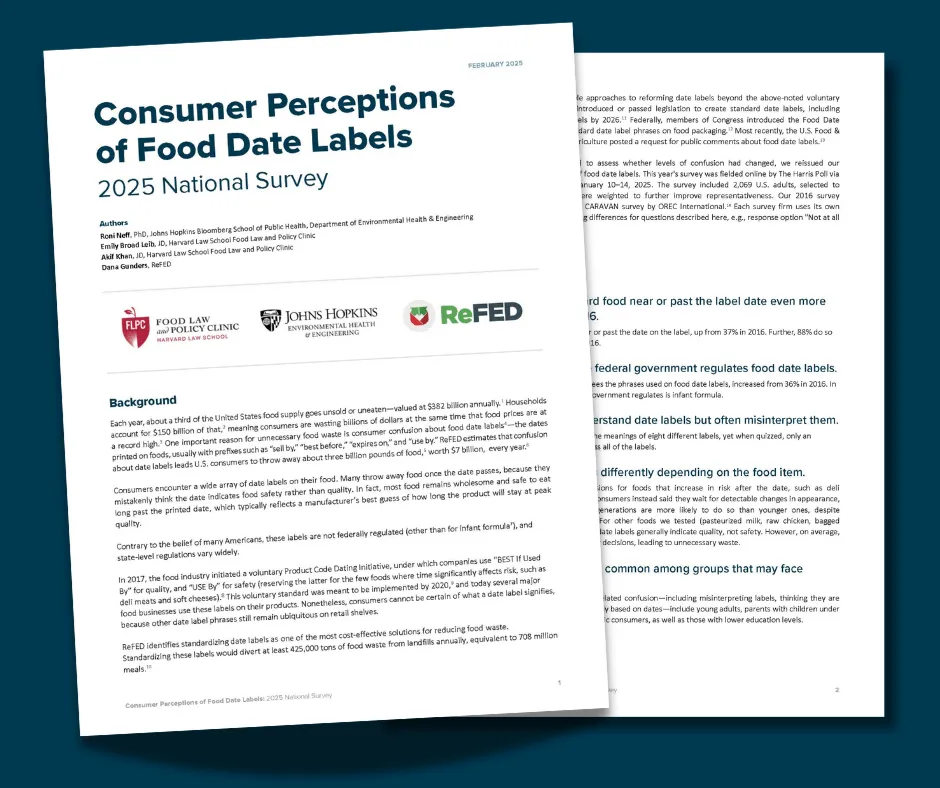
Consumer Perceptions of Food Date Labels 2025 National Survey Policy Brief
In response to the growing momentum around standardizing date labels, and to assess whether levels of confusion had changed, the Harvard Law School Food Law and Policy Clinic, the Johns Hopkins Department of Environmental Health & Engineering, and ReFED reissued a 2016 survey about U.S. consumer perceptions of food date labels. The results of this survey are reported in this document.
- Reports
 Reports
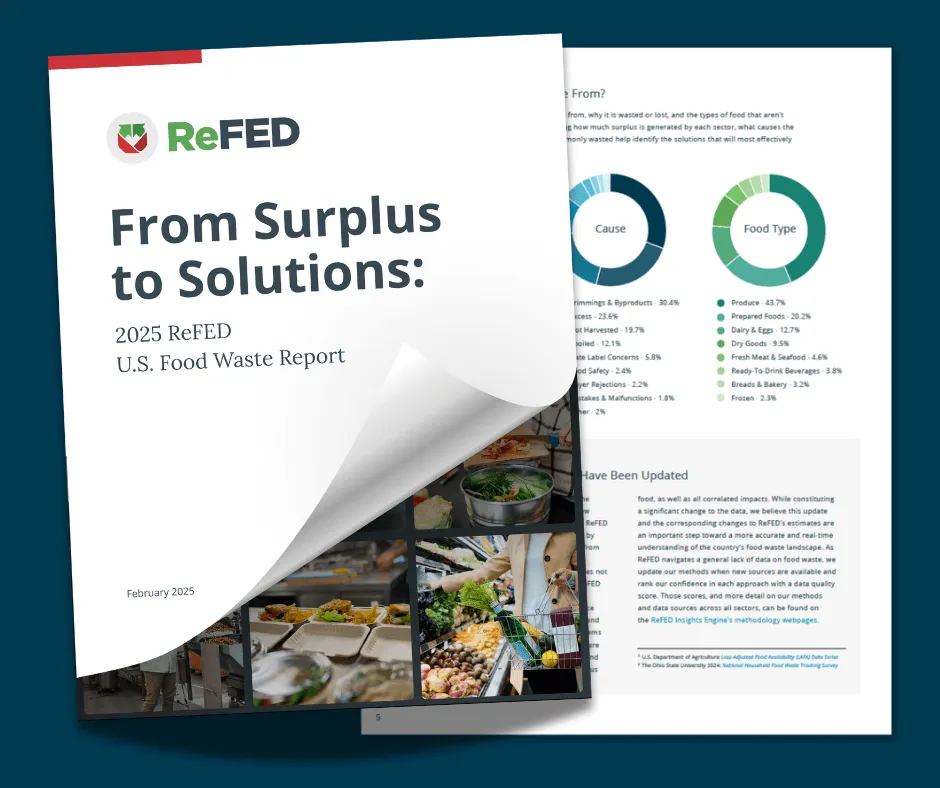
2025 ReFED U.S. Food Waste Report
Across the food system, nearly one third of all food is lost or wasted as it makes its way from farms to our plates. This report represents a landscape assessment, pulling together ReFED data analysis and modeling with external research, supported by qualitative narratives developed through our work with partners across the food waste ecosystem.
- Fact Sheets
 Fact Sheets
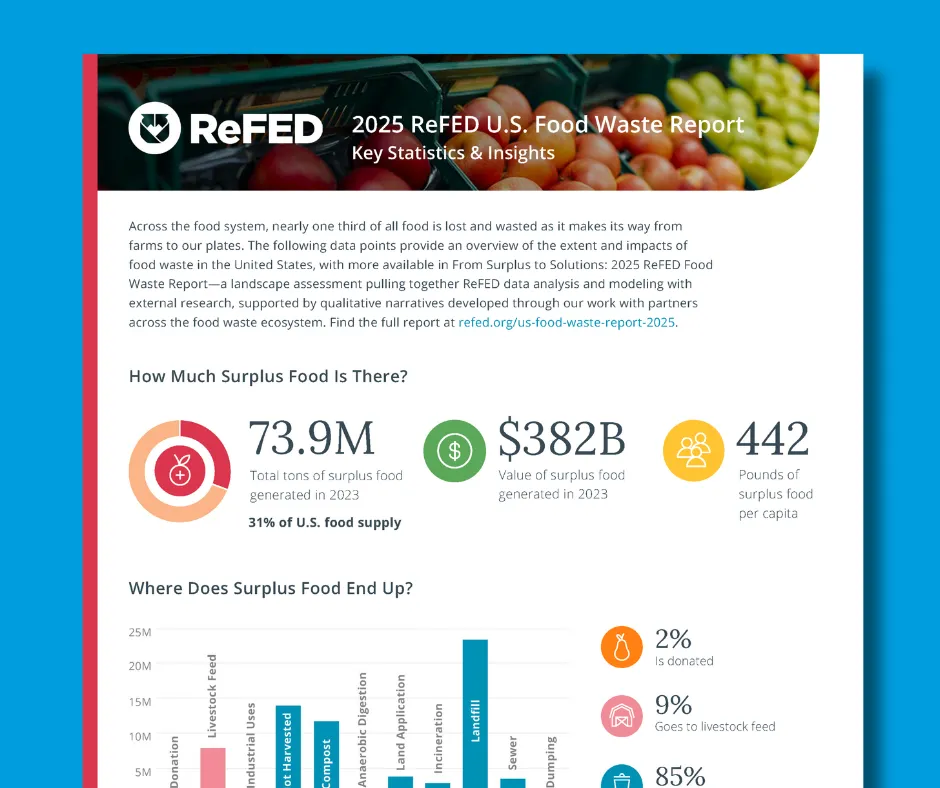
2025 ReFED U.S. Food Waste Report: Key Statistics & Insights
- Charts & Infographics
 Charts & Infographics
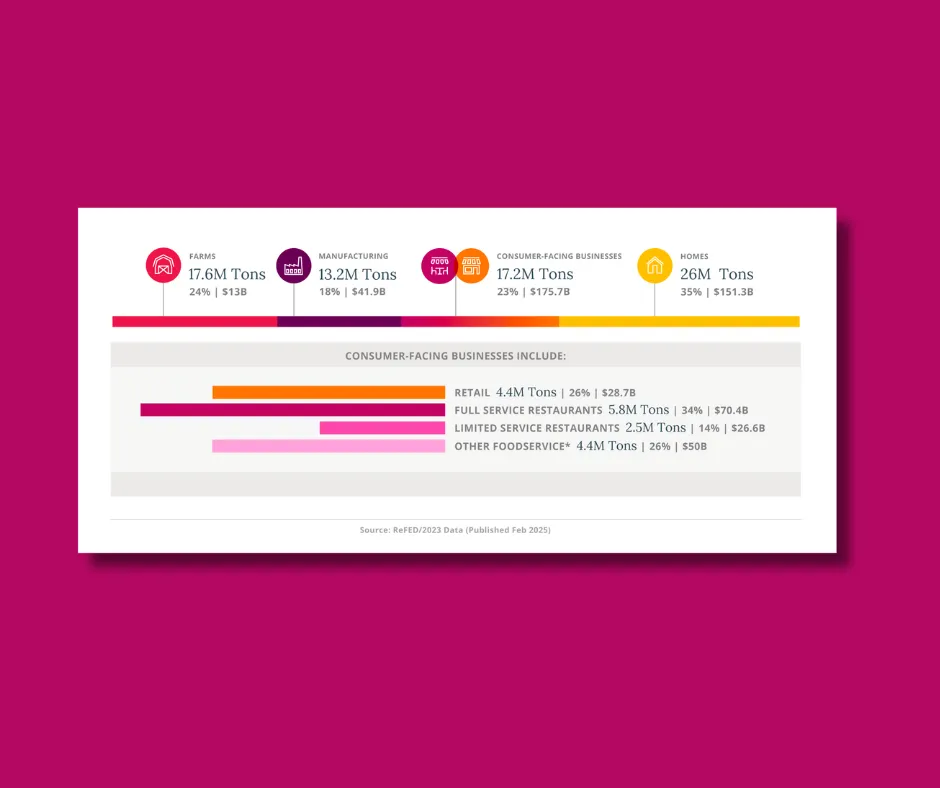
Food Waste Tons by Sector
- Charts & Infographics
 Charts & Infographics
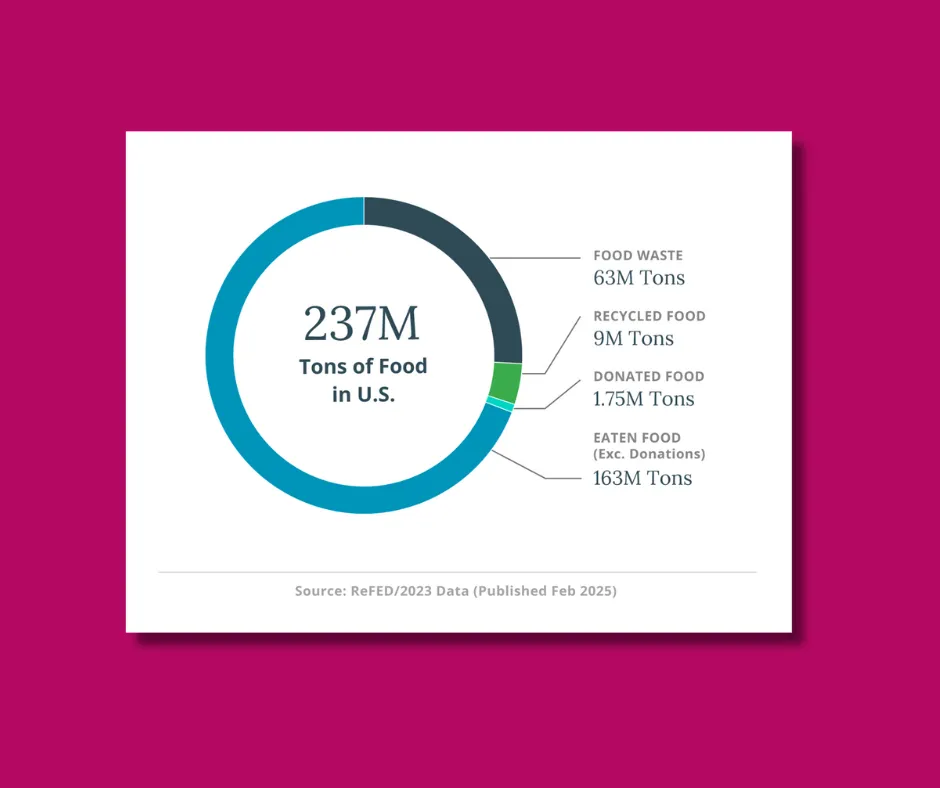
Surplus Food by Destination Pathway
- Charts & Infographics
 Charts & Infographics
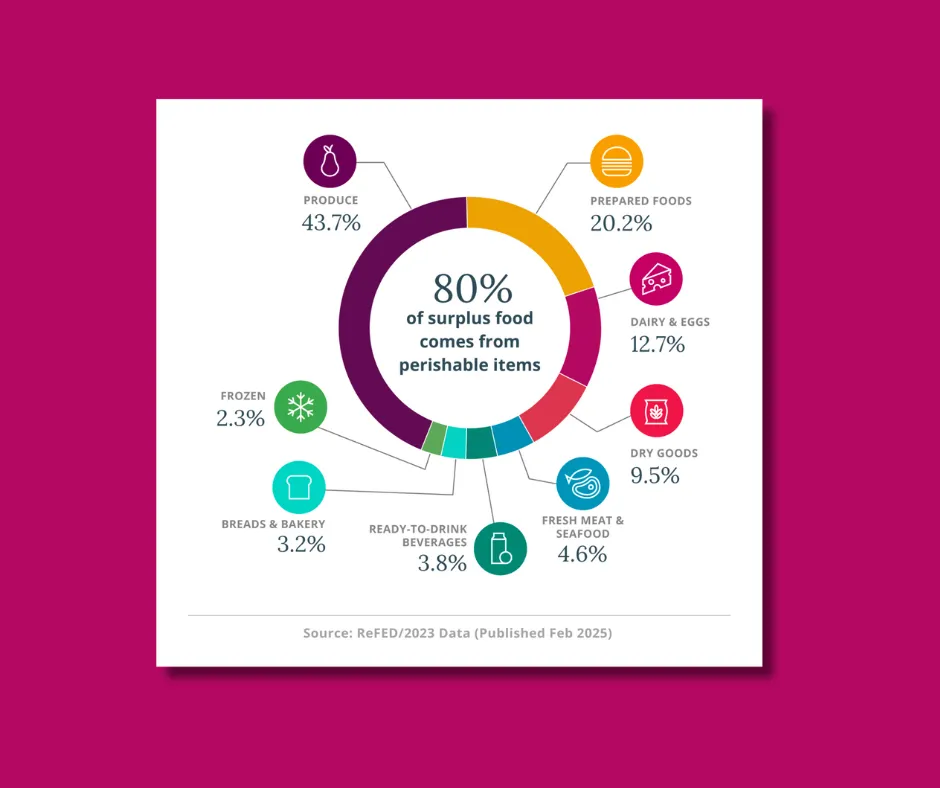
Surplus Food by Perishable Items
- Charts & Infographics
 Charts & Infographics
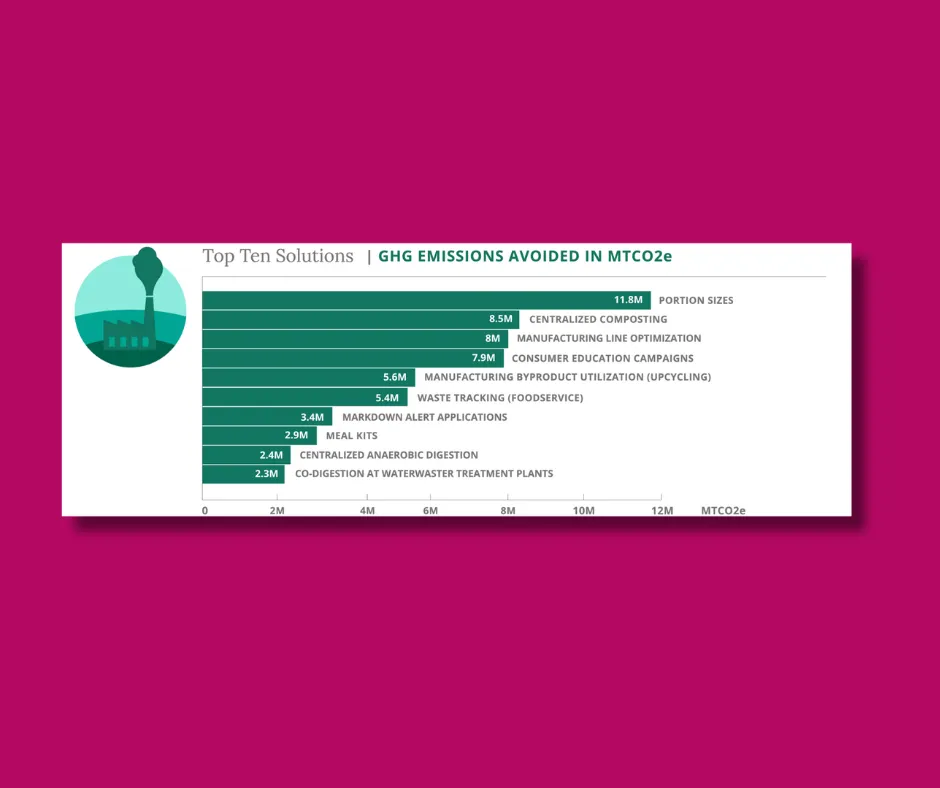
Top Ten Solutions for Reducing GHG Emissions
- Charts & Infographics
 Charts & Infographics
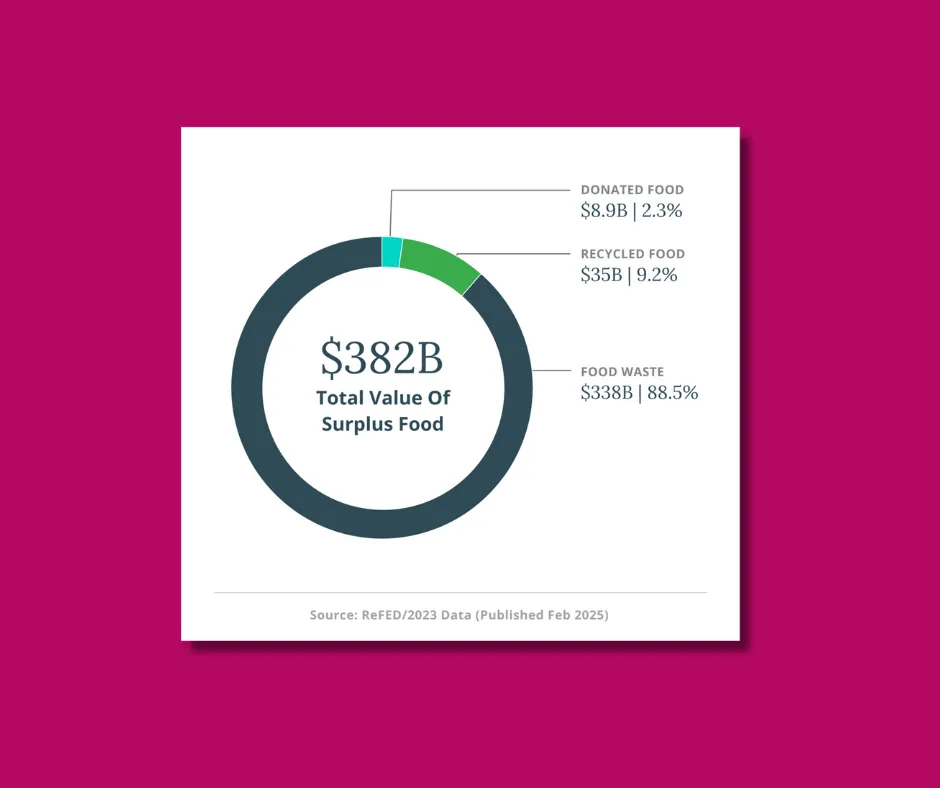
Value of Surplus Food
- Charts & Infographics
 Charts & Infographics
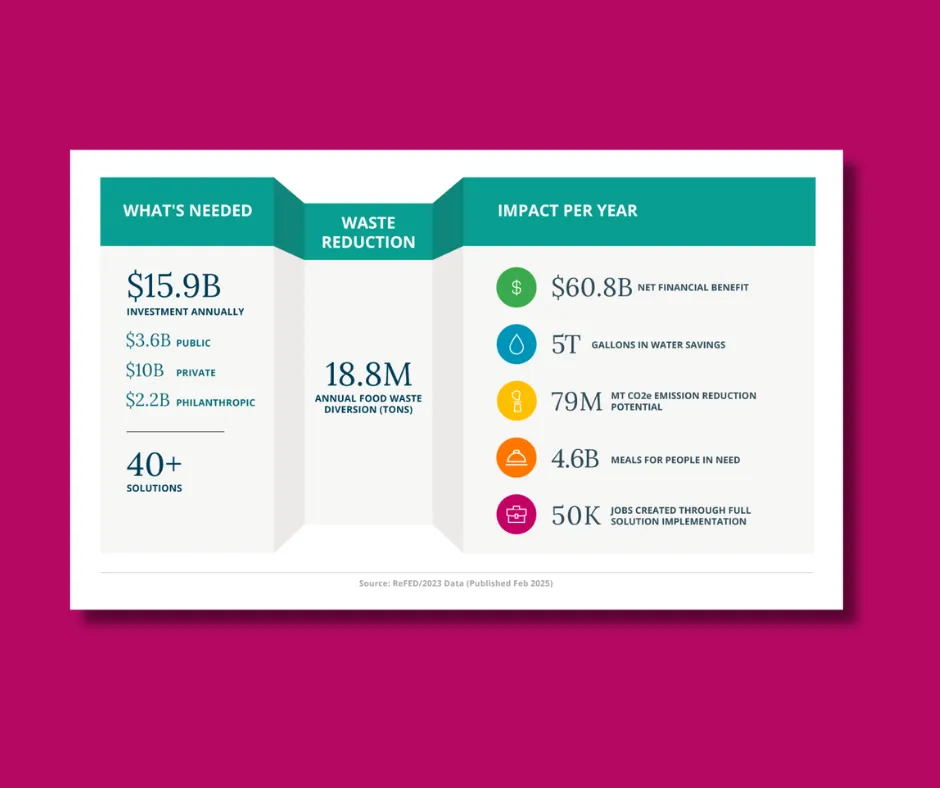
Waste Reduction Investment & Impacts
- Reports
 Reports
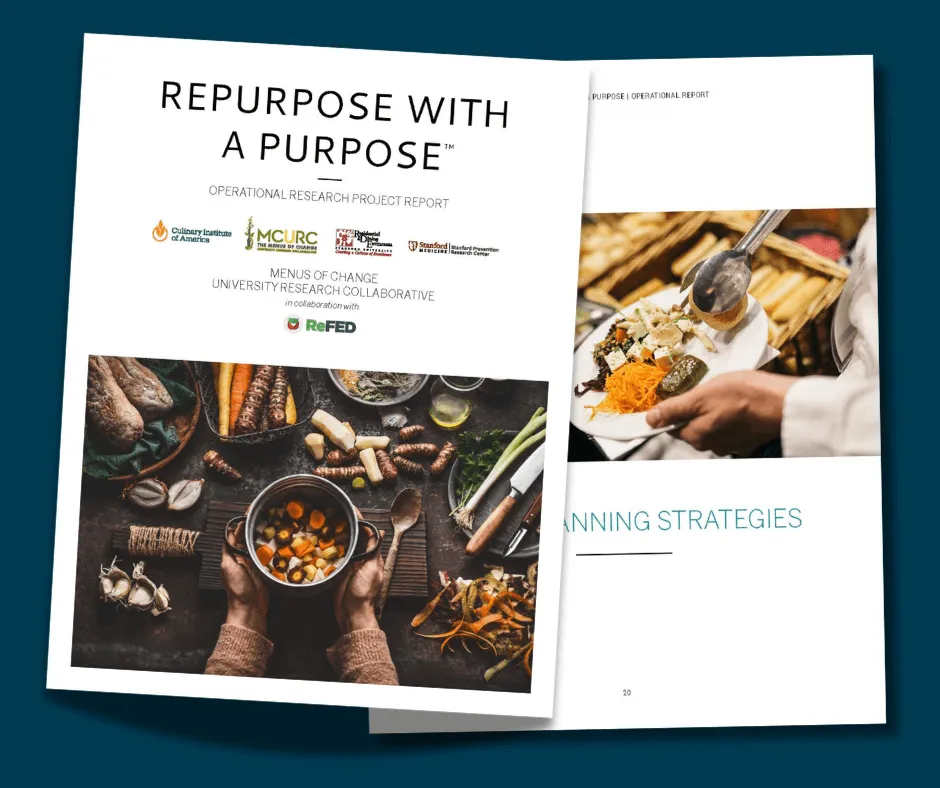
Repurpose with a Purpose: Operational Research Project Report
The comprehensive report provides the data and background on the initiative along with the financial, environmental, and social impacts of repurposing on foodservice operations.
- Explainers
 Explainers
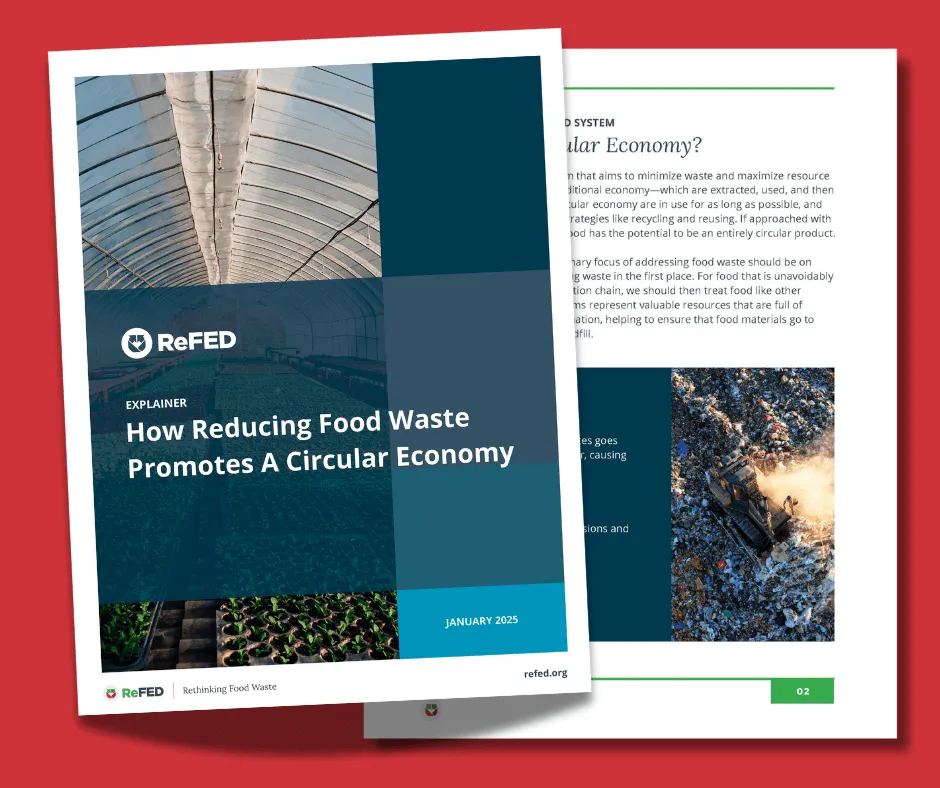
How Reducing Food Waste Promotes A Circular Economy
Reducing food waste is a key strategy in transitioning to a circular economy—one that minimizes waste and maximizes resource usage. Food waste contributes 6.1% of greenhouse gas emissions in the United States and costs the country $473 billion a year, among other impacts. By preventing food from going to waste in the first place, recovering and redistributing surplus food, and diverting food from landfills through strategies that aim to capture its nutrients and byproducts, we can catalyze the food system into becoming more resilient, sustainable—and circular.
- Reports
 Reports
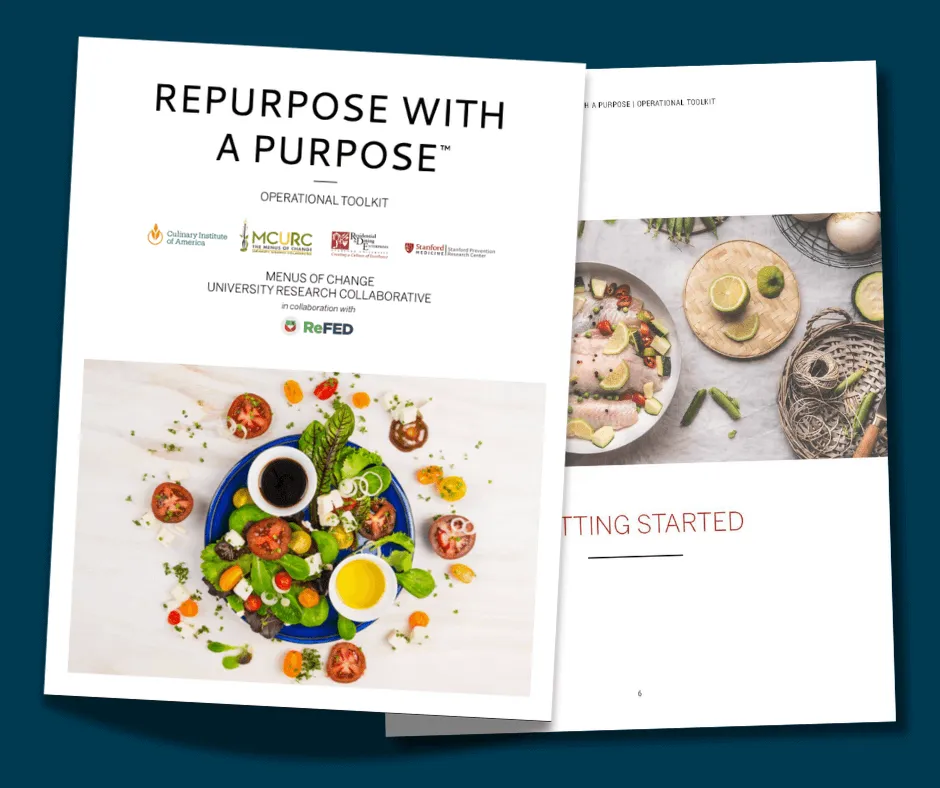
Repurpose with a Purpose: Operational Toolkit
Over a 12-week period, nearly 40 leaders from nine Menus of Change University Research Collaborative (MCURC) institutions came together for a research sprint to exchange learnings and develop best practices for reducing food waste through the creative practice of repurposing.
- Reports
 Reports
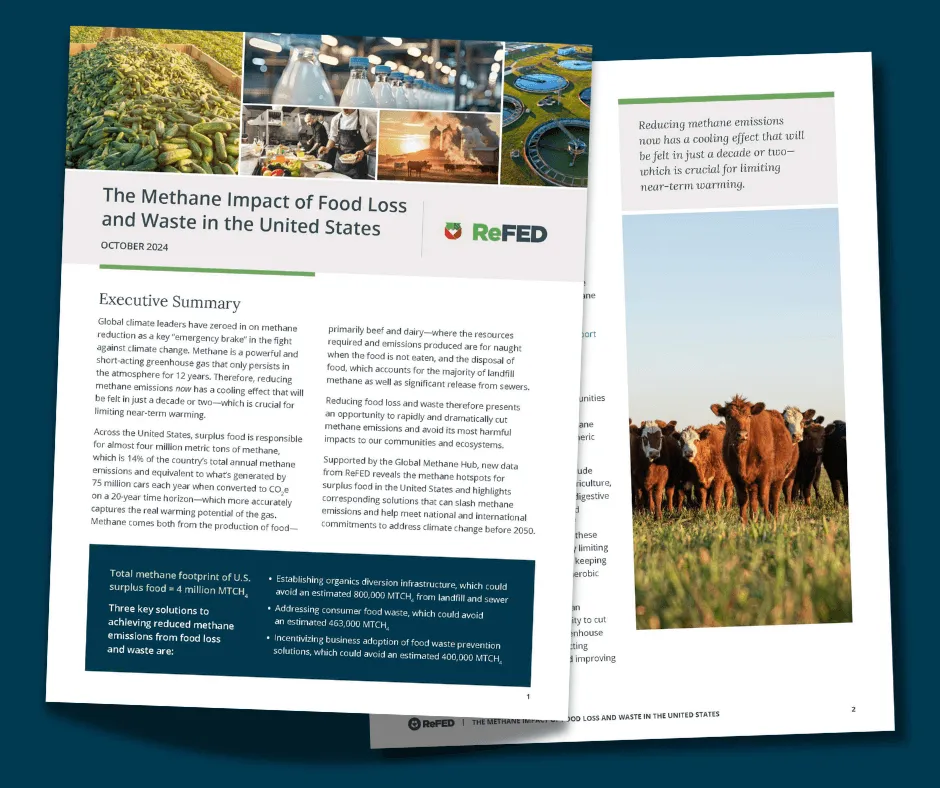
The Methane Impact of Food Loss and Waste in the United States
Global climate leaders have zeroed in on methane reduction as a key “emergency brake” in the fight against climate change. Methane is a powerful and short-acting greenhouse gas that only persists in the atmosphere for 12 years. Therefore, reducing methane emissions now has a cooling effect that will be felt in just a decade or two—which is crucial for limiting near-term warming.
- Reports
 Reports
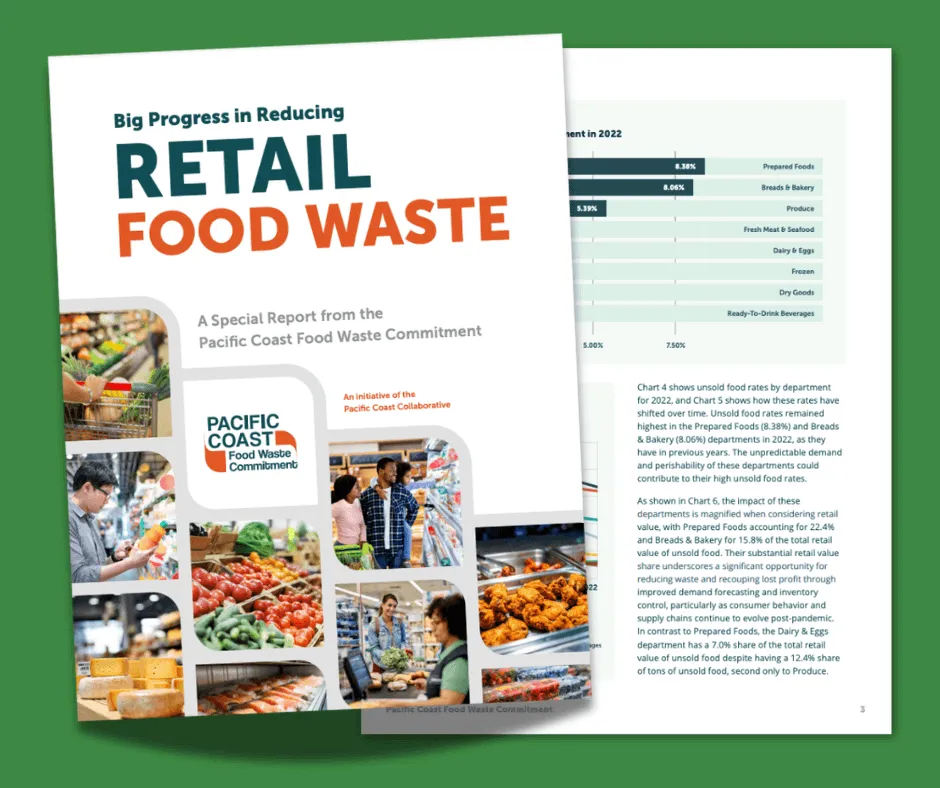
Big Progress in Reducing Retail Food Waste
The Pacific Coast Food Waste Commitment shares its retail data for 2022 as well as a comprehensive analysis of year-over-year data since 2019.
- Reports
 Reports
Quantis Greenhouse Gas Emissions of Food Waste Methodology
Read the methodology used to quantify the greenhouse gas footprint of food production and surplus disposal for dozens of food categories, tailored to the U.S. market.
- Reports
 Reports
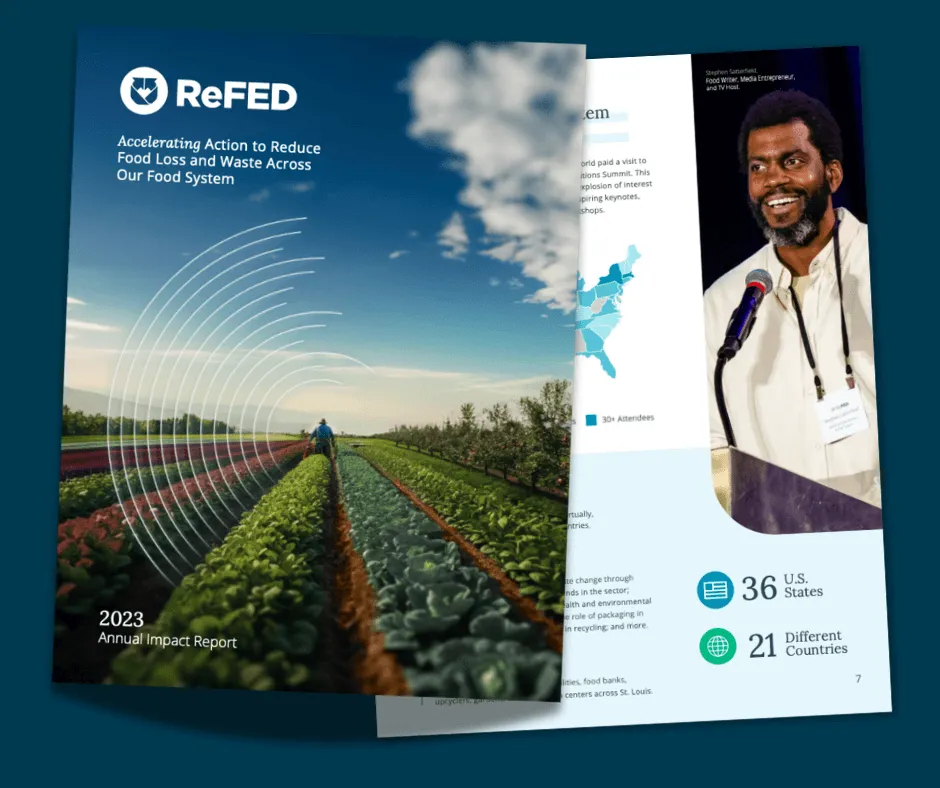
2023 Annual Impact Report
2023 was a landmark year for those working to reduce food waste. Investing in solutions that feed people instead of landfills became more than just a nice idea — it became a priority. This year’s Annual Impact Report theme — Acceleration — is a tribute to that evolution and the rapid progress that has been made. In the pages ahead, you’ll discover a collection of stories and moments that epitomize this sense of acceleration — moments that we will be able to point to ten years from now as having altered the trajectory of food waste, both domestically and globally. Thank you for believing in our work, and accelerating us toward a world that makes the very best use of the food we grow.
- Reports
 Reports
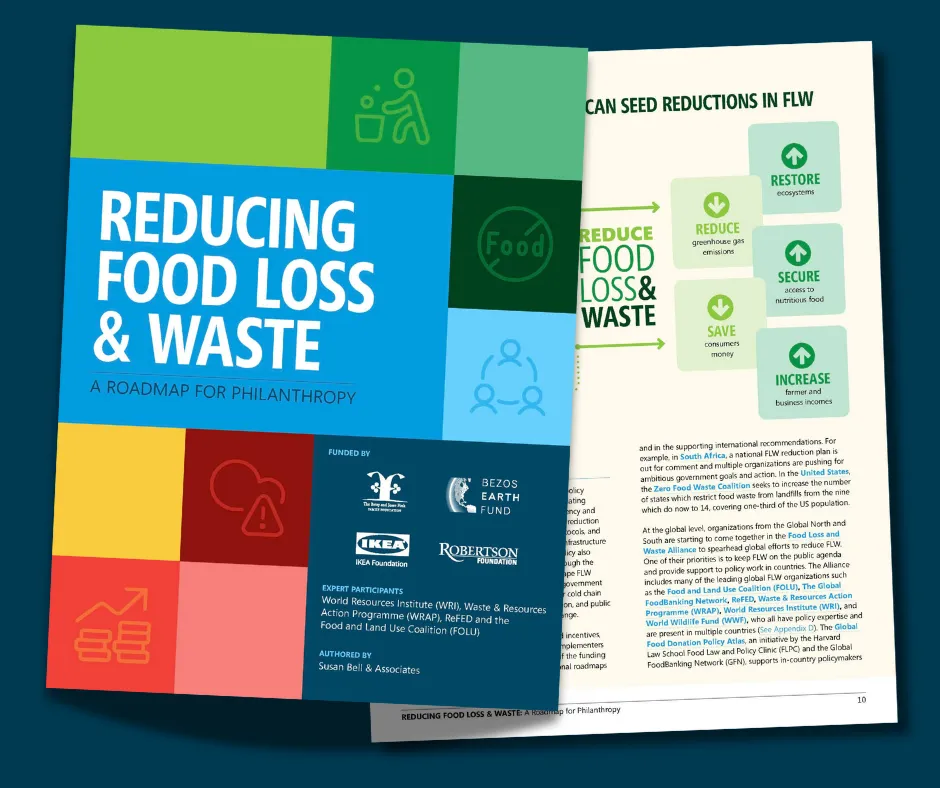
Reducing Food Loss and Waste: A Roadmap for Philanthropy
- Charts & Infographics
 Charts & Infographics
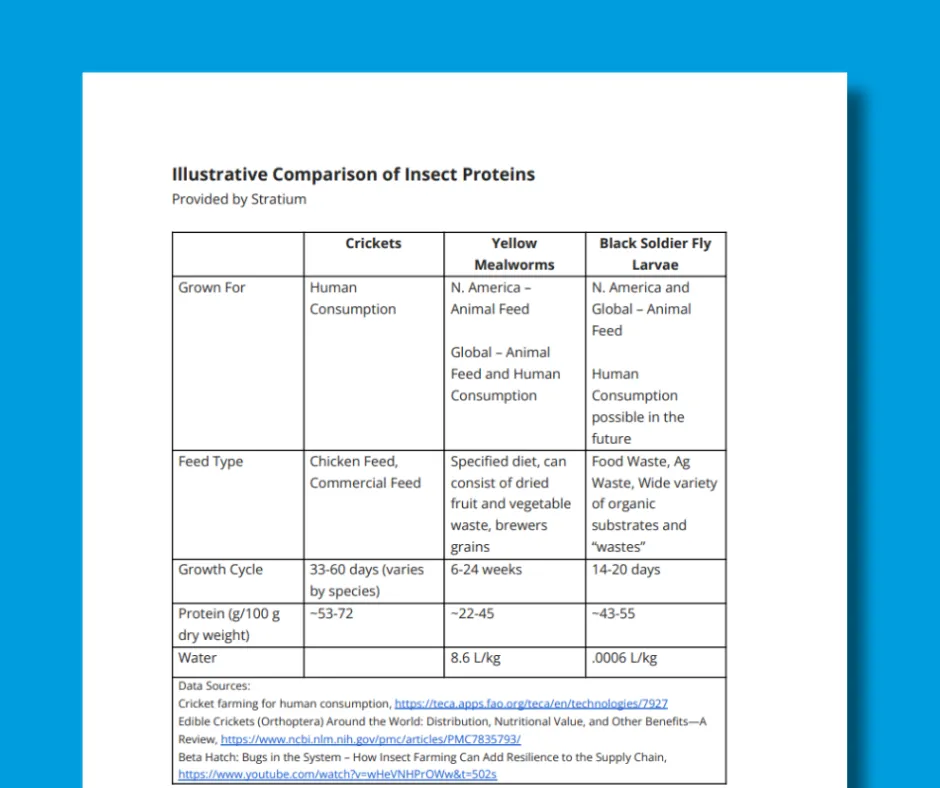
Stratium Insect Protein Table
- Reports
 Reports
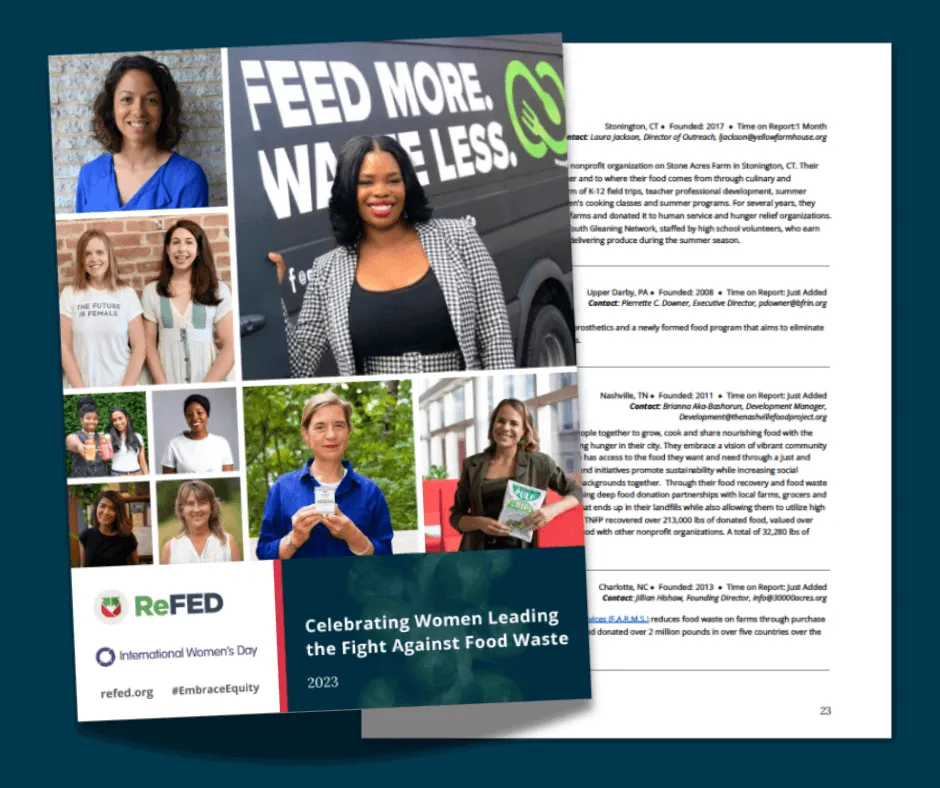
2023 Female Led Solution Providers | International Women's Day 2023
As part of ReFED’s efforts to catalyze capital to scale food waste solutions, we’re celebrating and amplifying female leaders across the food system who are working to ensure we make the best use of the food we grow.
- Reports
 Reports
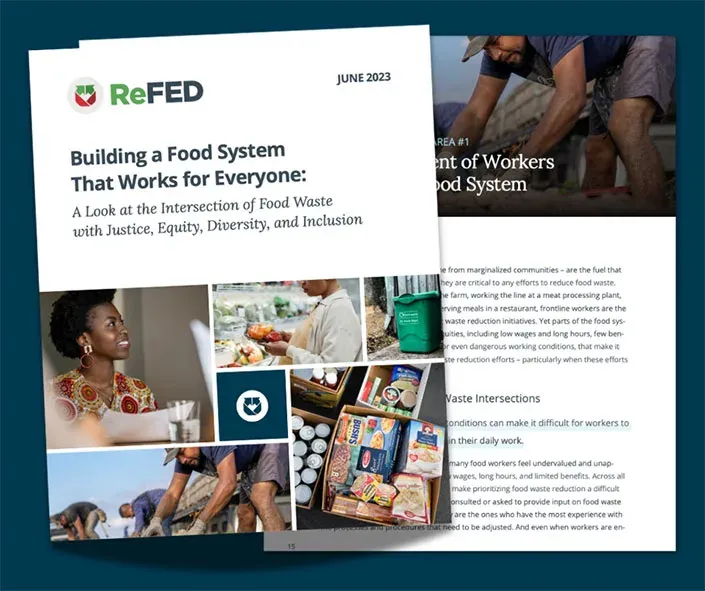
Building a Food System That Works for Everyone: A Look at the Intersection of Food Waste with Justice, Equity, Diversity, and Inclusion
While the connections between food waste and sustainability and resilience are clear, its link to justice, equity, diversity, and inclusion (JEDI) can often be harder to discern. ReFED's new landscape assessment explores the intersection between food waste and JEDI issues across five "Insight Areas" – the treatment of workers within the food system, capital flows, food assistance infrastructure and processes, consumer education strategies, and food waste disposal infrastructure – featuring potential solutions and case studies.
- Reports
 Reports
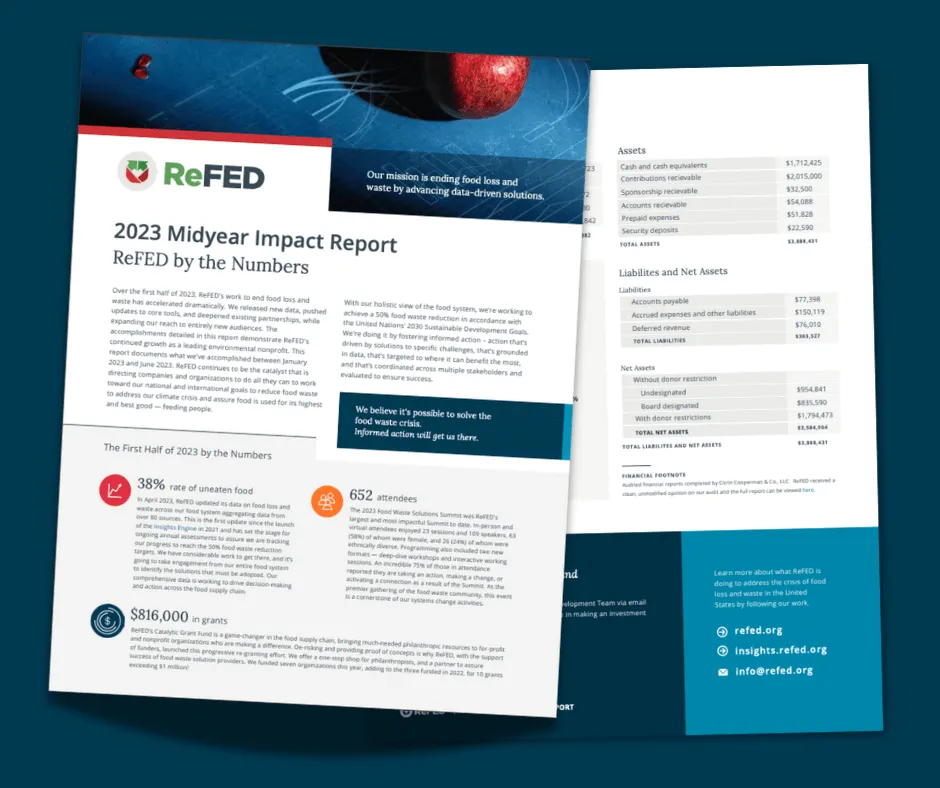
2023 Mid-Year Impact Report
- Reports
 Reports
Scaling Action: Opportunities for Food Waste Solution Providers to Engage with ReFED
Learn about partnership opportunities, how to make the most of ReFED’s tools and resources, and how we can support and amplify your work.
- Reports
 Reports
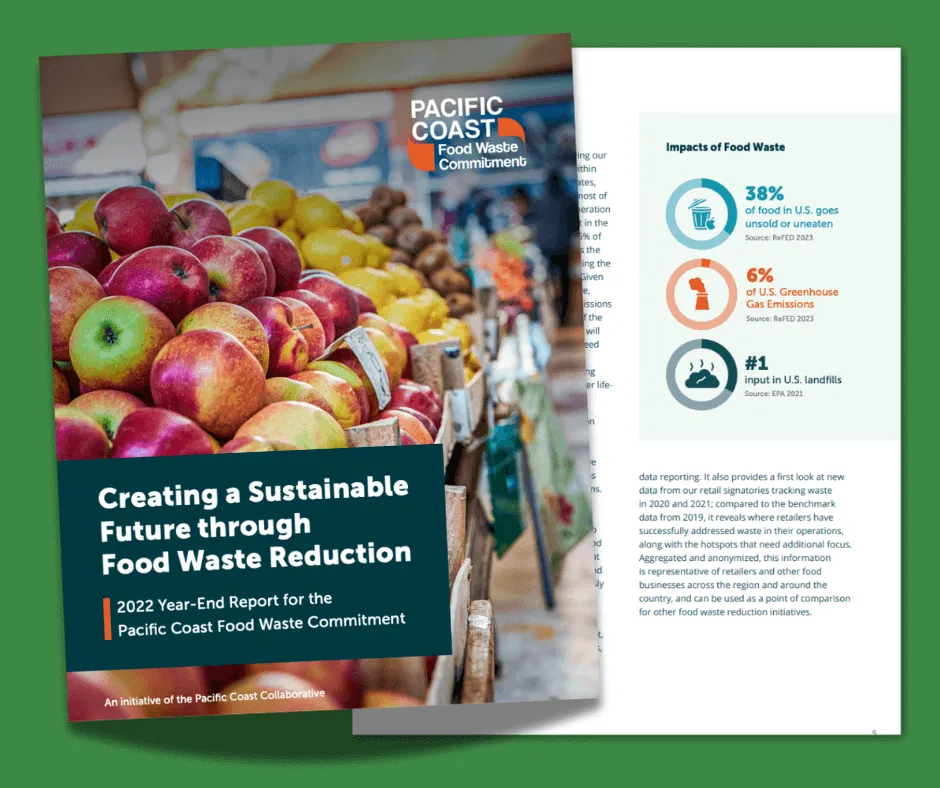
2022 Year-End Report for the Pacific Coast Food Waste Commitment
This report provides an overview of PCFWC’s progress in 2022 in the key areas of recruitment, signatory engagement, and data reporting. Building off of its landmark 2019 retail data set from the previous year, in 2022, the PCFWC collected and added 2020 and 2021 data to its compilation, allowing for year-over-year comparison and a more robust analysis than ever before. This dataset now stands as one of the most comprehensive resources in food waste research at the retail level and is being used to inform similar data tracking and analysis among PCFWC signatories within additional sectors.
- Reports
 Reports
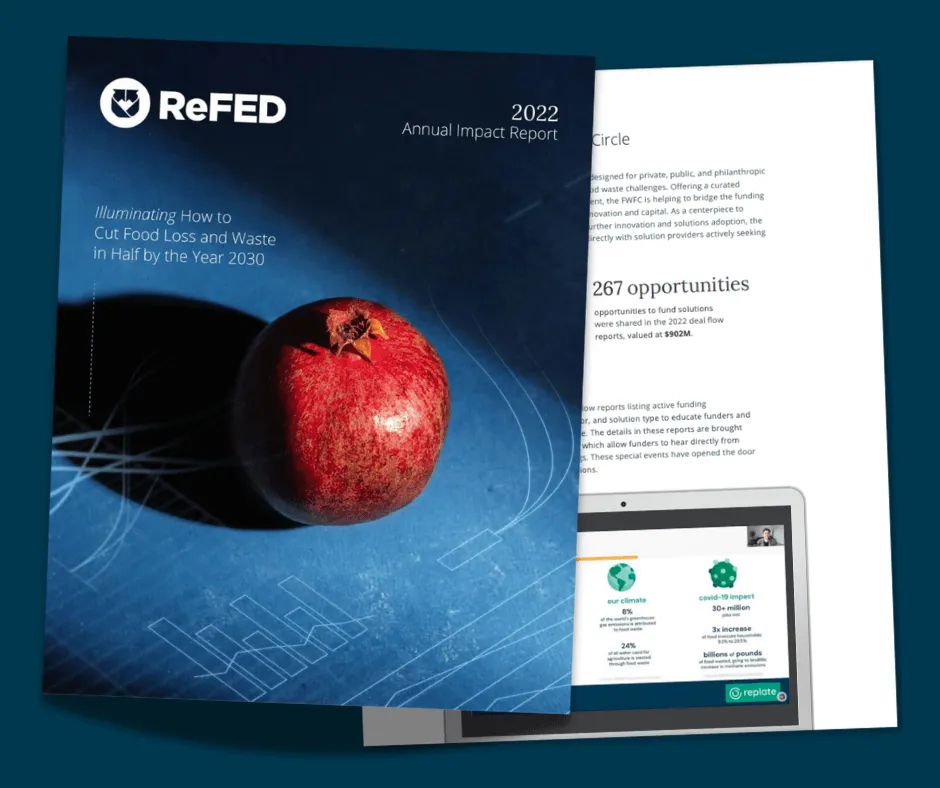
2022 Annual Impact Report
2022 was a milestone year for the sector and for ReFED — food waste reduction has been elevated in the global conversation as to how to achieve rapid climate impacts, as governments, businesses, funders, and more recognize just how powerful a lever it can be. This annual report shines a spotlight on our accomplishments to give you a better sense of the work we’re doing and the progress your support makes possible.
- Reports
 Reports
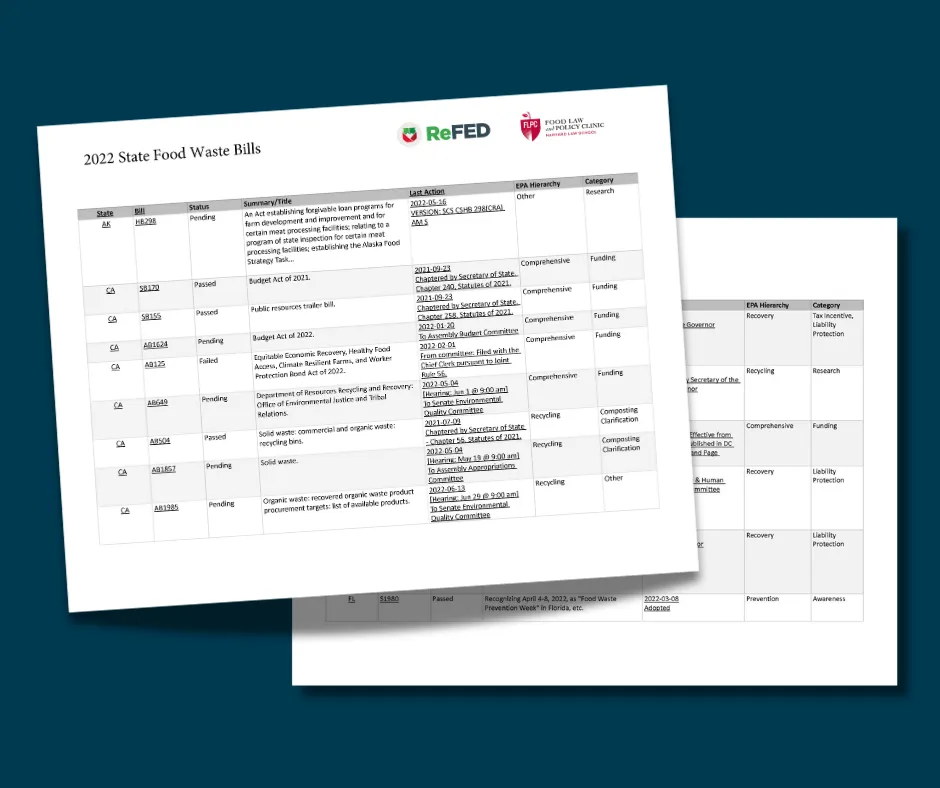
2022 State Food Waste Bills
2022 State Food Waste Bills
- Reports
 Reports
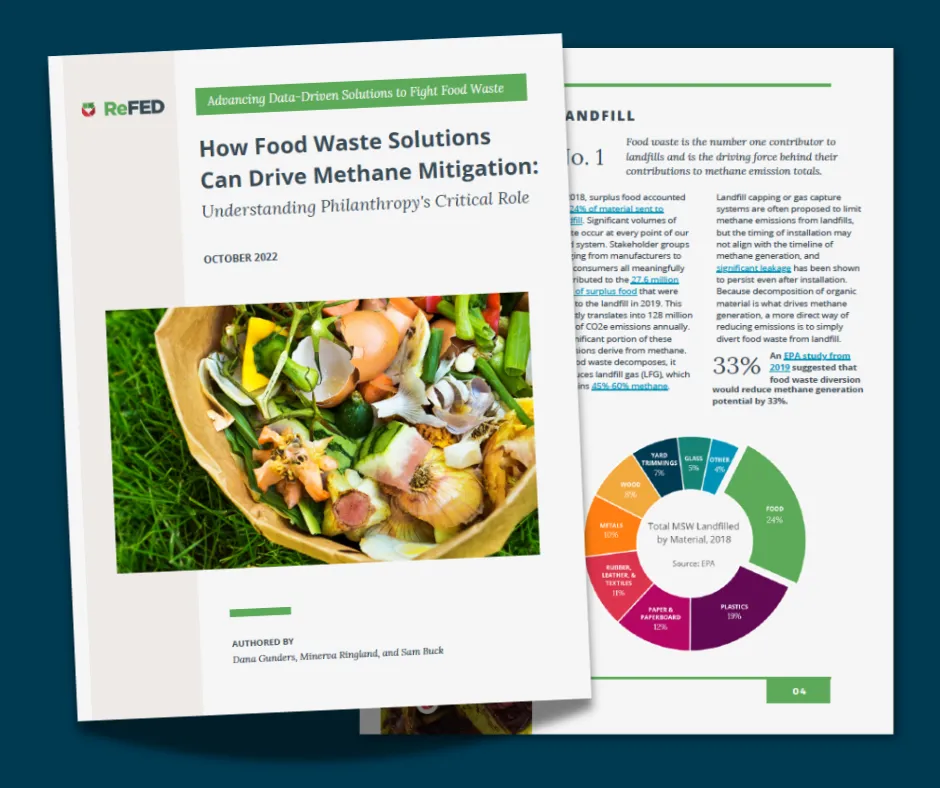
How Food Waste Solutions Can Drive Methane Mitigation
Slashing methane emissions is the single most powerful lever we have to limit the impacts of climate change on our communities and our ecosystems. Food waste is responsible for methane emissions through two pathways–landfills and livestock–and represents a critical opportunity to target methane, along with other greenhouse gasses, while providing diverse co-benefits spanning water conservation, protection of biodiversity, improved food security, improved local air quality, and more.
- Explainers
 Explainers
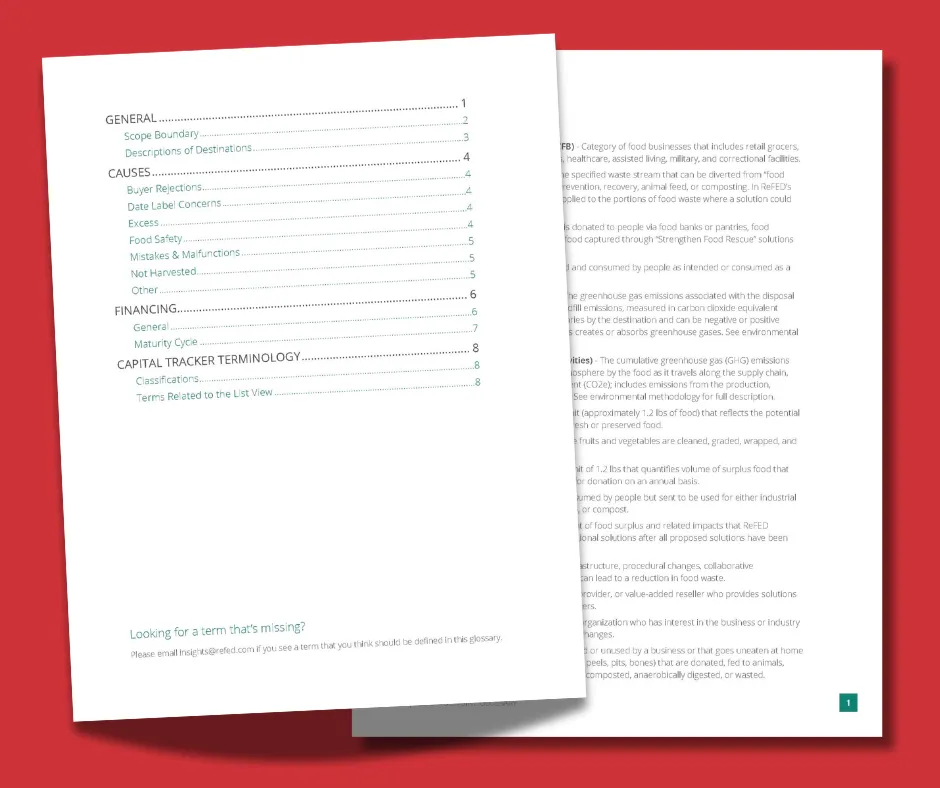
Insights Engine Glossary
- Reports
 Reports
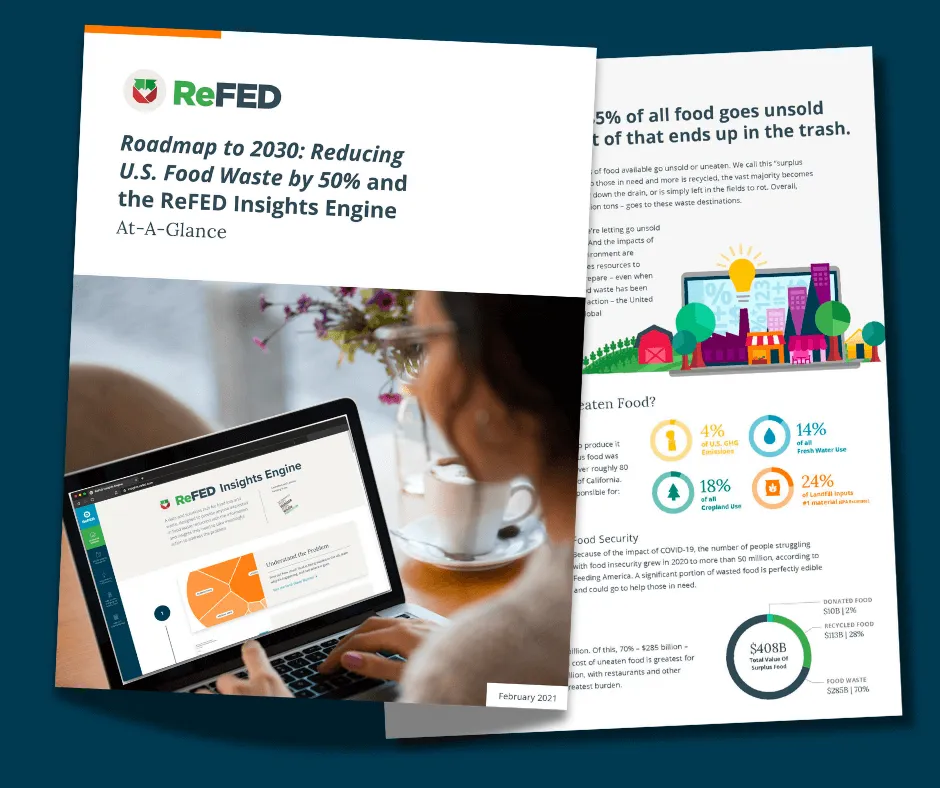
Roadmap to 2030: Reducing U.S. Food Waste by 50%
Food waste is a systemwide problem, and solving it will require a systemwide response. Our Roadmap to 2030: Reducing U.S. Food Waste by 50% looks at the entire food supply chain and identifies seven key action areas to help guide the food system’s efforts over the next ten years. In line with the "Target-Measure-Act" framework for food waste reduction that’s been adopted around the world, the Roadmap to 2030 is a critical blueprint to help the food system take action. View the entire report on this website or download our "at-a-glance" version with key highlights.
- Reports
 Reports
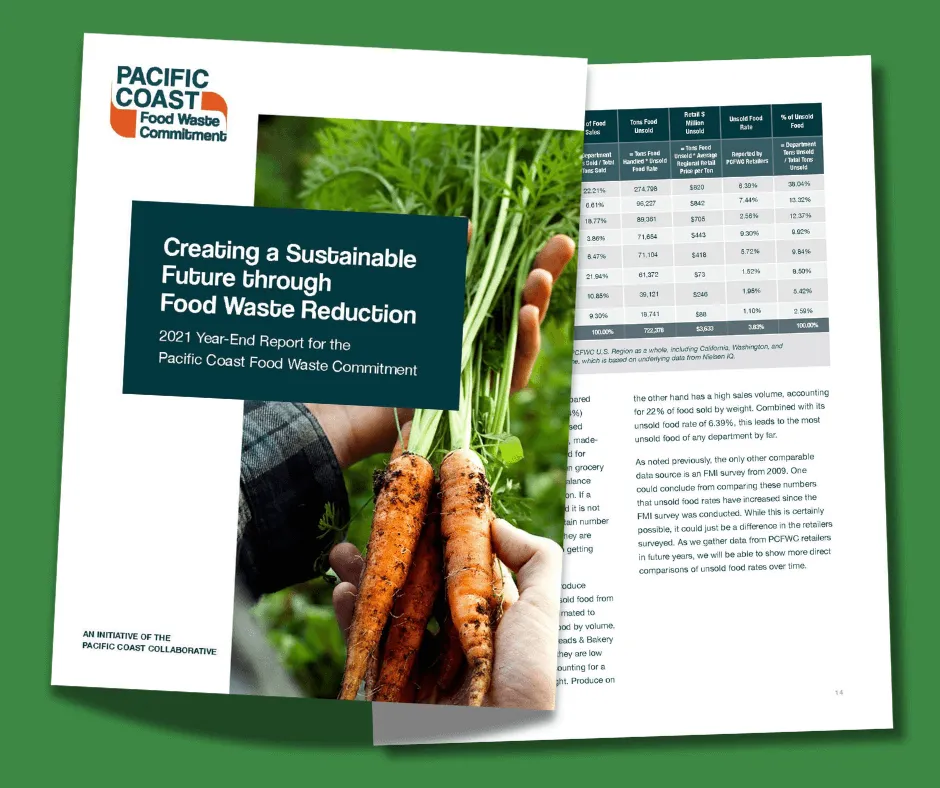
2021 PCFWC Annual Report
2021 end-of-year report features a special section with the first public data release from this initiative. Data collection is critical for food waste reduction efforts, as it is used to: Establish a baseline for improvement; Monitor progress; Identify hotspots that need action; and Highlight successes that can be replicated. Throughout 2021, data collection was a major focus of the PCFWC, and by the end of the year, we had received 2019 data on Unsold Food Rates and Unsold Food Destinations from more than 30% of regional grocery market share. This information is a significant contribution to the body of knowledge and will support food waste reduction by highlighting where attention and resources need to be directed – by PCFWC signatories and those businesses that have not yet joined.
- Reports
 Reports
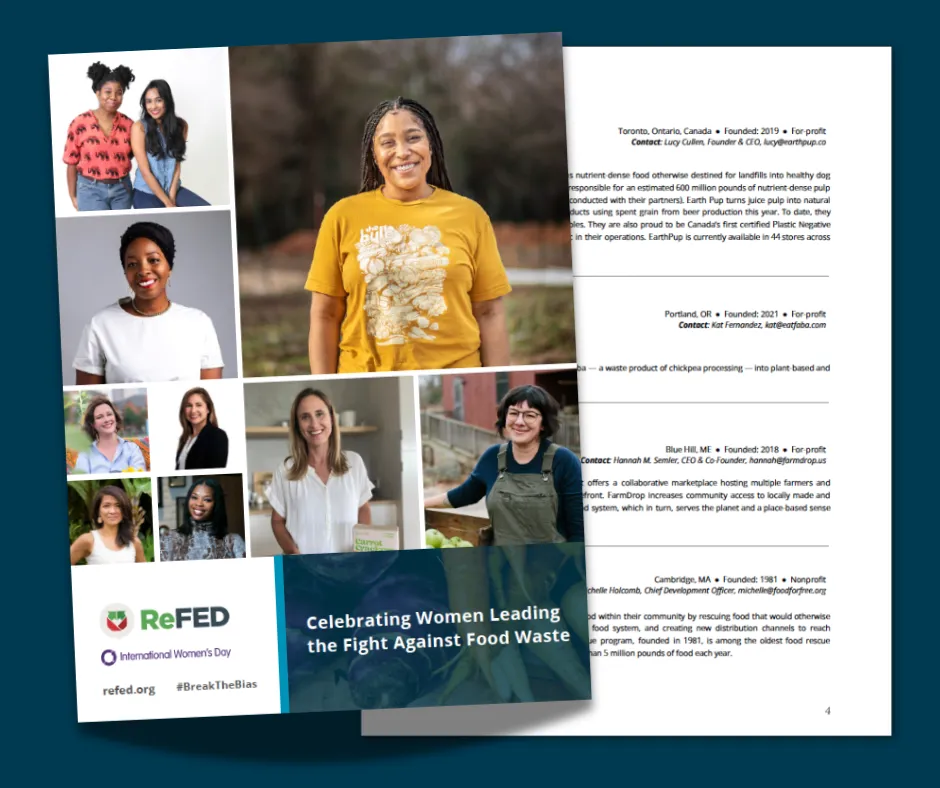
ReFED, Inc. Female Led Solution Providers_IWD 2022
- Reports
 Reports
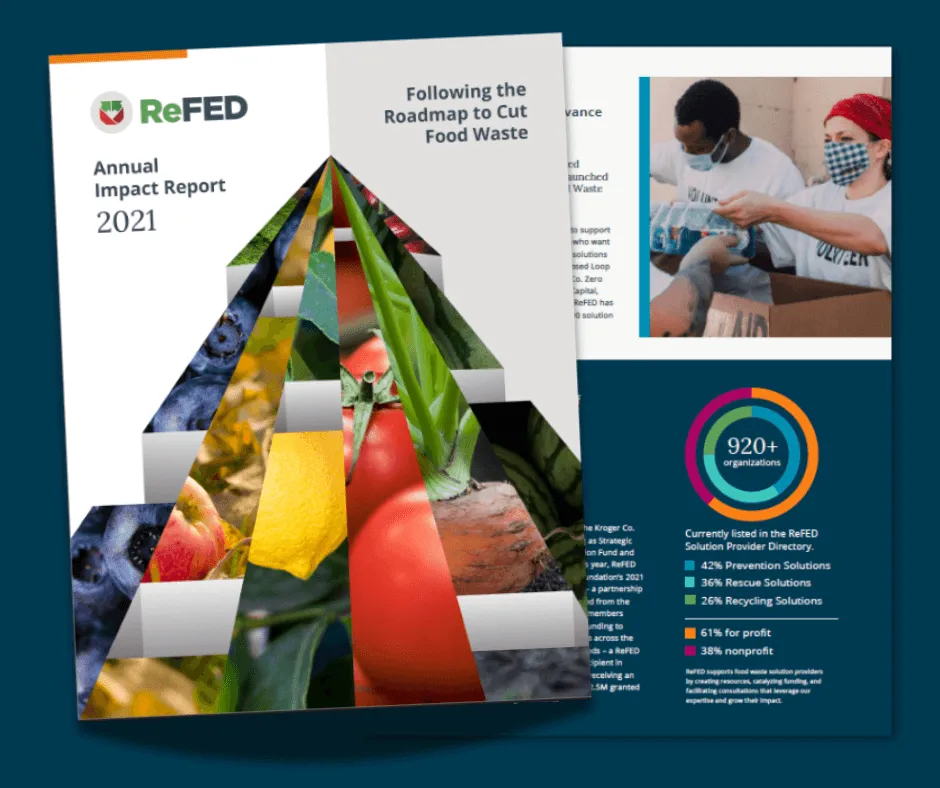
2021 Annual Impact Report
- Reports
 Reports
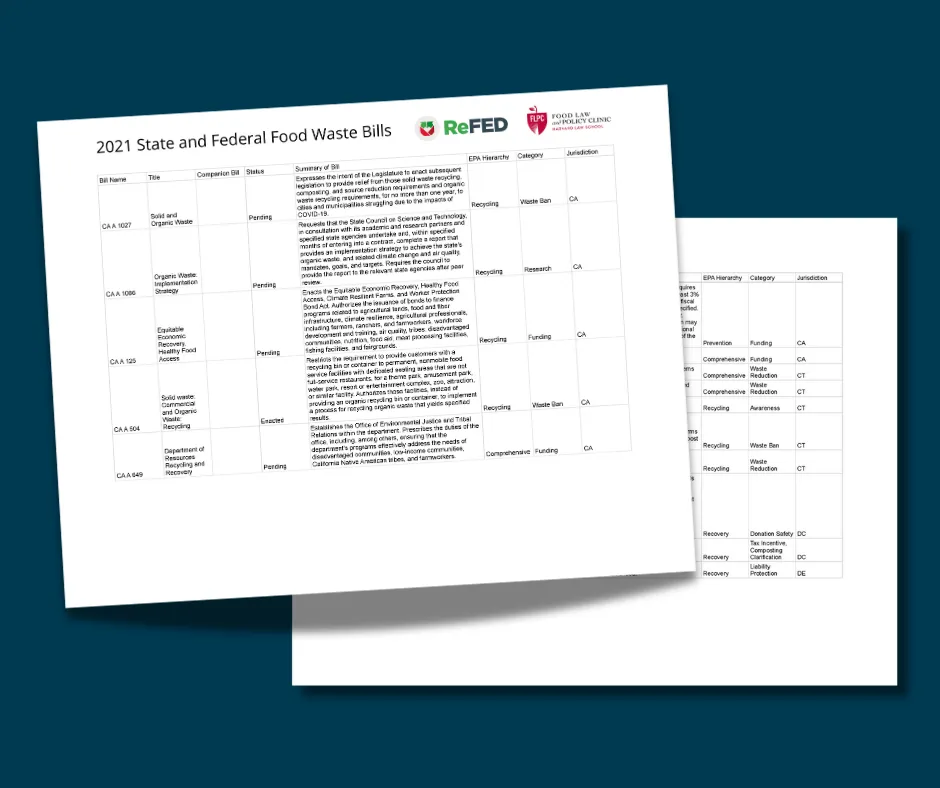
2021 State and Federal Food Waste Bills
Download a comprehensive list of state and federal bills introduced in 2021.
- Reports
 Reports
EPA: From Farm to Kitchen: The Environmental Impacts of U.S. Food Waste
- Reports
 Reports
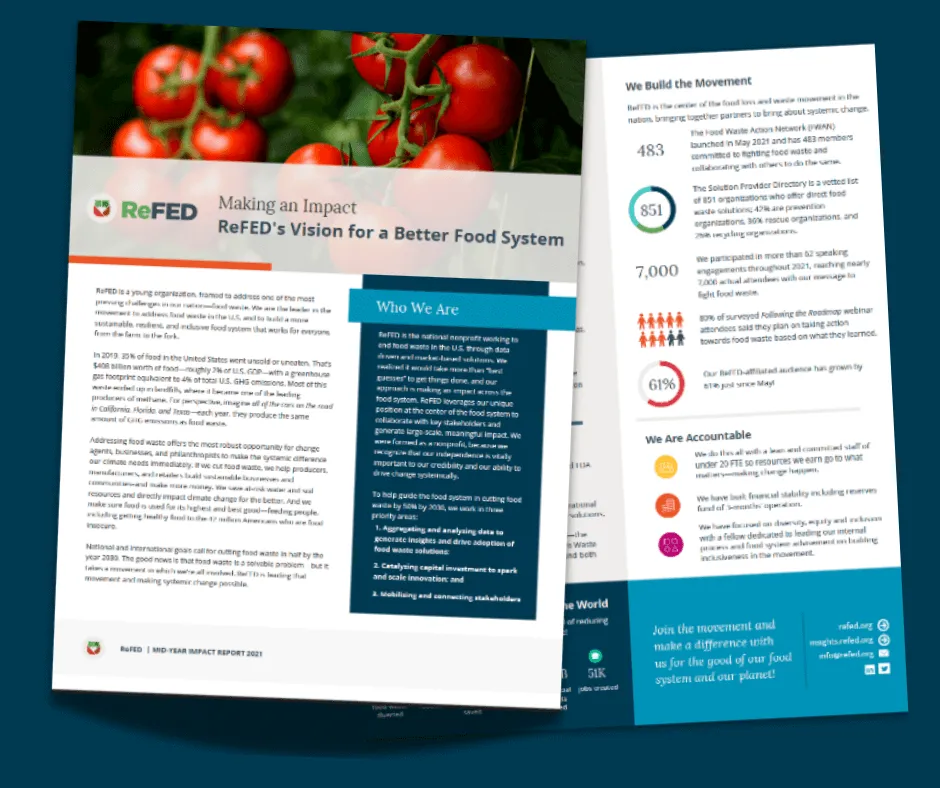
2021 Mid-year Impact Report
ReFED's 2021 mid-year impact report showcases the actions we've taken this year to build a better food system and make the best use of the food we grow.
- Reports
 Reports
Connecting Food Loss and Waste to Greenhouse Gas Emissions: Guidance for Companies
- Fact Sheets
 Fact Sheets
Restaurant & Food Service Reopening Guidelines
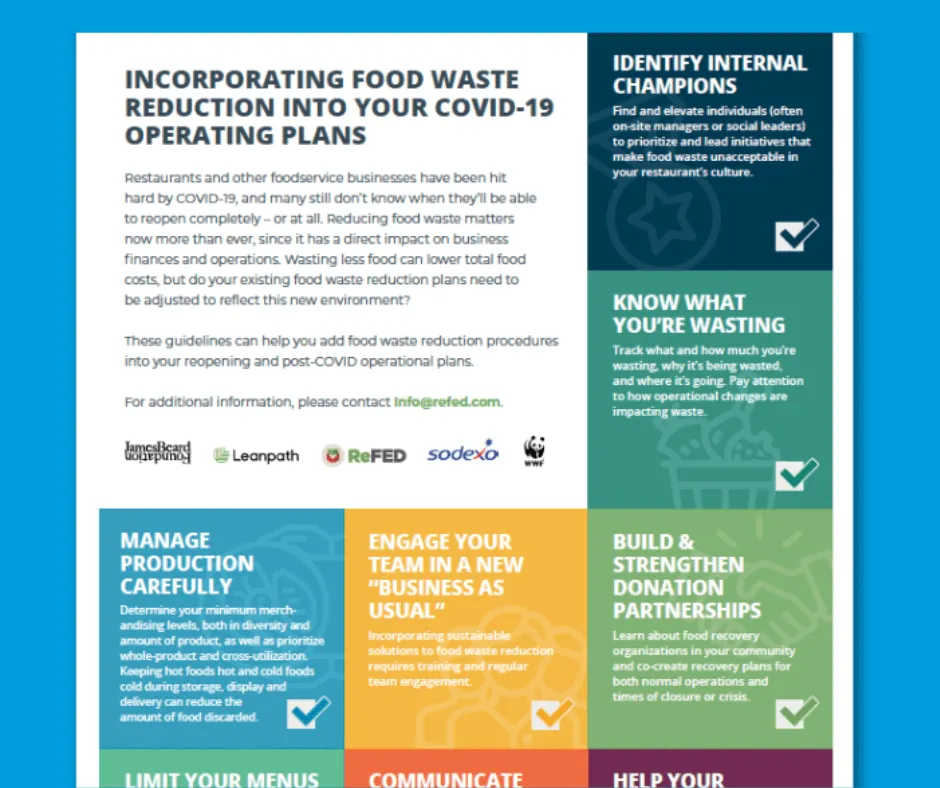
Restaurants and other foodservice businesses have been hit hard by COVID-19, and many still don’t know when they’ll be able to reopen completely – or at all. These guidelines can help you add food waste reduction procedures into your reopening and post-COVID operational plans.
- Reports
 Reports
2020 Annual Report
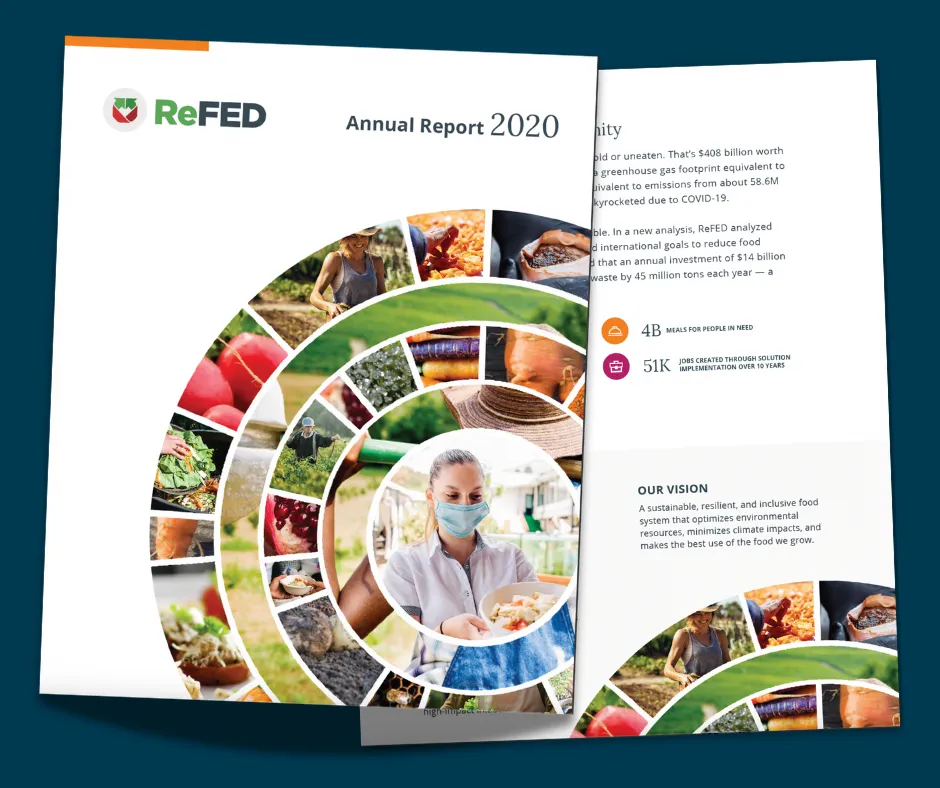
Explore our 2020 Annual Report. Like many organizations, much of our 2020 work focused on COVID-19 — from helping the food system understand the scope of its impact, to sharing insights about how businesses could reopen and operate safely, and connecting innovators with funding to scale their food waste reduction and hunger relief initiatives. This report highlights that work, as well as other milestones we achieved throughout the year.
- Reports
 Reports
PCC 2020 End-of-Year Report
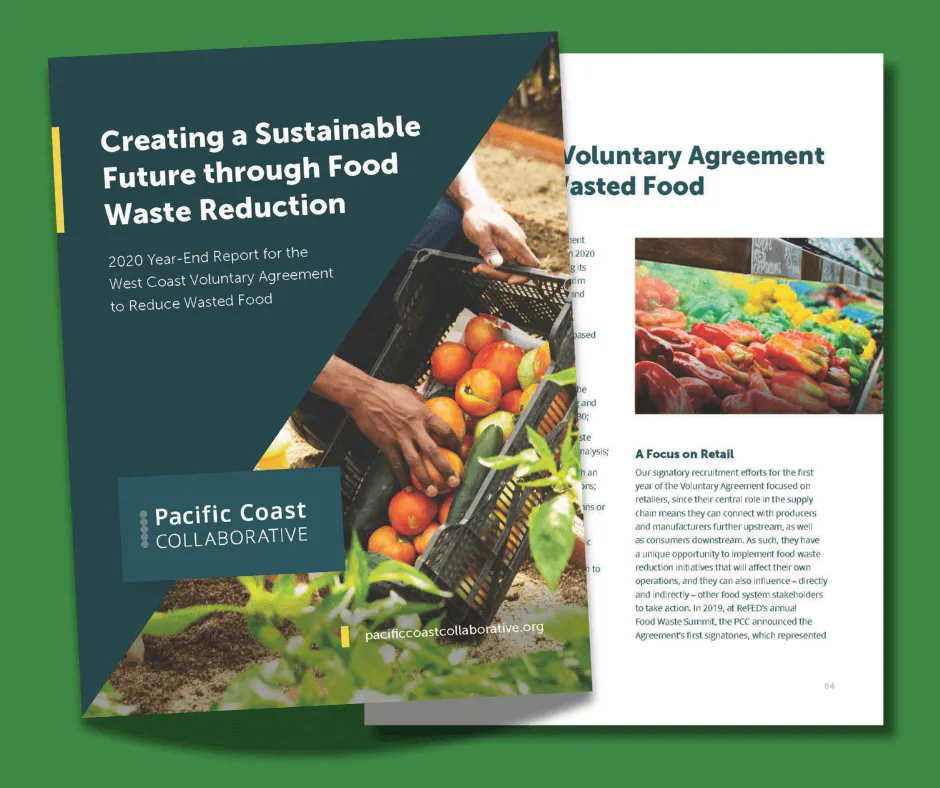
The Pacific Coast Collaborative's Food Waste Reduction Project's 2020 year-end report details the efforts of the public-private partnership to create a less wasteful and more sustainable food system – with the goal of making significant reductions in carbon emissions and contributing to the health and economic success of the West Coast region.
- Reports
 Reports
ReFED 2020 COVID-19 Food Waste Solutions Fund Impact Report
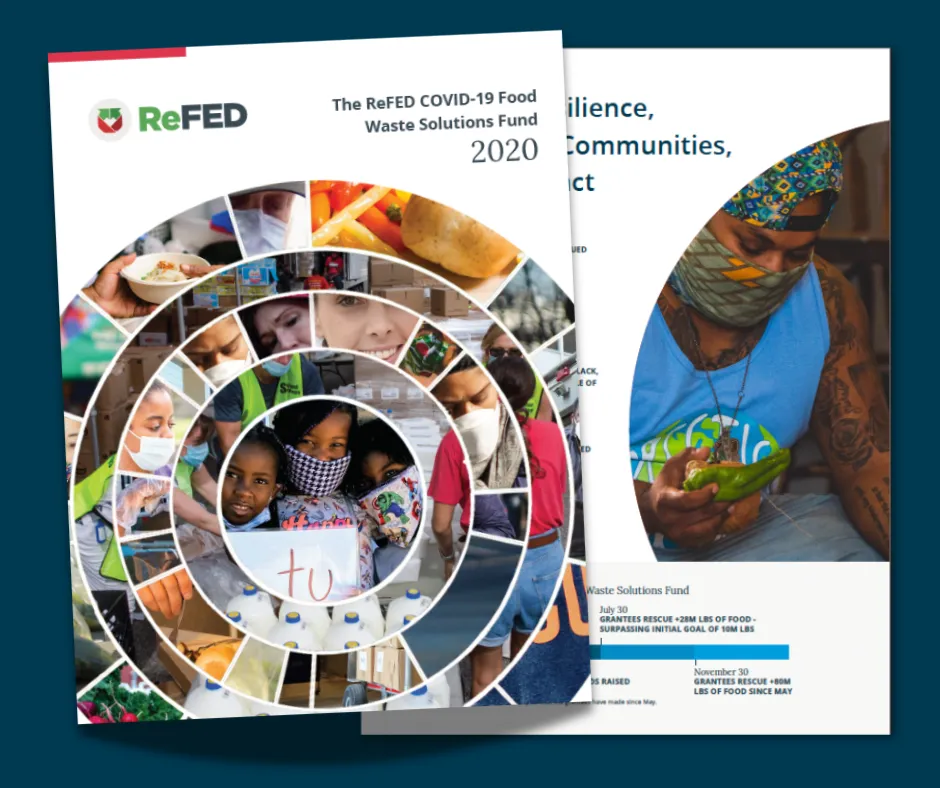
COVID-19 has sent shock waves through our entire food system. In response to these challenges and leveraging our expertise on advancing data-driven solutions to food waste, we launched the ReFED COVID-19 Solutions Fund to quickly deliver more than $3.5 million in vital funding to 37 mid-sized, for-profit and nonprofit organizations across the U.S. View the Impact Report to learn more about the Fund.
- Reports
 Reports
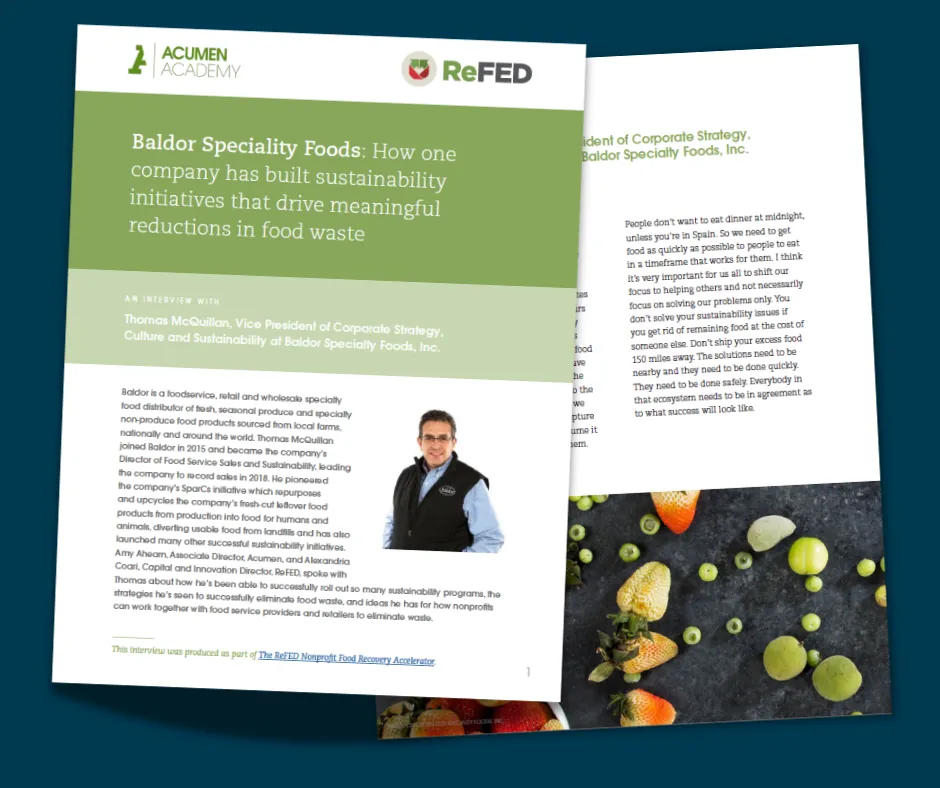
Accelerator Expert Network Knowledge Series: Thomas Mcquillan, Baldor Specialty Foods
Check out this interview with Thomas McQuillan, Vice President of Corporate Strategy, Culture and Sustainability at Baldor Specialty Foods, to learn about his work implementing major sustainability initiatives throughout their foodservice operations.
- Reports
 Reports
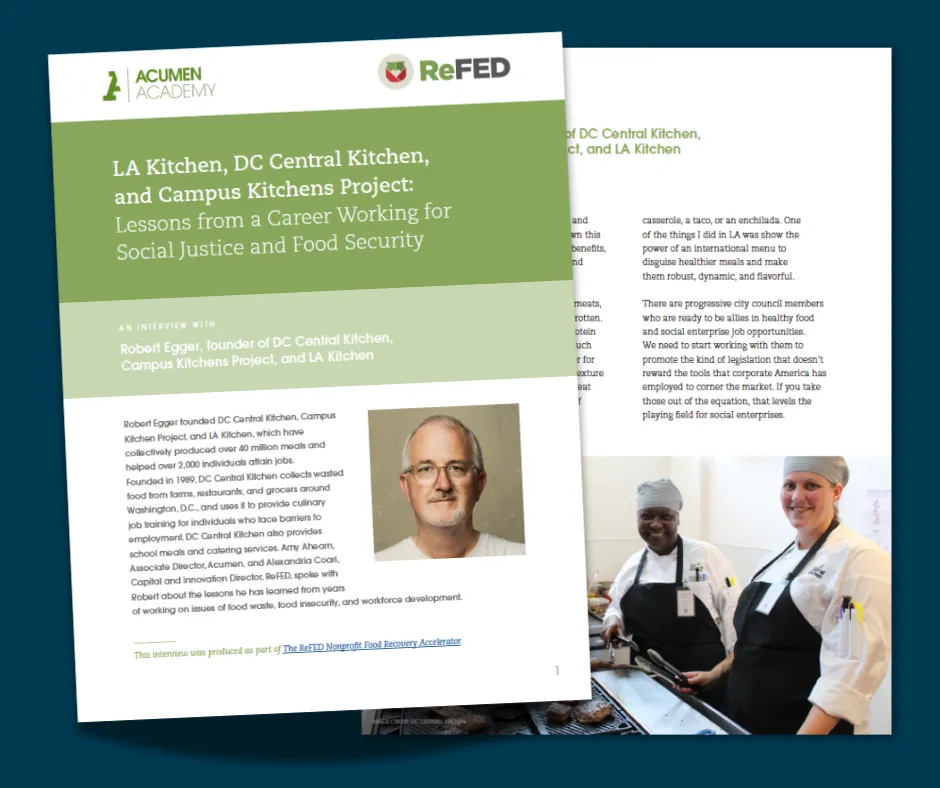
Accelerator Expert Network Knowledge Series: Robert Egger, LA Kitchen
Check out this interview with Robert Egger, founder of LA Kitchen, DC Central Kitchen and Campus Kitchens Project, who shared lessons learned from years of working on issues of food waste, food insecurity, and workforce development.
- Reports
 Reports
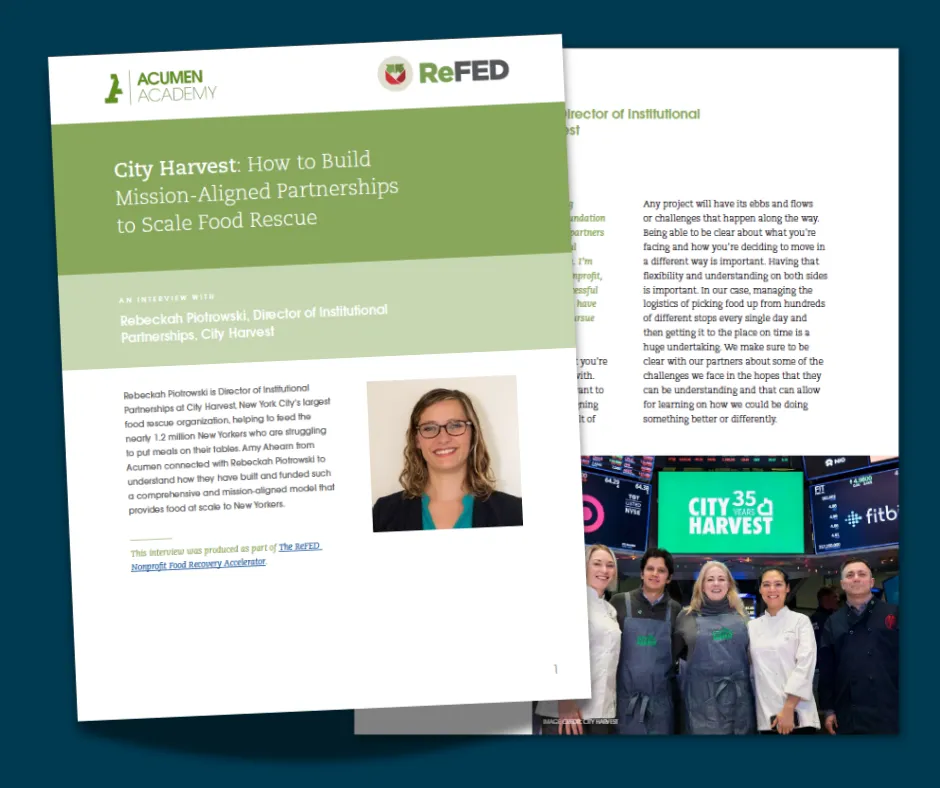
Accelerator Expert Network Knowledge Series: Rebeckah Piotrowski, City Harvest
In this week's interview, we hear from Rebeckah Piotrowski, Director of Institutional Partnerships at City Harvest to learn more about their mission-aligned partnerships that scale their impact to end hunger in New York.
- Reports
 Reports
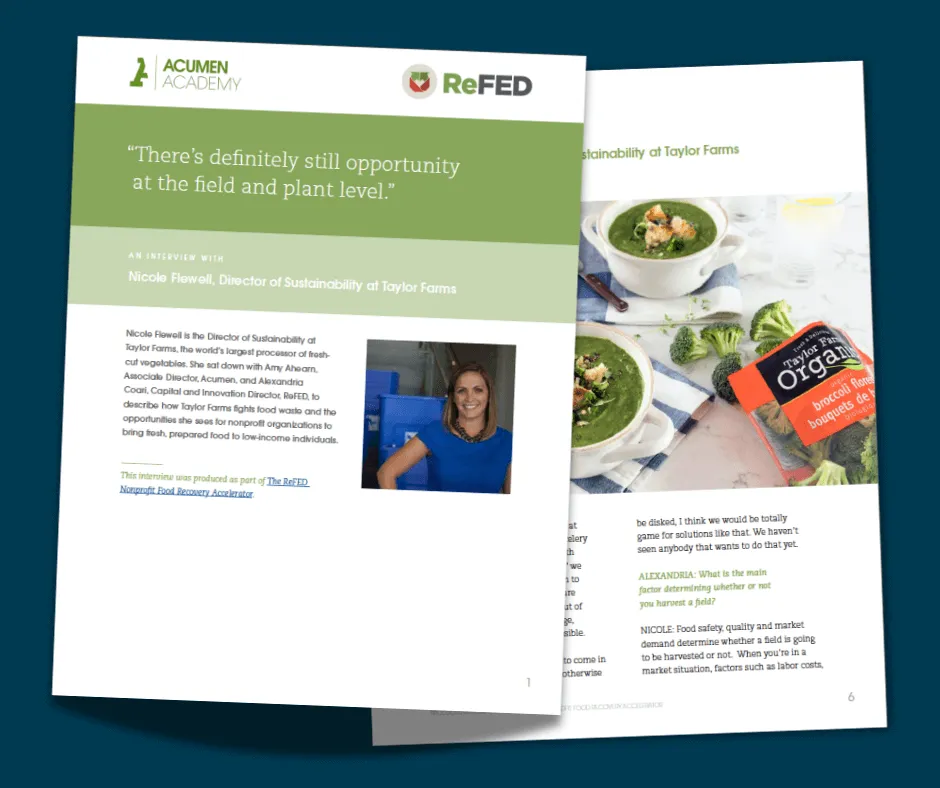
Accelerator Expert Network Knowledge Series: Nicole Flewell, Taylor Farms
Check out this interview with Nicole Flewell, Director of Sustainability at Taylor Farms, where she delves into the opportunities she sees for nonprofit organizations to bring fresh prepared food to low-income individuals.
- Reports
 Reports
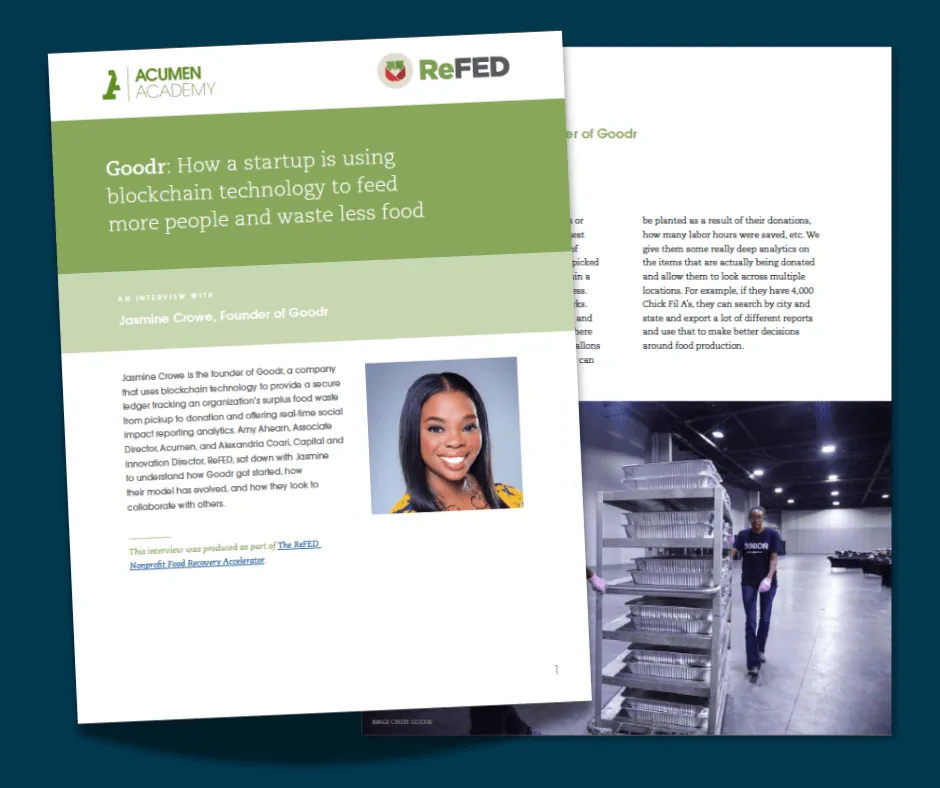
Accelerator Expert Network Knowledge Series: Jasmine Crowe, Goodr
In this week's interview, we hear from Jasmine Crowe, Founder of Goodr, to learn about how this innovative platform combines blockchain technology with a desire to reduce food waste.
- Reports
 Reports
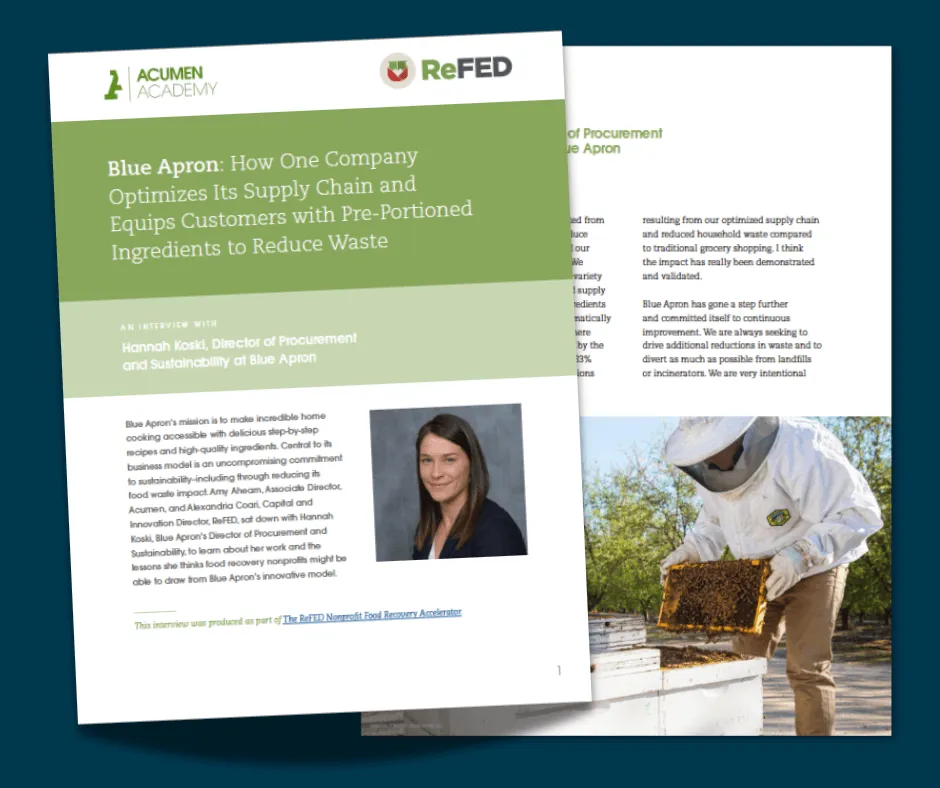
Accelerator Expert Network Knowledge Series: Hannah Koski, Blue Apron
Check out this interview with Hannah Koski, Director of Procurement and Sustainability at Blue Apron, to learn about how their innovative model reduces household waste and improves access to delicious fresh and healthy ingredients.
- Reports
 Reports
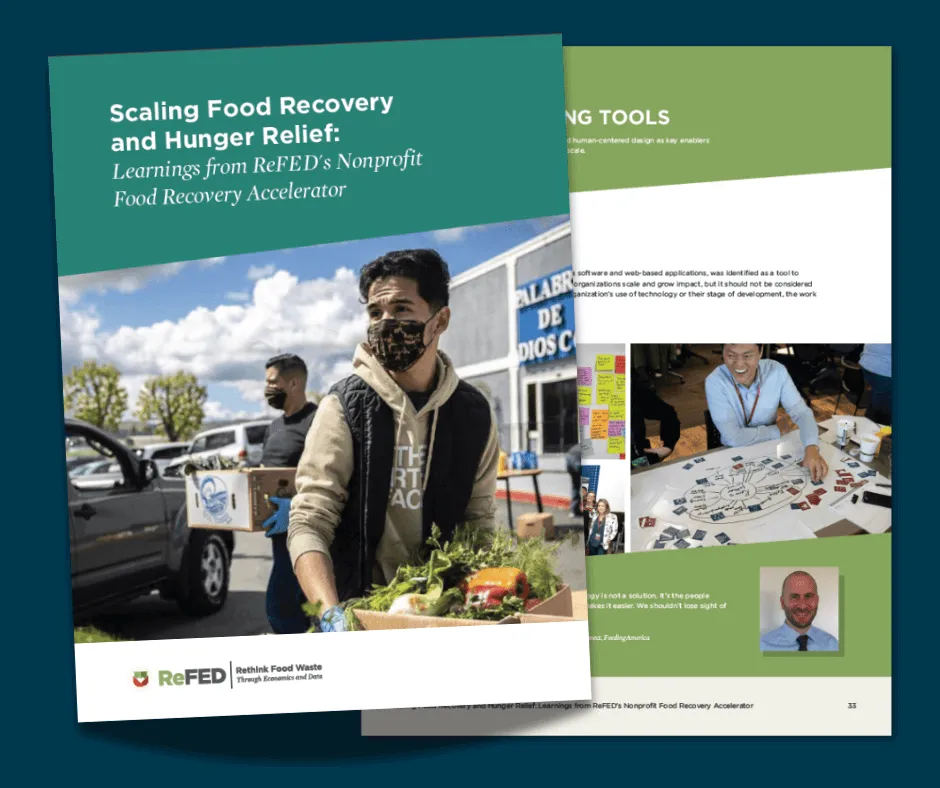
Scaling Food Recovery and Hunger Relief: Learnings from ReFED’s Nonprofit Food Recovery Accelerator
Our new report offers guidance to the entire food system on how to support innovative food recovery organizations as they scale their work to reduce food waste and fight hunger. Includes best practices, case studies, and expert insights from a network of world-class food business and technology executives, capital providers, innovators, and subject matter experts.
- Reports
 Reports
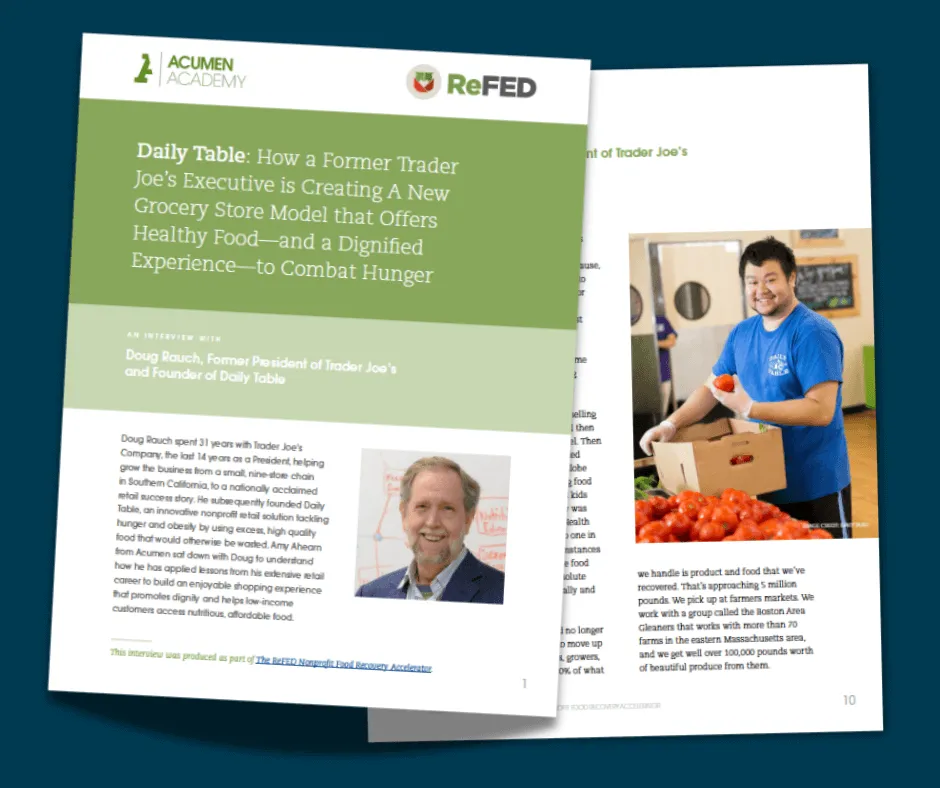
Accelerator Expert Network Knowledge Series: Doug Rauch, Daily Table
Check out this interview with Doug Rauch of Daily Table, who applied lessons from his extensive retail career at Trader Joe’s to build an enjoyable shopping experience that promotes dignity and helps low-income customers access nutritious, affordable food.
- Reports
 Reports
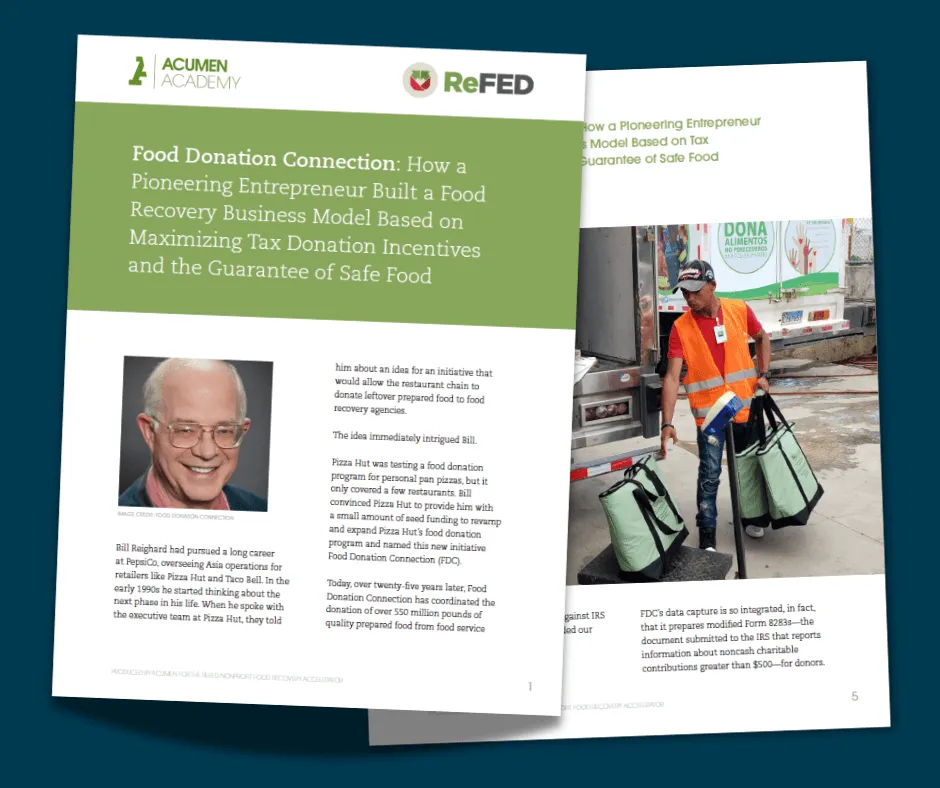
Accelerator Expert Network Knowledge Series: Bill Reighard, Food Donation Connection
Check out this interview with Bill Reighard of Food Donation Connection, who leveraged his industry knowledge overseeing operations at PepsiCo to launch a for-profit food recovery company that has coordinated more than 550m pounds of food.
- Reports
 Reports
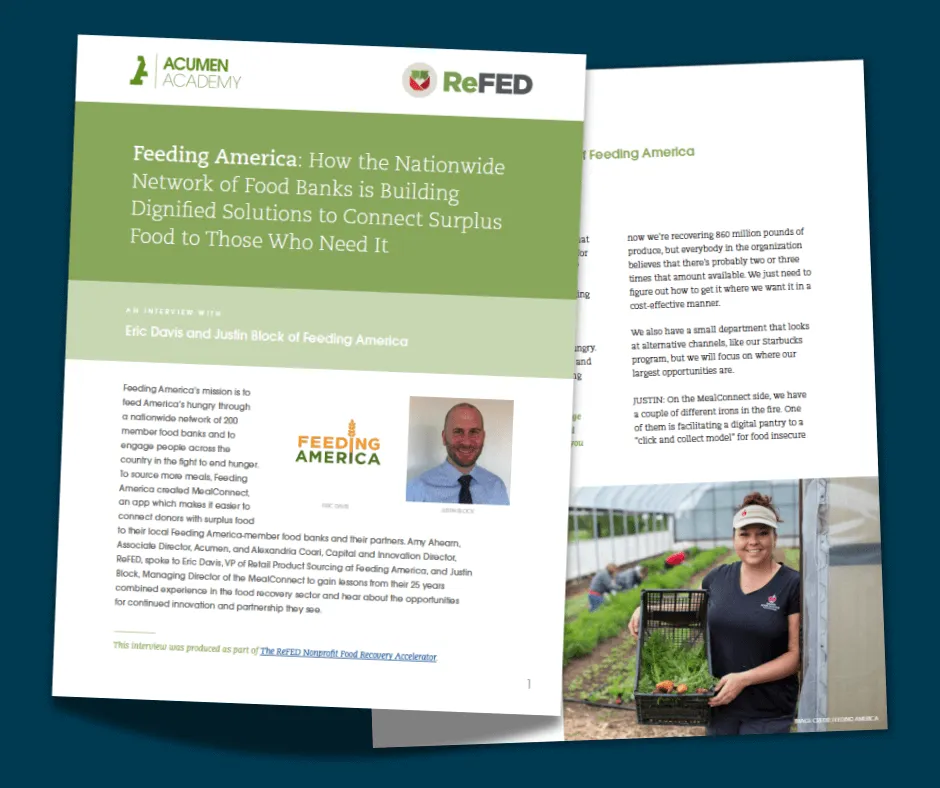
Accelerator Expert Network Knowledge Series: Eric Davis And Justin Block, Feeding America
Check out this interview with Eric Davis and Justin Block of Feeding America, where they discuss how they leverage technology and innovation to support their nationwide network of 200 member food banks.
- Reports
 Reports
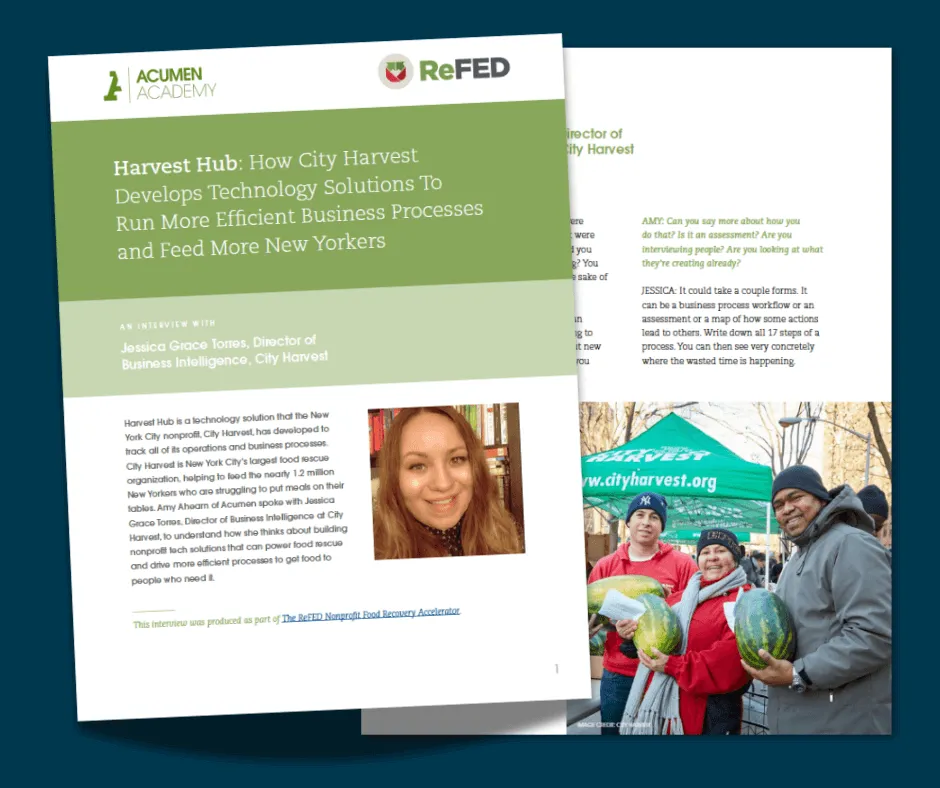
Accelerator Expert Network Knowledge Series: Jessica Grace Torres, City Harvest
Check out this interview with Jessica Grace Torres, Director of Business Intelligence at City Harvest, to learn more about City Harvest’s technology solutions geared towards alleviating hunger amongst food insecure New Yorkers.
- Reports
 Reports
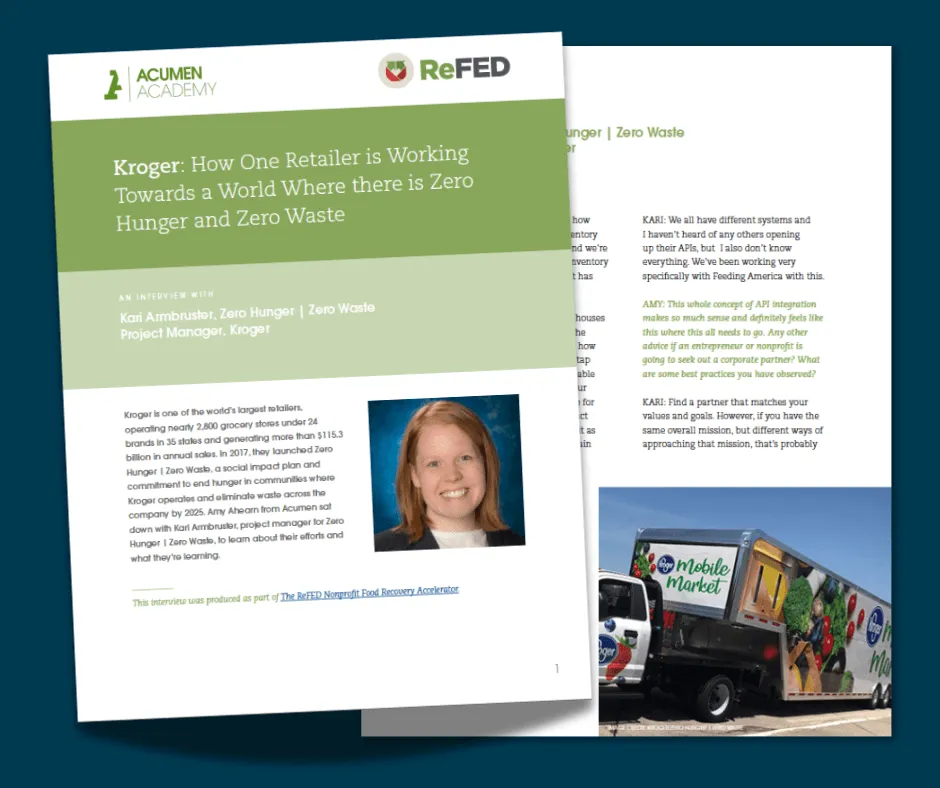
Accelerator Expert Network Knowledge Series: Kari Armbruster, The Kroger Co.
Check out this interview with Kari Armbruster, Zero Hunger | Zero Waste Project Manager at Kroger, to learn about their strategies for ending hunger in Kroger communities and eliminating waste across their company by 2025.
- Reports
 Reports
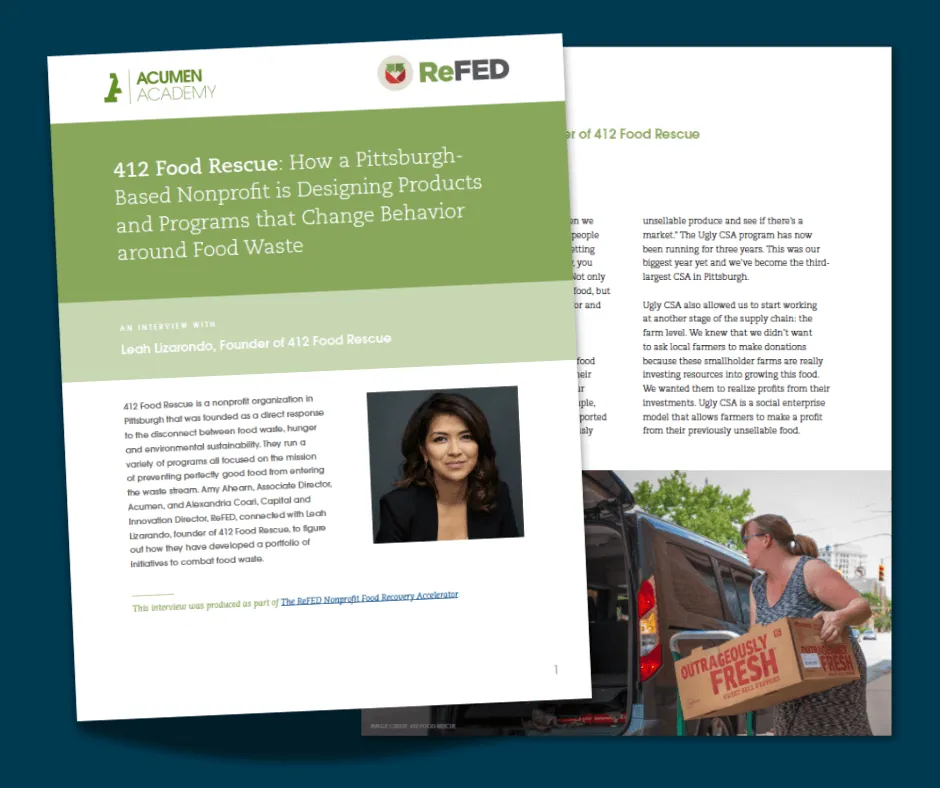
Accelerator Expert Network Knowledge Series: Leah Lizarondo, 412 Food Rescue
Check out this interview with Leah Lizarondo, Founder of 412 Food Rescue to learn how to develop a portfolio of initiatives to combat hunger and change behavior around food waste.
- Reports
 Reports
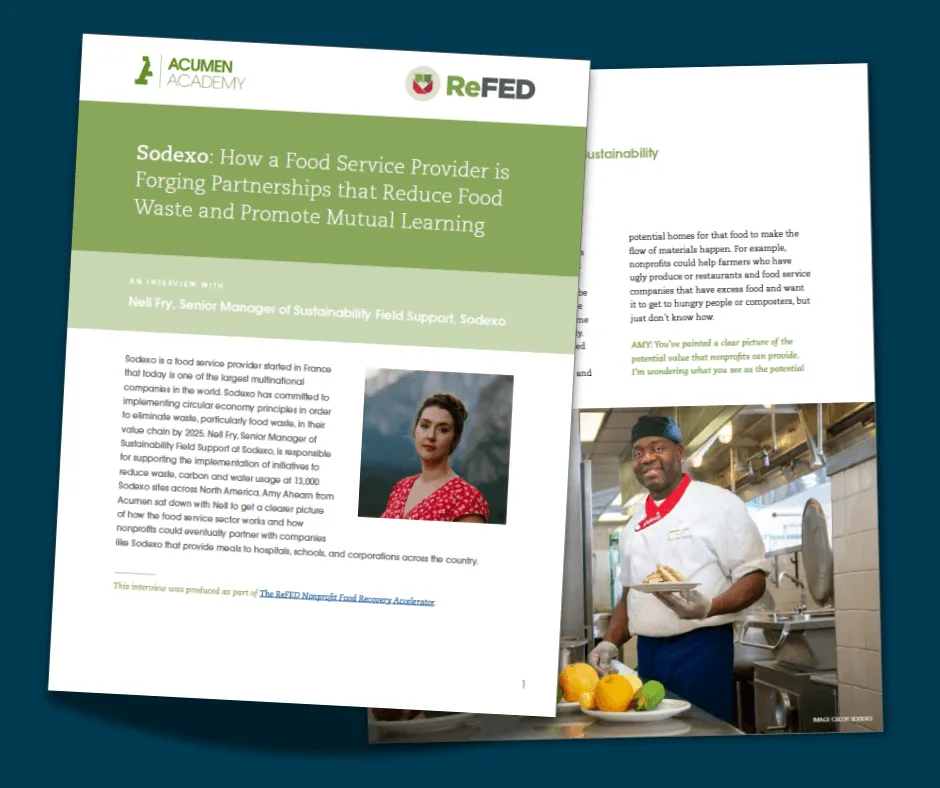
Accelerator Expert Network Knowledge Series: Nell Fry, Sodexo
Check out this interview with Nell Fry, Senior Manager of Sustainability Field Support at Sodexo, where she shares her strategy for reducing waste, carbon and water usage at 13,000 sites across North America.
- Fact Sheets
 Fact Sheets
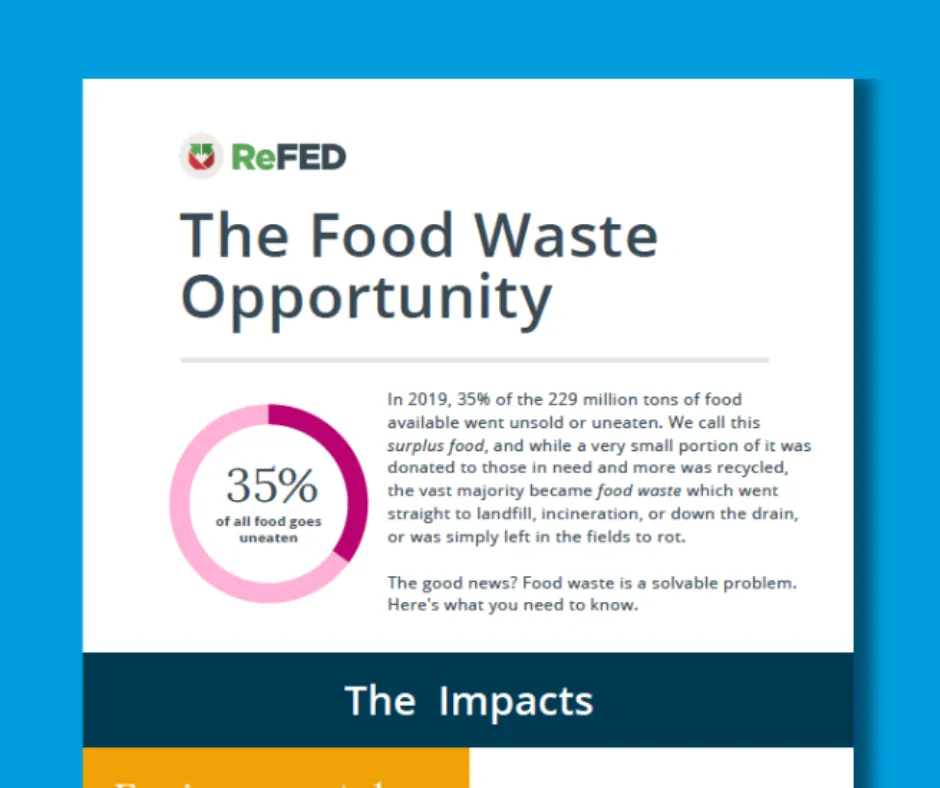
ReFED Food Waste Infographic
Our food system is radically inefficient. In 2019, the U.S. let a huge 35% of food go unsold or uneaten. The good news? Food waste is a solvable problem – here's what you need to know.
- Reports
 Reports
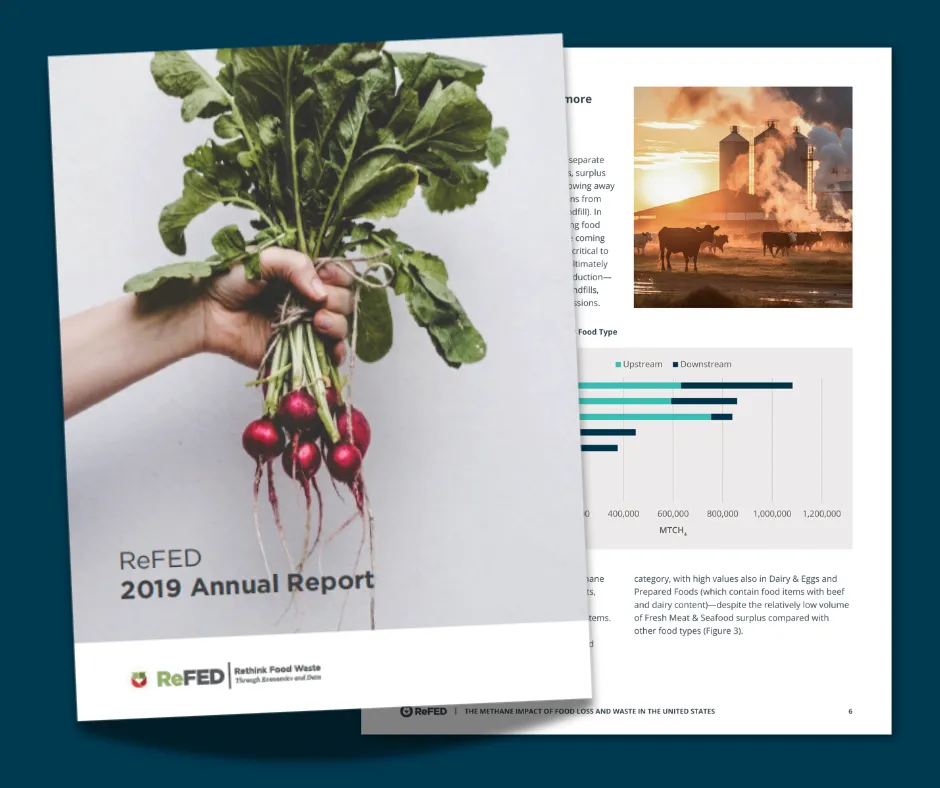
2019 Annual Report
2019 marked the transition from awareness to action. Check out ReFED’s 2019 Annual Report below to discover our history, what milestones we achieved, and what our 2020 objectives are.
- Reports
 Reports
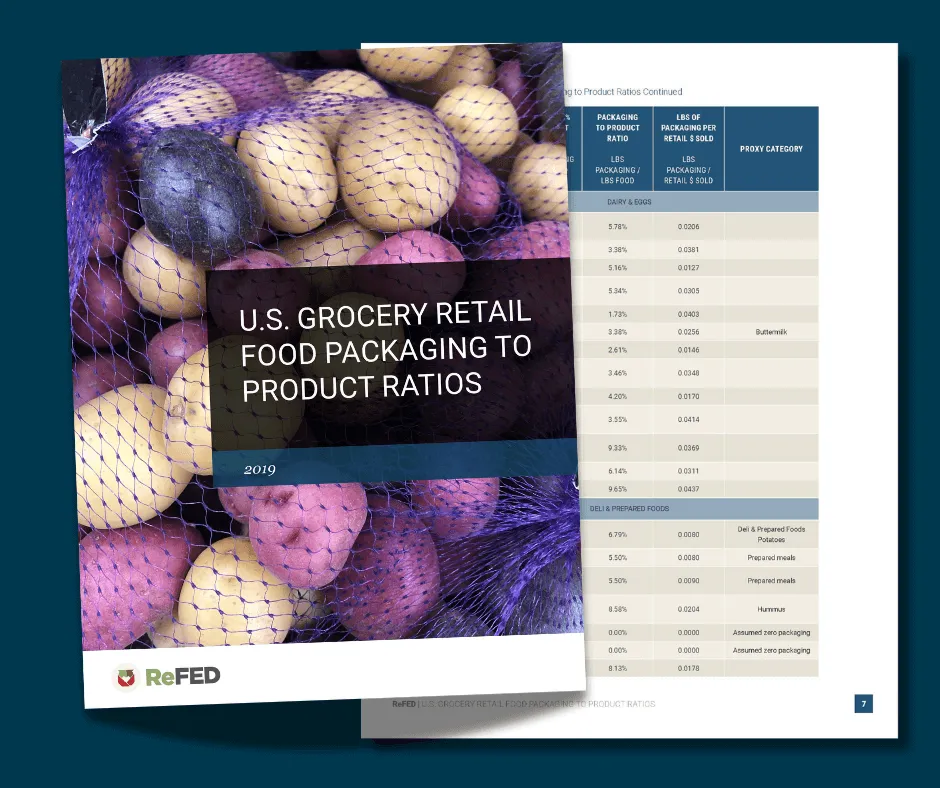
U.S. Grocery Retail Food Packaging to Product Ratios
This report provides U.S. grocery retail food packaging to product ratios at the department and category levels and describes the methodology used to do so. ReFED has developed this dataset with data from Nielsen combined with packaging weights obtained from primary research as documented in the Appendix
- Reports
 Reports
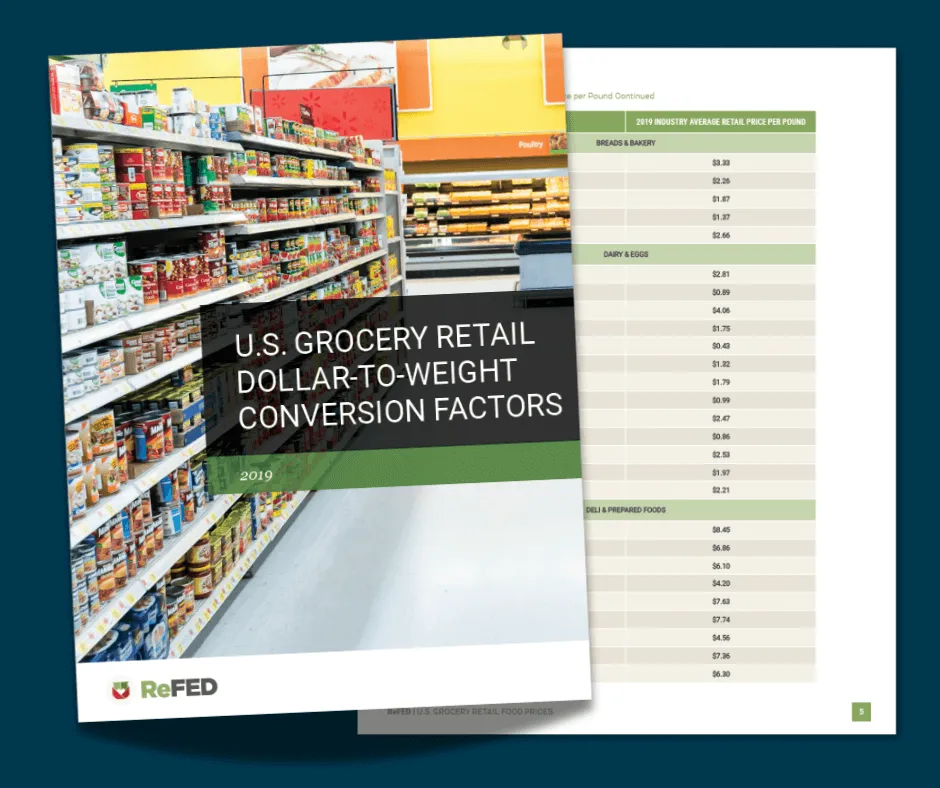
U.S. Grocery Retail Dollar-to-Weight Conversion Factors
This report describes the methodology used to quantify U.S. grocery retail food prices per pound at the department and category levels. ReFED has developed this dataset with data from Nielsen.
- Reports
 Reports
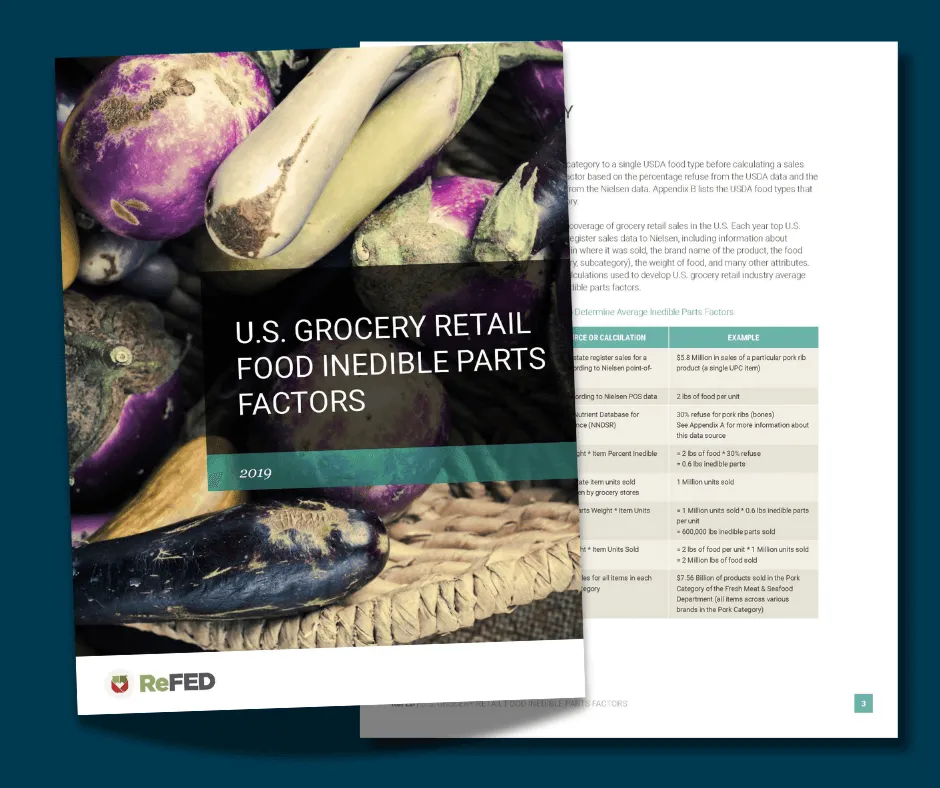
U.S. Grocery Retail Food Inedible Parts Factors
This report describes the methodology used to quantify the weight proportion of U.S. grocery food items that are inedible parts (e.g., bones, cores, peels) as opposed to the part of a food item that is intended for human consumption. Numbers are summarized at the food department and category levels. ReFED has developed this dataset with data from Nielsen combined with USDA inedible parts percentages as documented in the Appendix.
- Reports
 Reports
2018 U.S. Food Waste Investment Report
The 2018 U.S. Food Waste Investment Report details key trends in the capital and innovation landscape and highlights specific examples of philanthropic, public, and private food waste investment, including a Special Report on Foundation Funding.
- Reports
 Reports
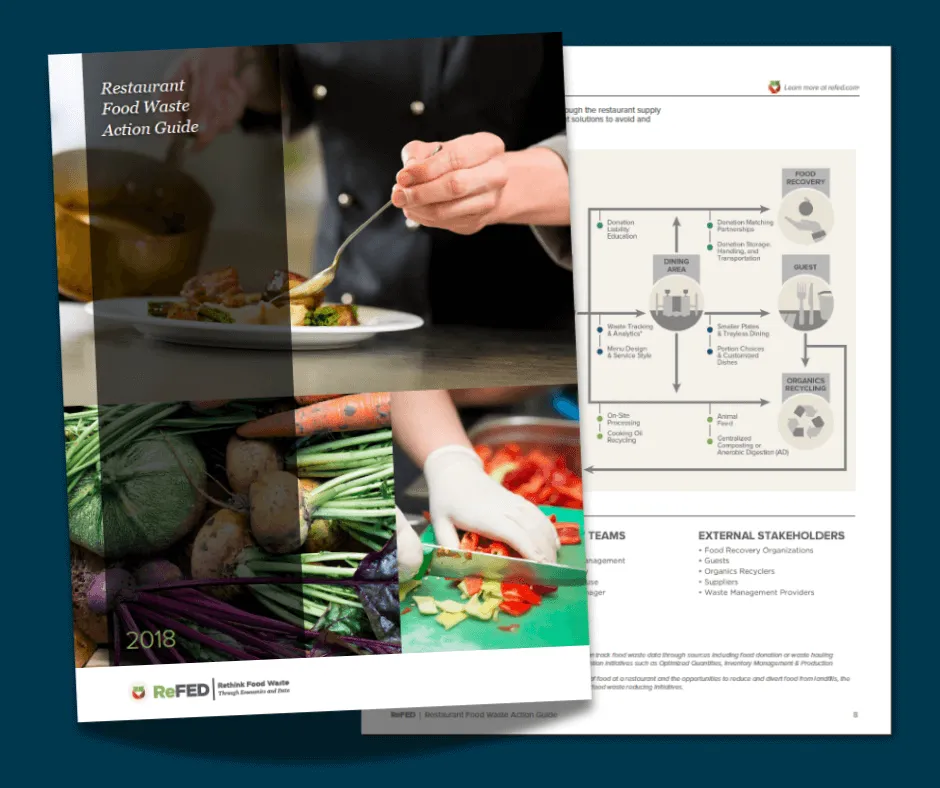
Restaurant Food Waste Action Guide
Produced in partnership with leading restaurants and trade associations, this guide is designed to help restaurants develop and implement food waste solutions.
- Reports
 Reports
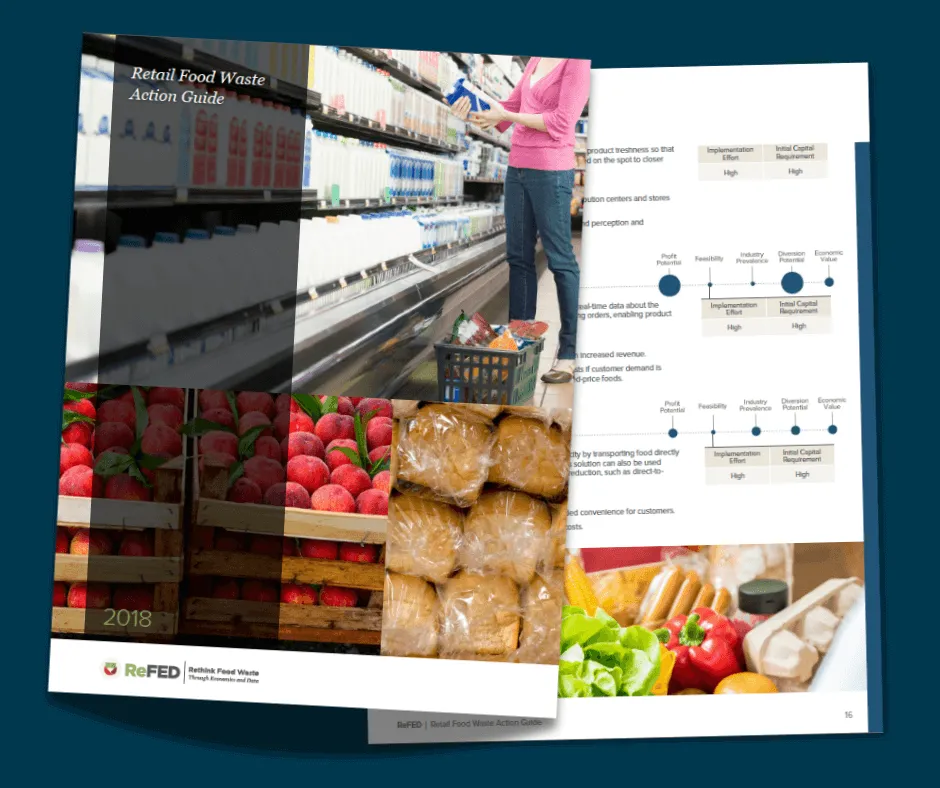
Retail Food Waste Action Guide
Produced in partnership with leading grocery retailers and trade associations, this guide is designed to help retailers develop and implement food waste solutions.
- Reports
 Reports
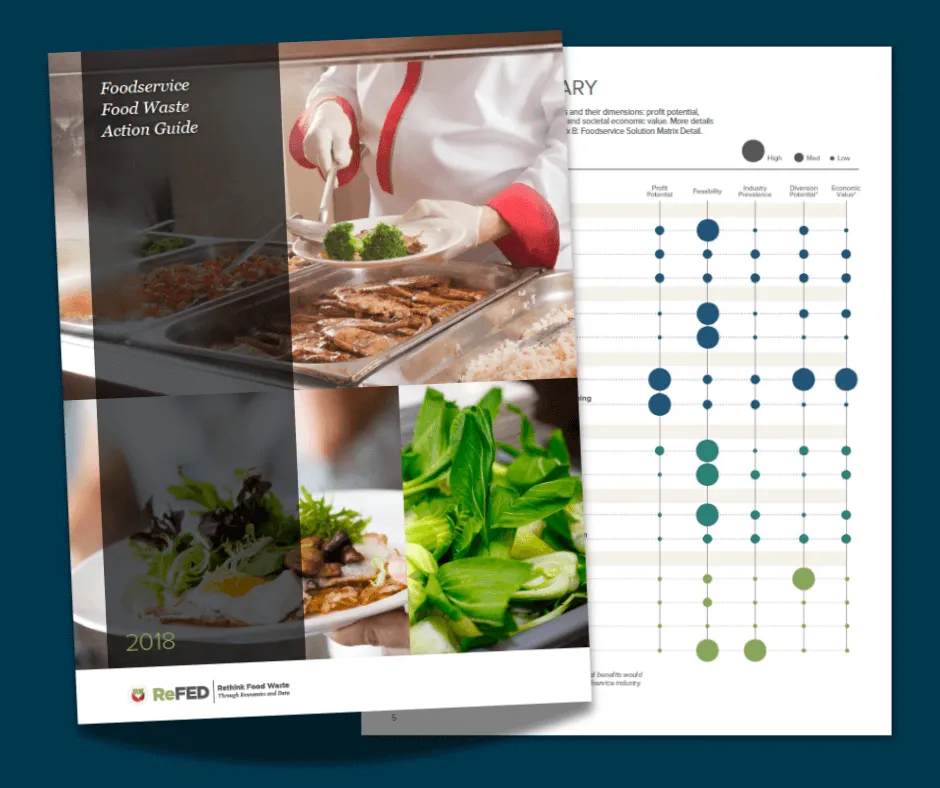
Foodservice Food Waste Action Guide
Produced in partnership with the four largest U.S. foodservice providers and trade associations, this guide is designed to help foodservice providers develop and implement food waste solutions.
- Reports
 Reports
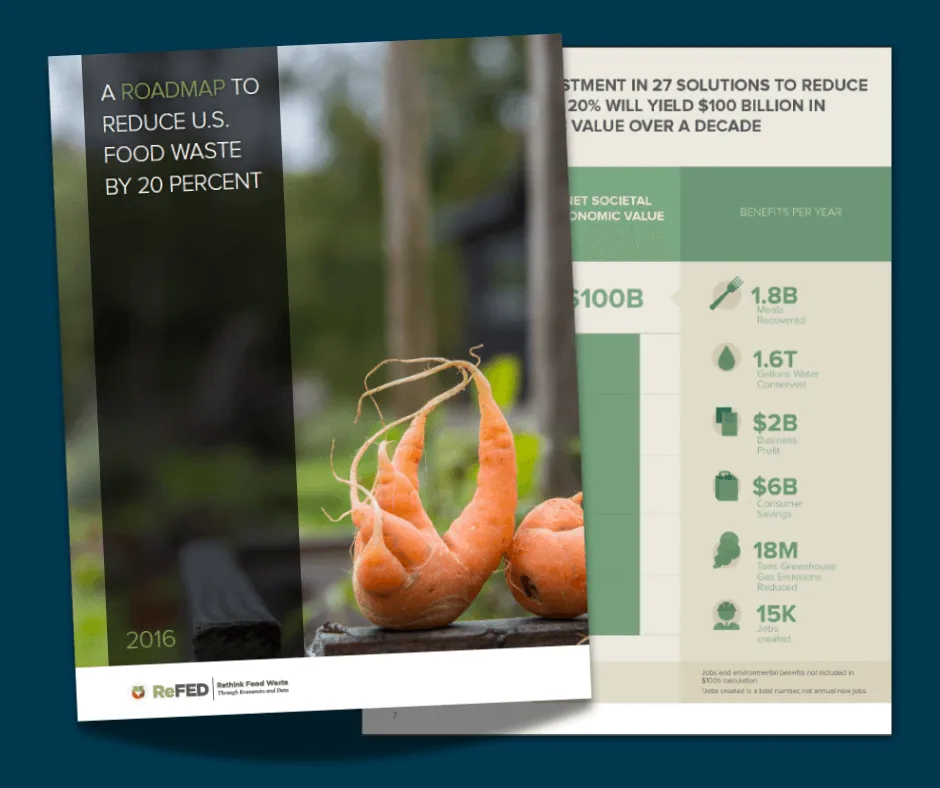
The 2016 Roadmap to Reduce U.S. Food Waste by 20 Percent
The Roadmap to Reduce U.S. Food Waste by 20 Percent is the first ever national economic study and action plan to reduce food waste at scale. It identifies the most cost-effective solutions and defines research priorities in an effort to spur multi-stakeholder action.
- Reports
 Reports
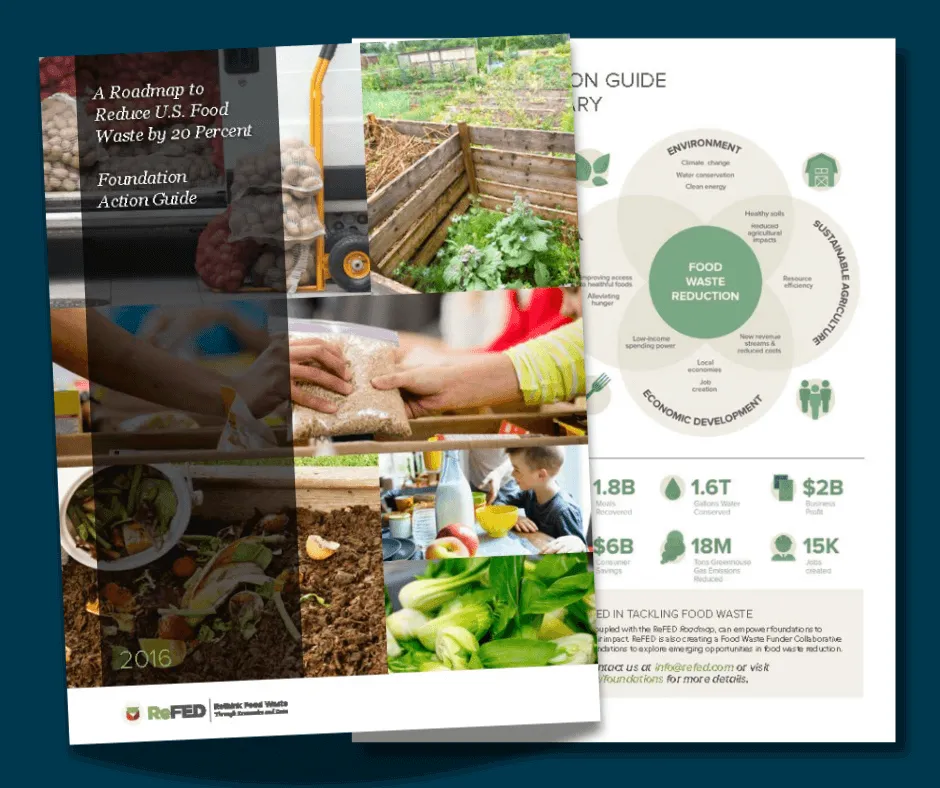
Foundation Action Guide
Philanthropic support is critical to the successful implementation of Roadmap solutions. This guide demonstrates how food waste initiatives enable foundations to achieve mission objectives, and provides key insights to help funders maximize their impact.


No results found.