
Our food system is radically inefficient.
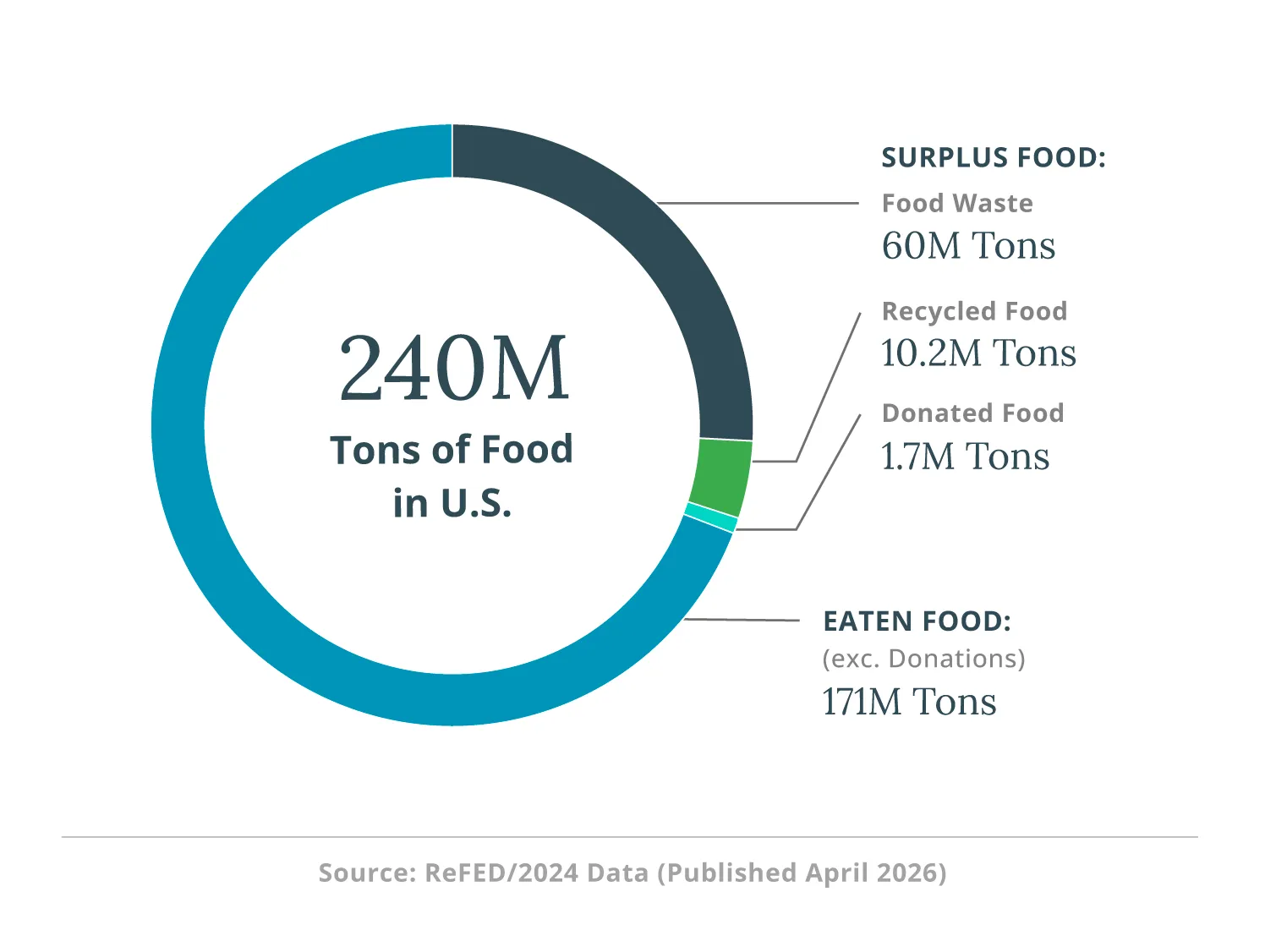
In 2024, the U.S. let a huge 29% of the 240 million tons in our food supply go unsold or uneaten. We call this "surplus food," and while a very small portion of it is donated to those in need and more is recycled, the vast majority becomes food waste, which goes straight to landfill, incineration, or down the drain, or is simply left in the fields to rot. Overall, ReFED estimates that 25% of all food in the U.S.—60 million tons—goes to these waste destinations.
That’s almost 114 billion meals’ worth of food that we’re letting go unsold or uneaten each year, roughly 1.3% of U.S. GDP. And the impacts of surplus food and food waste on our climate and environment are enormous, since food that is never eaten still requires resources to grow, harvest, transport, cool, cook or otherwise prepare—even when it ends up being disposed of. Around the world, food waste has been recognized as an urgent issue requiring immediate action—the United Nations, U.S. Government, European Parliament, global business coalitions such as the Consumer Goods Forum, and more have all set goals to cut food loss and waste in half by 2030. The good news? Food waste is a problem that can be solved—and we're providing the data, insights, and resources to help do it.
New Report
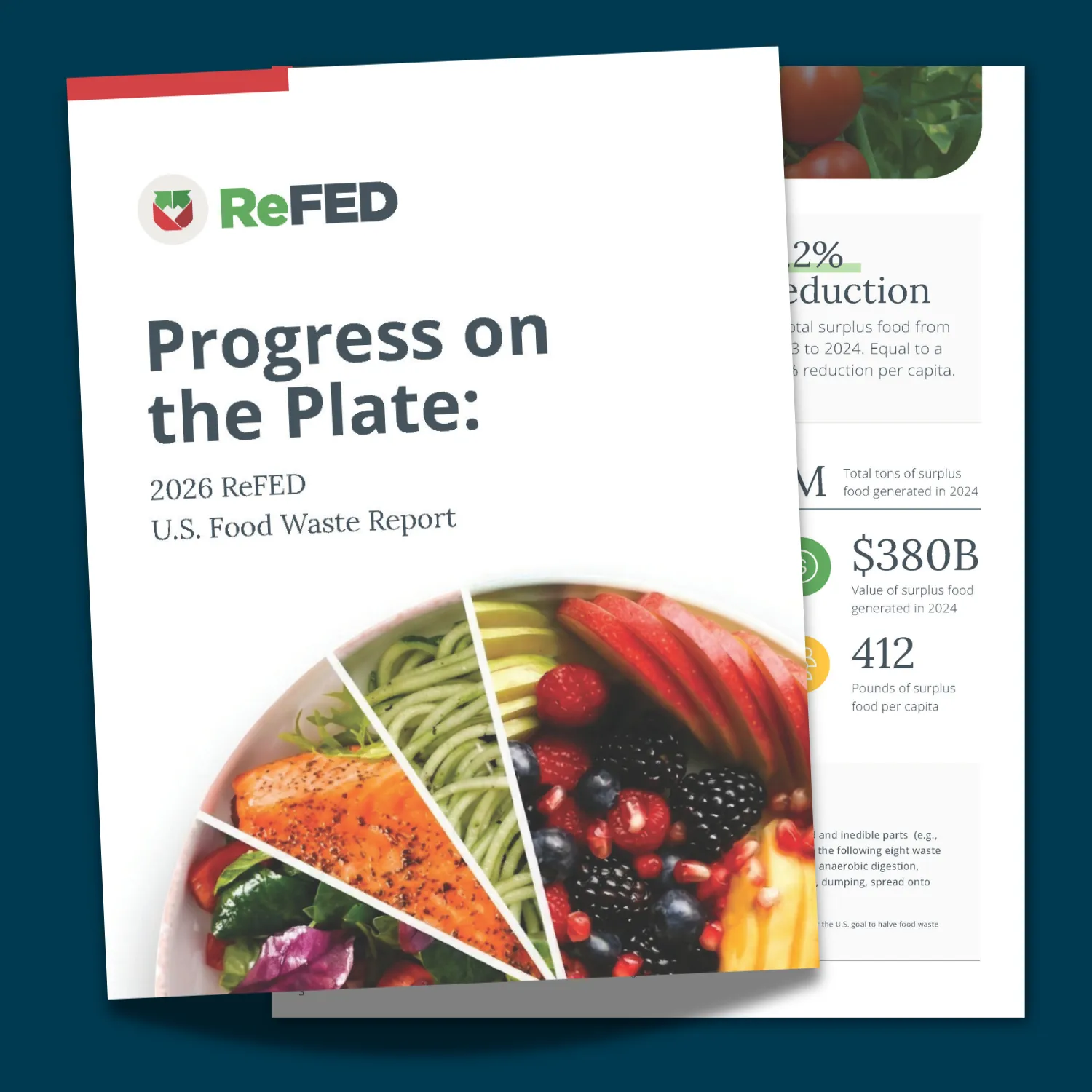
"Progress on the Plate: 2026 ReFED U.S. Food Waste Report"
As affordability and food prices remain top of mind for Americans, a harsh reality remains true: in the United States, nearly one third of all food is lost or wasted as it makes its way from farm to fork. But as you’ll see throughout this report, progress on food waste is not only possible—it’s happening.
Pulling together ReFED data analysis and modeling with external research and supported by narratives developed through our work with partners across the food waste ecosystem, this report is intended to help the food system understand the issue and what can be done to solve it.
What is Food Waste?
In line with the United States Environmental Protection Agency (EPA) and the United Nations’ definition, ReFED defines food waste as uneaten food and inedible parts (e.g., peels, pits, bones) going to the following eight destinations: composting, anaerobic digestion, landfill, combustion, sewer, dumping, spread onto land, or not harvested. It’s a subset of surplus food—which ReFED defines as all food that goes unsold or unused by a business or that goes uneaten at home—including food and inedible parts that are donated, fed to animals, repurposed to produce other products, and all of the destinations represented in food waste.
Some surplus food is inevitable, but the goal of food waste reduction efforts is not only to get food out of landfills. It’s also to make sure food is going to its “highest and best use”—that is, being eaten by people. This can be seen in guidance provided by the EPA in its Wasted Food Scale (opens in a new tab). Essentially, all of the resources required to produce, transport, store, and sell a truckload of strawberries have been better used when those strawberries are consumed by people rather than, for example, added to soil as compost—or worse, sent to landfill. The U.S. Government has set a 50% food waste reduction goal that aims to cut the amount of food waste in the retail, food service, and residential sectors in half, in line with United Nations Sustainable Development Goal 12.3.

What is the Impact of Surplus Food?
Food that is produced but never eaten still requires enormous resources to grow, harvest, transport, cool, cook or otherwise prepare—even when it’s disposed of. It’s an imprudent use of our food supply chain, and it has enormous impacts on the climate and natural resources, those struggling with food insecurity, and our economy.
The following data and statistics paint a picture of the extent of the food waste problem and its impacts.

Climate and Natural Resources
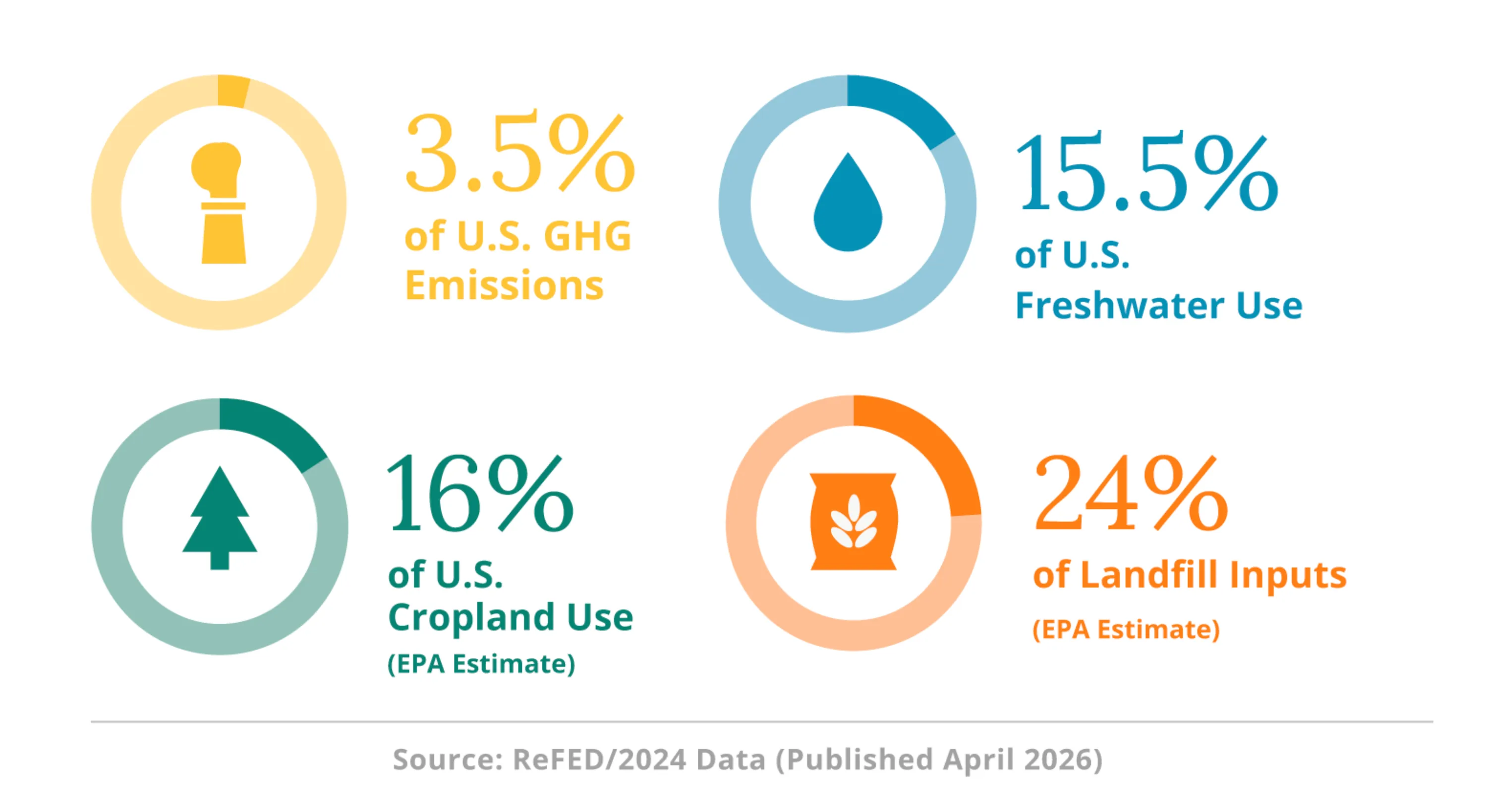
When food goes uneaten, the resources used to produce it go to waste as well. If all of our country’s surplus food was grown in one place, this “mega-farm” would cover roughly 80 million acres, over three-quarters of the state of California. Growing the food on this wasteful farm would consume all the water used in California and Idaho combined. The farm would harvest enough food to fill a 40-ton tractor every 18 seconds. Many of those trailers would travel thousands of miles, distributing food to be kept cold in refrigerators and grocery stores for weeks. But instead of being purchased, prepared, and eaten, this perfectly good food would be loaded onto another line of trucks and hauled to a landfill, where it would emit a harmful stream of greenhouse gases as it decomposes.
Uneaten Food Consumes:

Food Insecurity
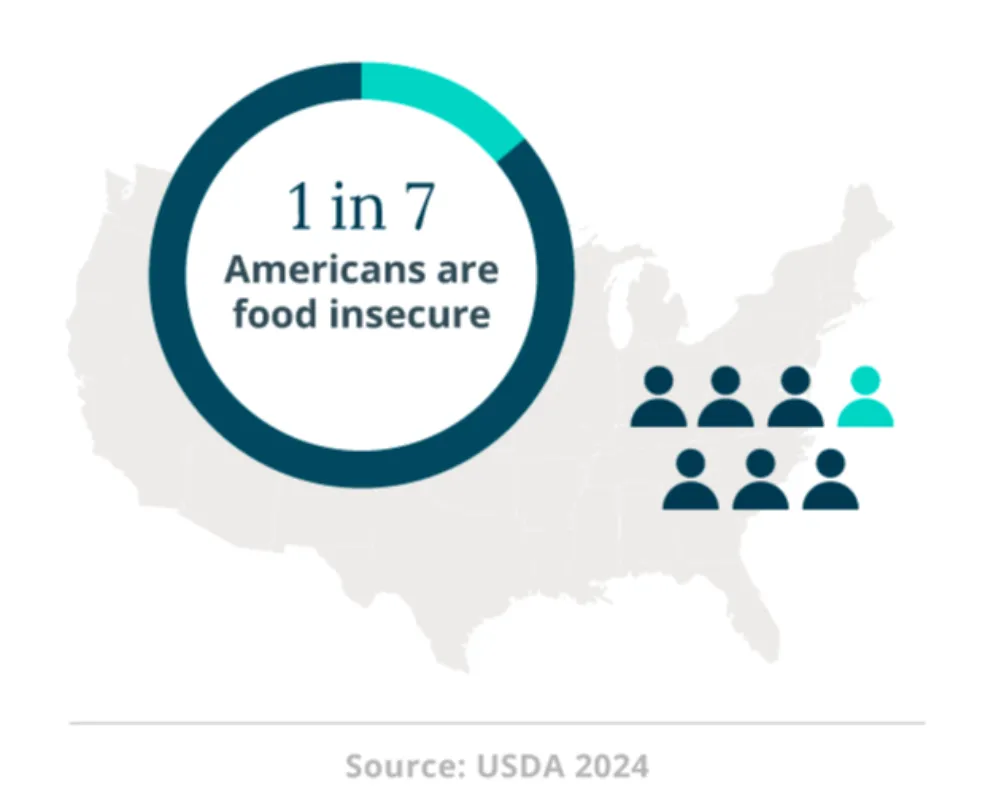
One in seven Americans—many of them children—are food insecure, meaning they lack reliable access to sufficient, affordable, nutritious, and culturally appropriate food. But much of what is considered "waste" isn't that at all—it's perfectly edible and could be going to help those in need.

Economy
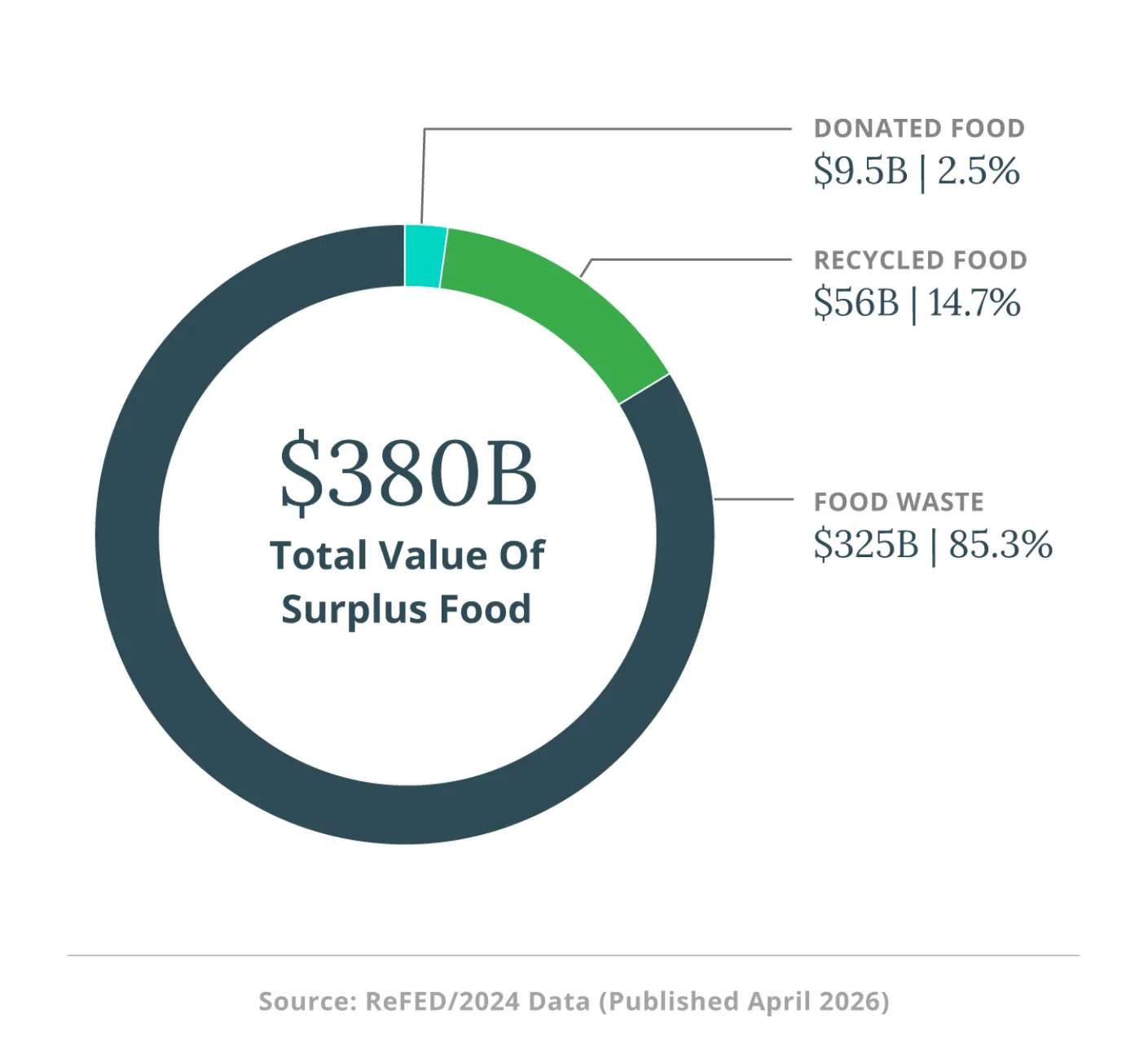
In 2024, the value of surplus food reached $381 billion. Of this, 85%—$325 billion—was due to food waste. While the financial cost of uneaten food is greatest for consumers, food surplus within all food industry sectors was worth $240 billion (including plate waste in restaurant and foodservice settings).
Where Does Surplus Food Occur?
Surplus food is often considered to be a singular problem, but it’s an entirely different situation for hundreds of tons of broccoli to go unharvested on a farm compared to a half-full platter of uneaten potatoes that’s scraped into the trash at home. Loss and waste occur at each stage of the supply chain, with the majority happening at consumer-facing businesses—including grocery stores, restaurants, and other businesses that sell and serve food—and in homes. Food waste is systemic in nature, and it’s important to recognize that the problems with food waste that happen at one stage are often influenced by something that happens at another stage, either upstream or downstream. For example, the farm mentioned above may not harvest all of its broccoli, because it doesn’t meet appearance specifications set by the retailers that purchase its produce—appearance standards the retailers established based on feedback received from the customers that shop in their stores.
Surplus Food Occurs Across the Supply Chain:

Which Foods are Surplus?
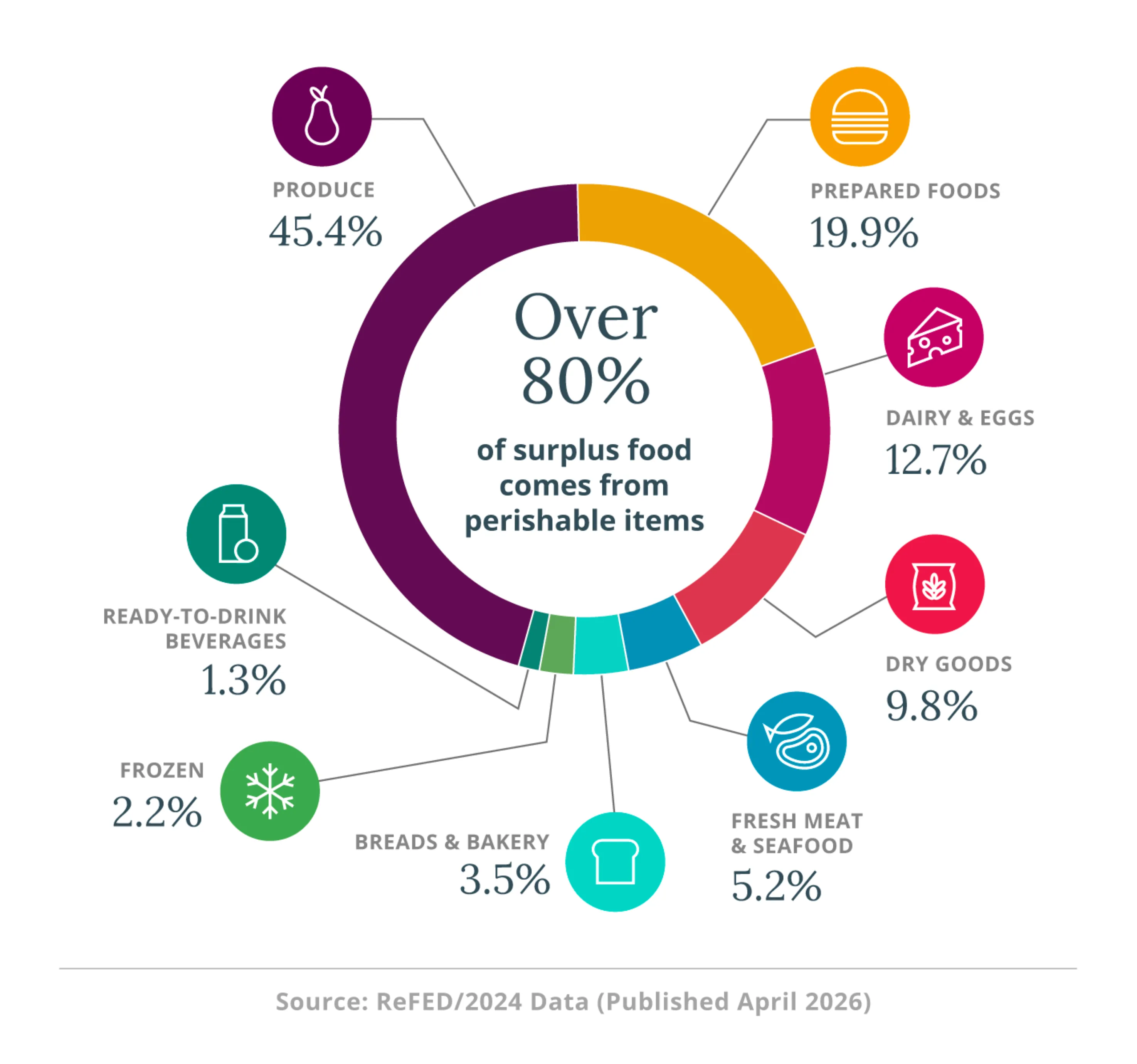
Food waste data shows that more than 80% of surplus food comes from perishables, which include fruits and vegetables, meats, prepared fresh deli items, seafood, milk and dairy, and some grain products such as bread and bakery items.
Perishables by nature can spoil, so are more often discarded. In contrast, non-perishable foods—pastas, canned goods, and highly processed, shelf-stable products—don’t go bad as easily. Fruits and vegetables constitute more than a third of total food waste. Meats and seafood, while perishable, are the most expensive food types and therefore tend to have lower waste rates due to their high value.
What Causes Surplus Food?
The reasons for surplus food are numerous and complex across the food supply chain. Here are some insights into why it occurs:
Farms
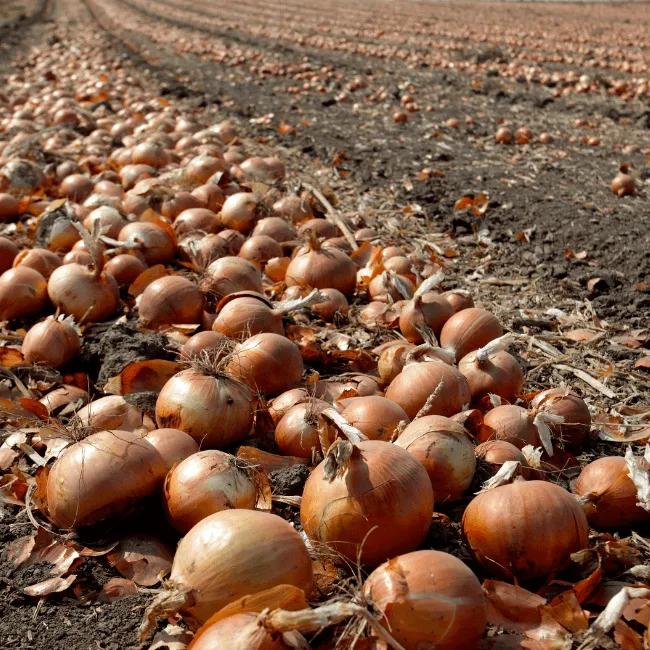
Food loss starts at the production level. Low market prices and high harvest costs often make it uneconomical for farmers to gather all that they produce. Strict cosmetic standards can exclude imperfect-looking produce. Labor shortages cause further challenges. And despite gleaning and farm-to-food-bank efforts to recover this unharvested food, the vast majority is left in the fields and tilled under.
Manufacturers
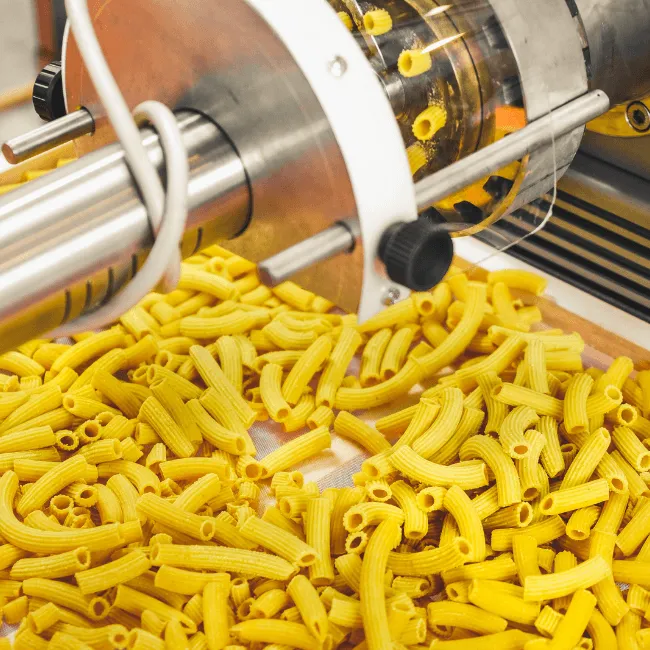
A full 90% of surplus in food processing is byproduct—the peels, stems, bones, and other parts not used in the main product—and production line waste. Many of these trimmings, such as potato peels from french fry lines, are still edible. The wide variety of products sold causes inefficiencies as well—each time a production line is changed, it must be emptied and cleaned. And during the COVID-19 pandemic, we saw how rigid processes caused some manufacturers to struggle to adjust their output to meet the needs of new customers with different product requirements—for example, producing smaller milk cartons for consumers stuck at home rather than larger containers for industrial markets.

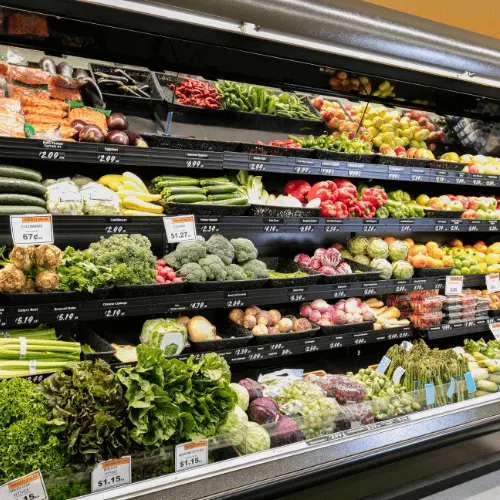
Retailers
Customer demand for a variety and quality of food being readily available strains inventory management and food purchasing, and it can be difficult to change stocking practices or product sizes—especially when those practices are tied to a retailer's brand identity. High customer standards for freshness can lead businesses to dispose of safe, edible food based on a perception that it's past its prime—date label concerns account for nearly 50% of food waste at the retail stage.
Read more about food waste in the retail sector in the U.S. Food Waste Pact's annual data report.

Foodservice
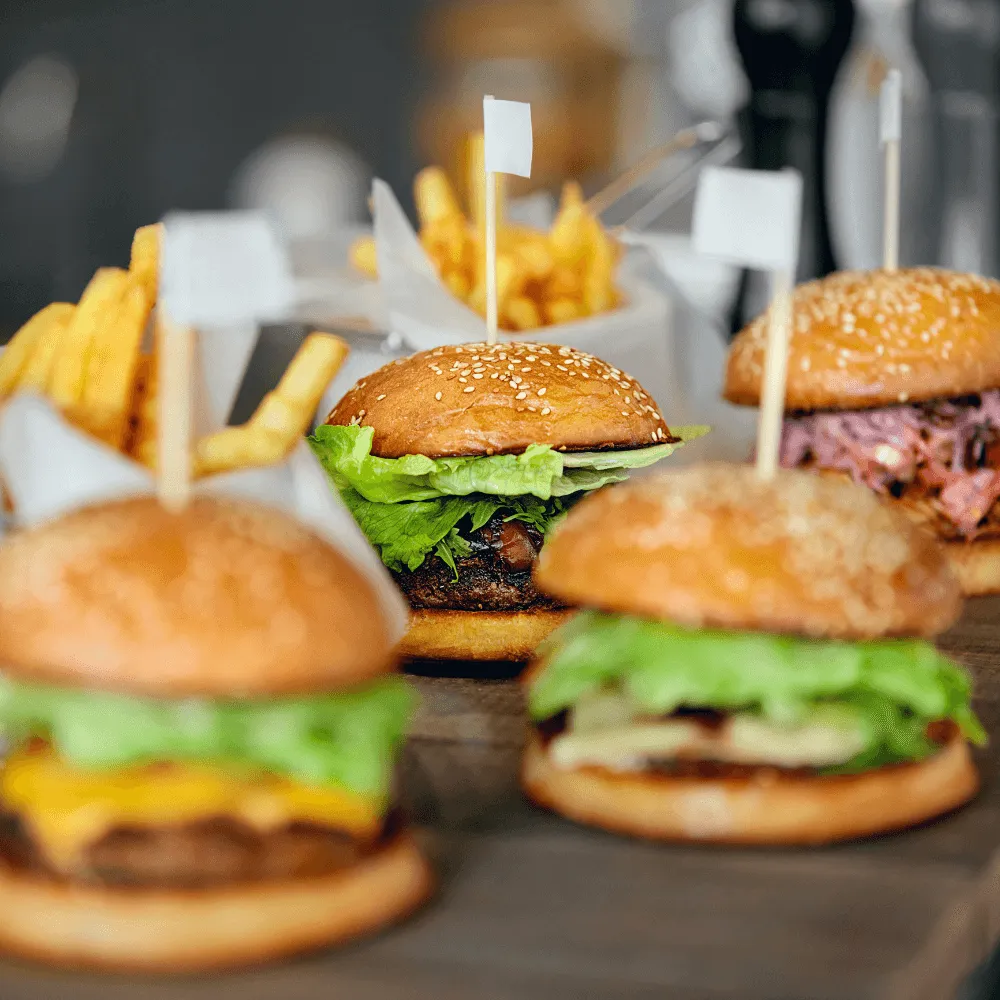
Similar to retailers, foodservice customers expect a variety and quality of food to be available—and in the case of fast-food restaurants and other businesses with similar formats, customers expect it as soon as they place their order. Difficulty in forecasting, bulk purchasing, and improper storage can all lead to waste, along with preparation techniques that can leave usable food behind. But the majority of waste at the foodservice level—a huge 70%—is due to plate waste from customers who don’t eat all that they are served (or take from a buffet).
Read more about food waste in the foodservice sector in the U.S. Food Waste Pact's annual data report.

Homes
Poor food management leads to spoilage and ultimately drives food waste in homes. Many consumer purchases are unplanned, which can lead to over-purchasing, and many families are tempted into bulk purchases of food they will never consume just to get a good deal on per-unit costs. Many consumers also lack the knowledge of how to repurpose ingredients and store food properly. Misunderstanding of date labels often leads consumers to throw away food before it’s spoiled. And many consumers have limited access to municipal food waste recycling programs and perceive barriers to composting at home.
Learn more about consumer food waste.


Barriers To Solutions Implementation
While solutions to reduce food waste exist, there are a range of reasons why they can be difficult to implement. Click on the arrows to explore some of these challenges:
Misalignment of Costs and Benefits
Businesses may be reluctant to implement a new technology or process if another part of the supply chain receives the benefit. They are also not incentivized to reduce the waste of their customers, as this could ultimately reduce sales.
Lack of Social License
Consumer expectations for product variety, convenience, low prices, and cosmetic perfection constrain businesses from streamlining their selection, offering cosmetically imperfect food, and reducing portion sizes.
Information Gaps
There is uncertainty about where food waste occurs, how much is being wasted, and its associated value. As such, the costs of food waste are often invisible, and it’s difficult to manage when it’s not being measured. [Visit ReFED's Insights Engine (opens in a new tab) for up-to-date facts about food waste.]
Organizational Silos
Implementing food waste reduction solutions requires collaboration between different departments within participating businesses, including buyers, merchants, store managers, chefs, waste managers, and financial analysts. Employees in different parts of an organization may not be aware of the fully loaded cost implications of waste.
Liability Concerns
The federal Good Samaritan Food Donation Act (opens in a new tab)—originally passed in 1996 and amended by the Food Donation Improvement Act (opens in a new tab) in 2022—has protected donors and recipients from civil or criminal liability short of gross negligence and misconduct. Still, many are not aware of this protection, and even those who are may have concerns over public perception that could result from a food safety issue around donation. Food recovery organizations have robust systems to ensure safety, but many businesses are still skeptical. [Learn more with ReFED's Policy Finder (opens in a new tab).]
Fragmented Regulation
Health regulations vary by city and state, arising from “home rule” authority in some localities and differing interpretations of the FDA Food Code, which only loosely defines basic requirements for food safety. This hampers national and global companies from developing uniform food donation policies across their organizations. [Learn more with ReFED's Policy Finder (opens in a new tab).]
Handling, Transportation, And Storage
Many consumer-facing businesses lack sufficient facilities to store food for donation. Food banks, pantries, soup kitchens, and other community organizations may similarly not have sufficient infrastructure or labor capacity to accept large donation volumes, especially of perishable foods requiring refrigeration or freezing. [Check out our Solution Provider Directory (opens in a new tab) to find organizations that can help support your food waste reduction initiatives.]
Financial Viability
Donating food can involve additional handling costs beyond regular disposal. For example, state and federal tax benefits for recovered food rarely cover the farm labor costs involved. Without a way to recoup these costs, businesses are more likely to default to the path of least resistance: disposal.
Cost of Disposal
Landfill disposal rates (i.e., tipping fees) have remained exceptionally low in the U.S. relative to many other developed countries. Since tipping fees are typically the largest revenue streams for recycling processing facilities, this has hurt the business case to expand organics recycling infrastructure.
Material Supply Assurance
A long-term guarantee of material is necessary for recycling facilities to access project finance and maintain long-term profitability. However, most cities and businesses are reluctant to sign long-term waste supply contracts due to long-term price uncertainty.
High Transportation and Logistics Costs
Once waste is collected and deposited to a transfer station, the distance that it must travel to a recycling facility versus a landfill becomes the key driver for system economics. If hauling costs to a recycling facility are high, haulers may not bring enough food scrap volumes to keep the facility at the high capacity rate needed to be profitable.
Access to Financing
Food waste reduction solutions have varying return profiles based on their level of maturity, capital required, nature of the solution (for-profit, non-profit), and more. This can result in a lack – or perceived lack – of direct return on investment, competing internal initiatives (from a management/personnel bandwidth and budgeting perspective) at the adopter level, and poor matching of capital type to the appropriate project. A perceived risk of adopting new solutions (e.g., new technology, operational disruptions, etc.) leads to higher return hurdles required to adopt the project. Additionally, capital-intensive projects require high upfront costs and are the most sensitive to variations in financing rates, which can be a differentiator for success. [Learn about the financing needed to implement the food waste reduction solutions in our Insights Engine here (opens in a new tab).]
Packaging and Contamination
The hassle of removing food from its packaging significantly reduces food recycling rates among businesses and consumers. Common contaminants include plastic, foam, or disposable food packaging that appears compostable but is not. The problem continues at the treatment facility. Compost or anaerobic digestion facilities that receive highly contaminated feedstock must spend more costs on pre- and post-processing, which may hurt profitability.
Permitting and Siting
Compost and anaerobic digestion facilities have trouble rallying local support, because the benefits are often hidden to communities. For densely populated municipalities, a limited number of sites are feasible for centralized composting. In addition, communities often object to compost facilities from “NIMBY” concerns related to perceived odors, pests, or increased truck traffic, even though these impacts can vary greatly based on the management of the compost facility.
End-Market Development
Recycling facilities must maintain high prices for their end products (compost, digestate, energy) to maintain financial viability over time. This is impacted by customer demand. Energy demand is massive and linked into regional markets. However, for anaerobic digestion projects, the sharp ups and downs of natural gas market prices make it challenging to finance projects that require stable, long-term cash flows. Compost markets are smaller and constrained by transportation costs. Therefore, market demand for compost must keep pace with the millions of new tons of compost generated, or else a market imbalance will negatively impact compost prices and system economics.
Policy Overview
Public policy at the federal, state, and municipal levels can offer opportunities to accelerate large-scale food waste reduction. Our Food Waste Policy Finder—developed by ReFED in partnership with the Harvard Law School Food Law and Policy Clinic to provide an overview of current federal and state policies related to food waste—shows the existing policy landscape, while highlighting best-practice legislation that can inform the continued development and implementation of sound food waste policy.
Your Source for Data and Solutions:
ReFED's Insights Engine
The Insights Engine is an online hub for data and insights about food waste built from dozens of public and proprietary datasets—plus estimates and information from academic studies, industry papers, case studies, and expert interviews—featuring a detailed financial analysis of more than 40 food waste reduction solutions; a directory of organizations ready to partner on food waste reduction initiatives; and more. With more granular data, more extensive analyses, more customized views, and the most up-to-date information, the Insights Engine can provide anyone interested in food waste reduction with the information they need to take meaningful action.
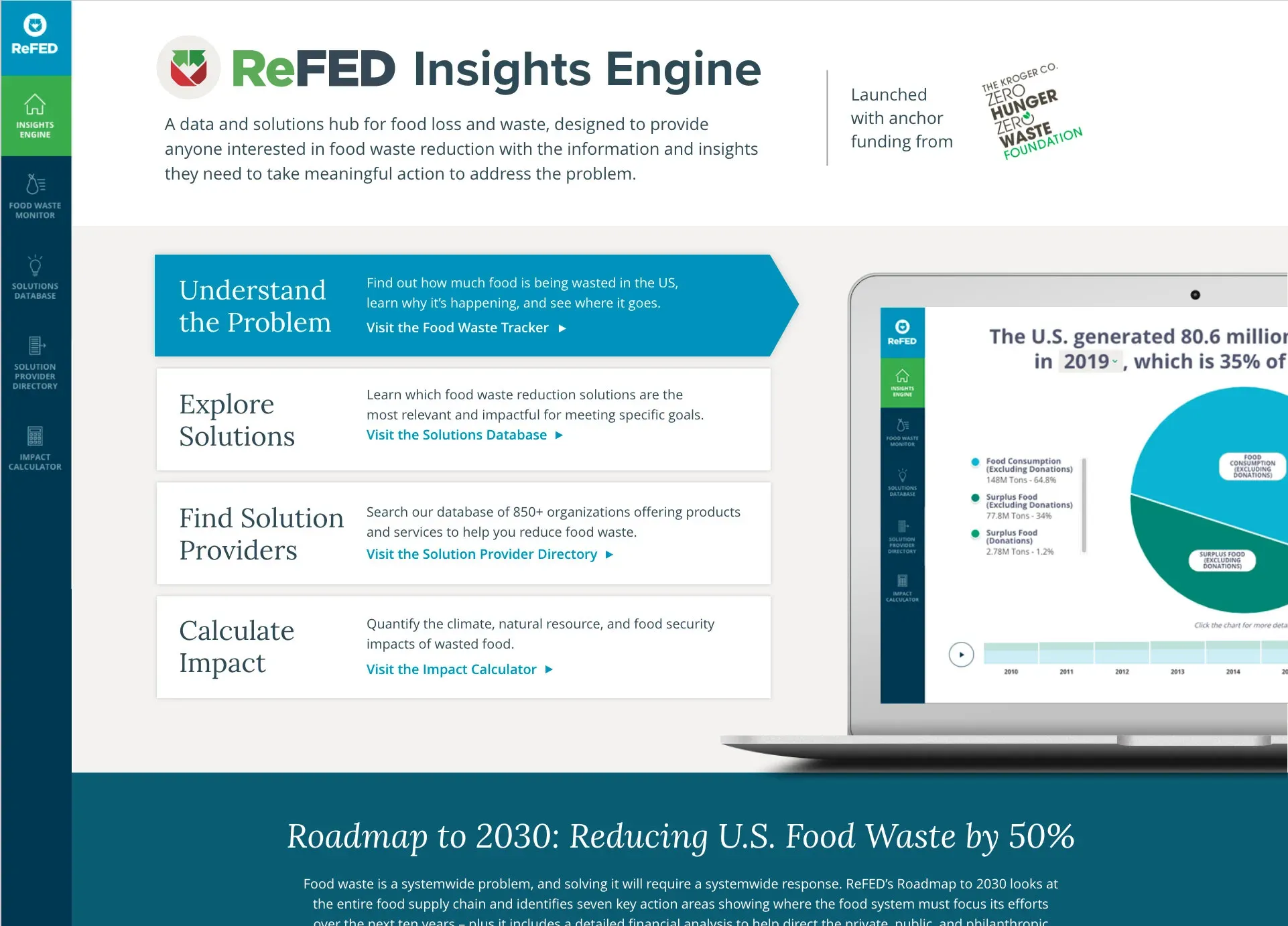

Food waste is a solvable problem – and ReFED can help you do it. We offer a range of resources for organizations to advance their own food waste initiatives. Our Roadmap to 2030 and Insights Engine—featuring seven key action areas for focus, 40+ food waste reduction solutions, and more—can help your team get started.