

Stakeholder Recommendations
How Can Manufacturers Reduce Food Waste During Production?

Stakeholder Recommendations
Manufacturers
Summary
Manufacturers (inclusive of food processors) play a key role in transforming raw, edible materials into food products that can be sold to other businesses and/or consumers—and demand from these end users for a wide variety of products continues to cause inefficiencies. Each time a production line is changed, it must be emptied and cleaned. Inputs can require trimming for use in end products, leading to edible parts going unused. And the COVID-19 pandemic revealed how rigid many processes are, as manufacturers struggled to adjust their output to meet the needs of new customers with different product requirements—for example, manufacturers who have always produced milk for industrial markets in large containers were unable to quickly offer their products in small, consumer-friendly sizes.
While manufacturing generated 13.1M tons of surplus food in 2024, nearly 50% (the highest percentage of all sectors) went to recycling destinations. The biggest categories of surplus were dairy & eggs (44.7%), produce (23.1%), and dry goods (18.4%). The vast majority of the surplus (90.1%) came from byproducts and production line waste, with buyer rejections and unshipped finished product contributing a small portion.
Manufacturers have already implemented a range of efficient procedures, but opportunities to drive down surplus and waste generation remain.
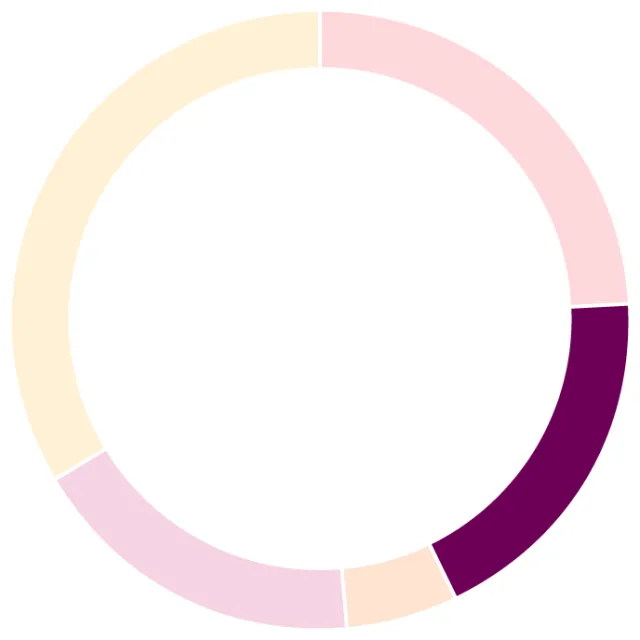
18.8%
Total Surplus Food in 2024 by Manufacturers
13.1M Tons
Causes
Byproducts & Production Line Waste - 11.8M Tons (90.1%)
Buyer Rejections - 1.02M Tons (7.8%)
Unshipped Finished Product - 278k Tons (2.1%)
Destinations
Animal Feed - 5.05M Tons (38.4%)
Land Application - 3.88M Tons (29.5%)
Composting - 1.36M Tons (10.4%)
Explore solutions that can help Manufacturers reduce food waste.
Solutions for this sector can impact food waste generated by other sectors as well, not just waste from Manufacturers. ReFED's impact estimates reflect Modeled Solutions only—Unmodeled Solutions and Best Practices can take these amounts even higher.
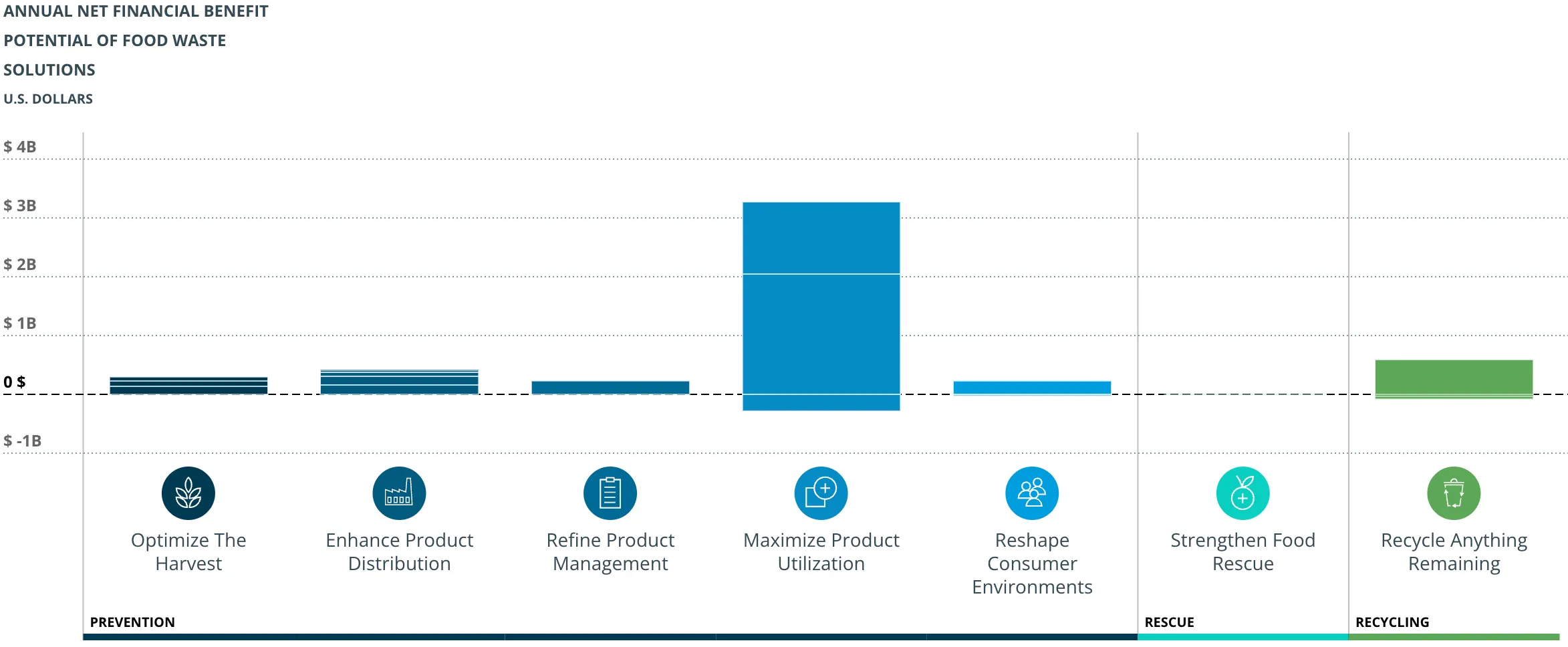
Top 5 Solutions for Manufacturers
- Manufacturing Byproduct Utilization (Upcycling) 2B
- Manufacturing Line Optimization 1B
- Livestock Feed 590M
- Assisted Distressed Sales 231M
- Standardized Date Labels 231M
- Manufacturing Line Optimization 590M
- Waste-Derived Processed Animal Feed 320M
- Active & Intelligent Packaging 285M
- Centralized Composting 112M
- Co-Digestion At Wastewater Treatment Plants 47M
- Manufacturing Byproduct Utilization (Upcycling) 2B
- Manufacturing Line Optimization 2B
- Livestock Feed 608M
- Waste-Derived Processed Animal Feed 272M
- Standardized Date Labels 236M
- Livestock Feed 3M
- Manufacturing Line Optimization 3M
- Manufacturing Byproduct Utilization (Upcycling) 2M
- Waste-Derived Processed Animal Feed 2M
- Centralized Composting 836K
- Manufacturing Line Optimization 8M
- Manufacturing Byproduct Utilization (Upcycling) 6M
- Standardized Date Labels 2M
- Active & Intelligent Packaging 1M
- Temperature Monitoring (Pallet Transport) 884K
(Annual Figures)
Top Recommendations
Upcycle byproducts: Dedicate R&D resources to create upcycled product lines for edible byproducts.
Optimize manufacturing lines: Re-engineer processes and product design to reduce waste during production and product line changeovers.
Improve package design:
Create packaging solutions that enable transferability between supply chains, such as foodservice to retail.
Employ packaging solutions that reduce household waste, such as sub-packaging, resealing, active and intelligent packaging, smaller sizes, and usability information.
Implement industry-recommended standardized date labeling and extend dates for quality-based date labels where possible.
Recharge distressed sales: Recharge distressed sales through doubled down internal efforts or external solution providers, as there is often more opportunity there.
Allow donation: Eliminate any mandatory destruction requirements in vendor agreements, allowing for donation instead.
Prevention

Optimize the Harvest
Key Opportunities
- Explore opportunities to expand product specifications in a way that would reduce culls and product left behind after harvest.
- Establish advance purchase agreements with local growers to support demand planning, ensuring a more predictable supply and reducing waste from overproduction.
- Partner with growers to adopt technologies that enable precise sorting of products, ensuring retailers receive the exact SKUs needed and reducing rejections.

Enhance Product Distribution
Key Opportunities
- Use technology innovations that streamline product movement, such as dynamic and intelligent routing, temperature monitoring, and early spoilage detection.
- Coordinate across the sector to develop shared economies for idle assets, such as cold storage and transportation, to expand access at lower cost and resource impact.

Refine Product Management
Key Opportunities
- Recharge distressed sales through doubled down internal efforts or external solution providers, as there is often more opportunity there.
- Ensure regular or automated waste tracking and measurement at regular intervals in production processes.
- Propose new arrangements with buyers that lead to better upstream communication of demand, including data tools that could facilitate this.

Maximize Product Utilization
Key Opportunities
- Dedicate R&D resources to create upcycled product lines for edible byproducts
- Optimize manufacturing lines by re-enginering processes and product design to reduce waste during production and product line changeovers.
- Implement active packaging solutions to extend the shelf life of produce, along with intelligent packaging that provides real-time freshness indicators.
- Partner with food upcycling companies to transform byproducts into new, value-added food products.

Reshape Consumer Environments
Key Opportunities
- Employ packaging solutions that reduce household waste, such as sub-packaging, resealing, active and intelligent packaging, smaller sizes, and usability information.
- Implement industry-recommended standardized date labeling and extend dates for quality-based date labels where possible.
- Leverage brand communication platforms to educate and engage with consumers to increase the value placed on food, disincentivize waste, and improve consumer food management skills.
Rescue

Strengthen Food Rescue
Key Opportunities
- Eliminate any mandatory destruction requirements in vendor agreements, allowing for donation instead.
- Support innovation and pilots of real and near-time data-sharing technology that are informed by the type, quantity, condition, location, etc. of product nearing expiration to address time-sensitive food rescue opportunities.
- Coordinate across the sector to develop shared economies for idle assets, such as cold storage and transportation, to expand ability to food recovery organizations access to these resources at low cost.
Recycling
Recycle Anything Remaining
Key Opportunities
- Collaborate with systems players to demonstrate demand for feedstock, generate consistent inputs, and incentivize investment in recycling infrastructure.
- Enhance the value of nutrient-dense, fiber-rich byproducts by selling them as feedstock for animal feed and insect farming and as inputs for other industries such as pharmaceuticals and textiles.
- Pilot distributed anaerobic digestion models behind processing facilities.
- Partner with companies offering anaerobic digestion solutions or local waste haulers that specialize in waste diversion to ensure food scraps and other waste are properly recycled or composted.
- Partner with vendors that provide onsite digesters or other food waste management units, along with services to responsibly handle any byproducts, ensuring they are diverted from landfills, sewer systems, and wastewater treatment plants.
Your Source for Data and Solutions:
ReFED's Insights Engine
The Insights Engine is an online hub for data and insights about food waste built from more than 50 public and proprietary datasets, plus estimates and information from academic studies, industry papers, case studies, and expert interviews; a detailed financial analysis of more than 40 food waste reduction solutions; a directory of organizations ready to partner on food waste reduction initiatives; and more. With more granular data, more extensive analyses, more customized views, and the most up-to-date information, the Insights Engine can provide anyone interested in food waste reduction with the information they need to take meaningful action.
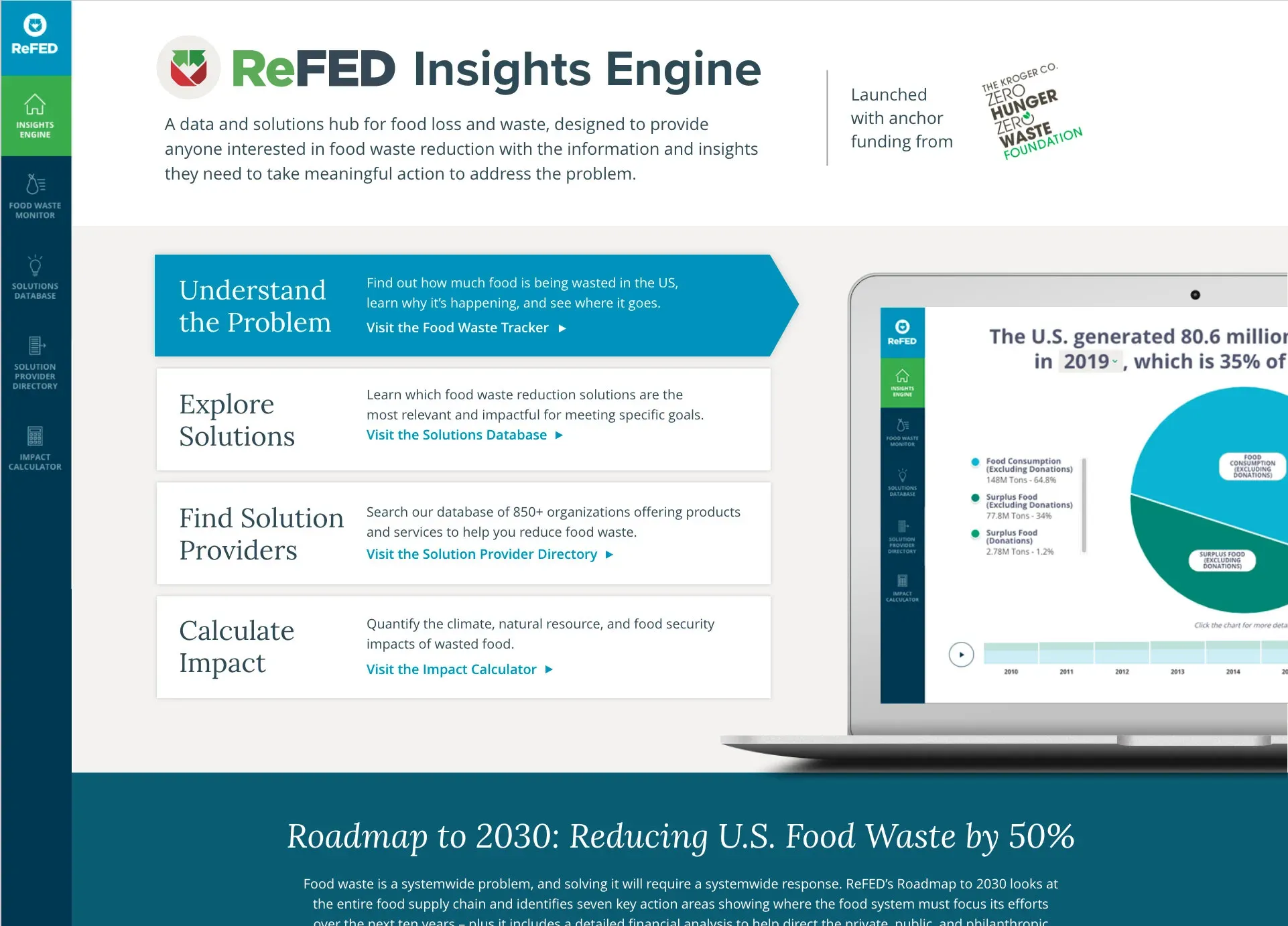

ReFED offers a range of solutions for organizations to advance their own food waste initiatives. Our interactive tools, reports and strategic solutions can help your team get started.