
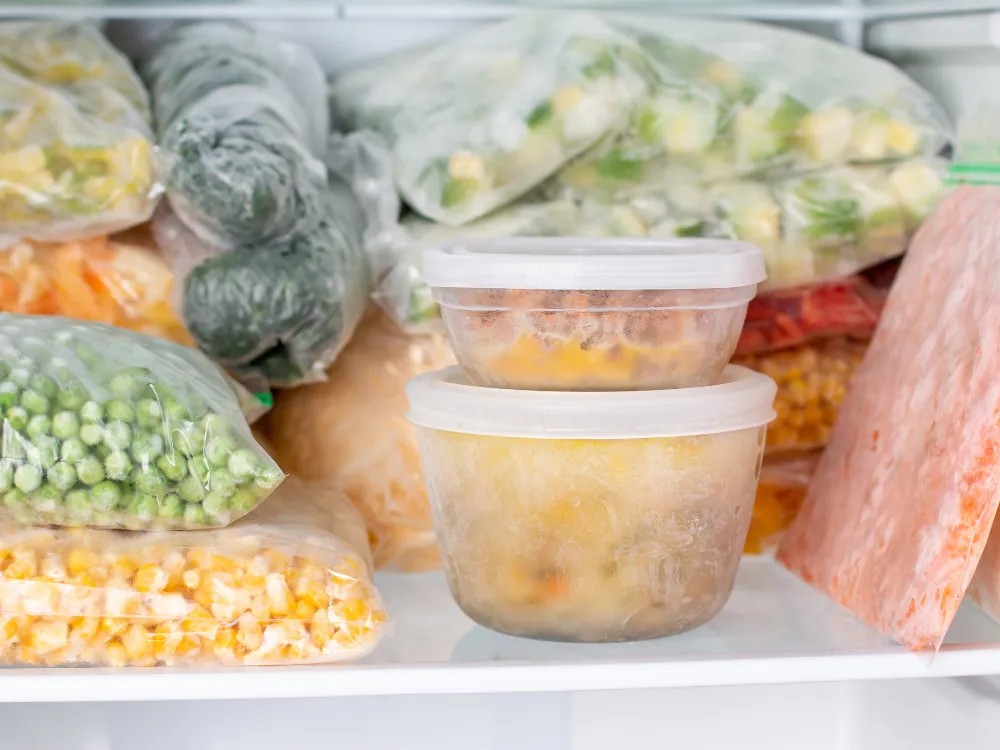
Nearly one third of food in the United States goes unsold or uneaten, and half of that waste is generated by consumers at home and in restaurants. While many strategies around cutting down on food waste focus on purchasing, planning, or redistribution, one powerful tool is often hiding in plain sight: the freezer.
In a recent webinar (opens in a new tab) hosted by ReFED and the American Frozen Food Institute (AFFI) (opens in a new tab), “Ice Out Food Waste: Leveraging the Power of Freezing to Reduce Wasted Food,” experts from across nutrition, sustainability, and the frozen food industry explored how freezing food can help households and businesses extend shelf life, preserve nutrients, and ultimately reduce food waste. This discussion featured:
Dana Gunders - President, ReFED
Liz Weiss, MS, RDN - Founder, Liz's Healthy Table (opens in a new tab)
Kai Robertson - Senior Corporate Sustainability Advisor, KOR Consulting (opens in a new tab)
Danielle Reid - Senior Sustainability Manager, Nature’s Touch Frozen Foods (opens in a new tab)
The timing of this conversation was particularly notable. In early January, the USDA Center for Nutrition Policy and Promotion and the HHS Office of Disease Prevention and Health Promotion released the 2025–2030 Dietary Guidelines for Americans (DGAs), which explicitly recommended (opens in a new tab) frozen foods as a practical way for households to access nutrient-dense ingredients year-round. As the DGAs recognize, frozen fruits, vegetables, and meals can help families maintain balanced diets while also reducing spoilage and offering convenience.
To help you take action on the insights shared during this webinar, which ranged from the sustainability trade-off’s of freezing versus fresh to tips and tricks for using frozen food, we’re sharing a few additional resources, as well as a couple of key clips.
The American Frozen Food Institute put together an FAQ document (opens in a new tab) that answers a lot of the questions raised during the webinar on topics like packaging, frozen food lifecycle analyses, and nutrition.
Liz Weiss of Liz’s Healthy Table wrote a special recipe (opens in a new tab) that leverages frozen ingredients to create a delicious shrimp fried rice with vegetables.
We pulled a few different video clips from our favorite moments:
As the food system continues to seek food waste solutions that are practical, scalable, and aligned with consumer behavior, a main takeaway from this webinar is that freezing stands out as an underutilized and highly cost-effective lever. From extending shelf life to supporting healthier diets, it offers benefits across environmental, economic, and nutritional dimensions.
Want to further explore the insights and guidance shared during the discussion? Watch the webinar recording below:
ReFED is a U.S.-based nonprofit that partners with food businesses, funders, solution providers, policymakers, and more to solve food waste. Its vision is a sustainable, resilient, and inclusive food system that makes the best use of the food we grow. The organization serves as the definitive source for food waste data, providing the most comprehensive analysis of the food waste problem and solutions to address it. Through its tools and resources, in-person and virtual convenings, and services tailored to help businesses, funders, and solution providers scale their impact, ReFED works to increase adoption of food waste solutions across the supply chain.


Find more news and updates from the ReFED blog.